
The musical instrument market has evolved, and the growing interest in used handpans is a perfect example. According to a recent study, 72% of buyers say they are satisfied with their purchase. Savings can reach up to 50% compared with a new model.
However, buying a used instrument carries risks. Nearly 15% of online transactions encounter problems, often because of stolen photos or hidden defects. That is why it is essential to prepare carefully before making a choice.
In this guide, we will explore the checks you should make to ensure a safe, satisfying purchase. You will learn how to assess the instrument’s condition, check its tuning, and recognize the signs of good sound quality.
Introduction to Used Handpans
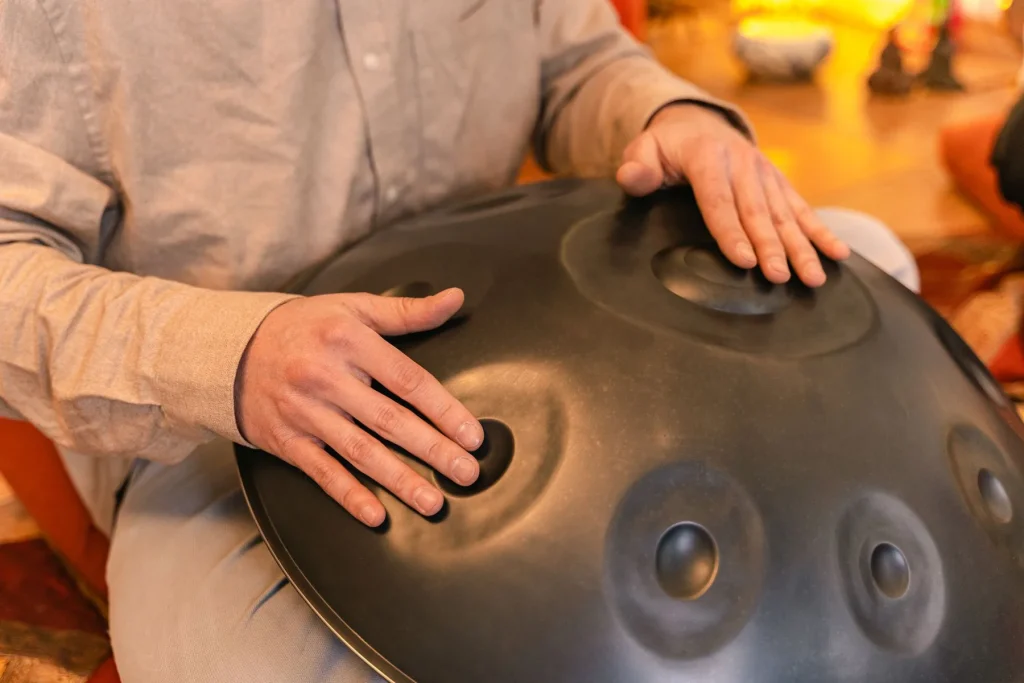
The emergence of a captivating instrument has transformed the music scene. The handpan, a melodic percussion instrument, originated in Switzerland in the early 2000s. Created by Felix Rohner and Sabina Schärer of PANArt, it draws inspiration from the steelpans of Trinidad and Tobago. This unique instrument produces enchanting sounds when gently tapped with the hands.
The handpan has become a symbol of relaxation and meditation. Its ability to reduce stress appeals to an ever wider audience. Amateur and professional musicians alike appreciate its harmonious melodies and striking tones.
In France, the used handpan market has grown remarkably. Many musicians want to sell or trade their handpans, creating a dynamic community. This gives newcomers access to quality instruments without waiting through long production times.
Here are some advantages of the used market:
- Almost immediate availability, so you can start playing quickly.
- Access to rare, high quality models.
- The chance to save considerably compared with buying a new instrument.
- Opportunities to share experiences with fellow enthusiasts.
However, the handpan’s growing popularity has also led to more questionable offers. It is therefore essential to prepare carefully before buying a secondhand instrument. By exploring this expanding market with care, you can avoid pitfalls and find an instrument that meets your expectations.
| Features | New handpan | Used handpan |
|---|---|---|
| Delivery time | 6 to 18 months | Almost immediate |
| Cost | High price | Potential savings |
| Access to rare models | Limited | Wide selection |
Why Choose a Used Handpan?
In the world of musical instruments, choosing a used model can often be a wise decision. The financial benefits are considerable. Buying a secondhand instrument can save you up to 50% compared with the price of a new model. That makes this fascinating instrument accessible to more passionate musicians.
Prices for new instruments can range from 1,000 to 3,000 euros or more. A used instrument, on the other hand, may cost between 700 and 2,000 euros, depending on its maker, condition, and rarity. This difference allows many musicians to obtain a quality instrument without breaking the bank.
In addition, the used market provides access to rare models and limited editions. Instruments such as early PANArt Hang generations or special Halo Handpan series circulate exclusively on this market and are real treasures for collectors.
Unlike new models, which often have production lead times of 6 to 18 months, used instruments are available immediately. You can start playing and exploring your musical creativity without waiting.
Another appealing feature is the unique patina an instrument develops over time. Many musicians seek out this characteristic because it gives the instrument a distinctive character and sound that develop as it is played.
Over time, the sound of a used instrument may evolve, gaining depth and richness. These qualities are not always found in new models and can add a unique emotional dimension to your music.
Finally, 72% of buyers of used models say they are satisfied with their purchase. This figure reflects the quality and value these secondhand instruments can offer when chosen carefully and maintained properly.
In short, buying a used instrument can be a wise choice for musicians who want a quality instrument and the opportunity to find a distinctive piece with plenty of character.
| Criteria | New handpan | Used handpan |
|---|---|---|
| Price | €1,000 to €3,000 | €700 to €2,000 |
| Delivery time | 6 to 18 months | Immediate |
| Access to rare models | Limited | Wide selection |
| Buyer satisfaction | – | 72% satisfied |
Before Buying: Research and Preparation
A good purchase starts with thorough research and careful preparation. Before committing, learn about the available makers and models. This will help you make an informed choice and feel satisfied with your purchase.
Research the Maker and Model
Start by exploring online directories of makers. Identify reputable names such as PANArt, Halo Handpan, and Spacedrum. These craftspeople are known for the quality of their instruments.
Then focus on the model that interests you. Learn about its technical features, the materials used, and other musicians’ opinions. This will help you determine whether the instrument meets your musical expectations.
Consult the Community and Specialist Forums
Joining communities of enthusiasts can be very helpful. On Facebook pages such as Handpan Instruments and Handpan Instrument Lovers, you can find valuable advice. Members often share their experiences and can help you assess whether listings are legitimate.
You can also join the HandPan.org forum. This platform brings together experienced musicians and trusted makers. Members help one another avoid bad deals.
Ask the seller the right questions. Find out why they are selling the instrument, whether they can provide a recent video, and whether you can try it before committing. A transparent seller is often a good sign.
Use Google’s reverse image search to check whether the listing photos are authentic. This can help you avoid scams.
Finally, cross check information from several sources. This will give you more confidence and help protect you from unpleasant surprises when buying.
Used Handpan: What to Check Before Buying
Before making your final choice, it is crucial to carry out thorough checks. They will help you invest in a quality instrument and avoid problems. Here are the key points to examine for a successful purchase.
Check the Tuning and Sound Quality
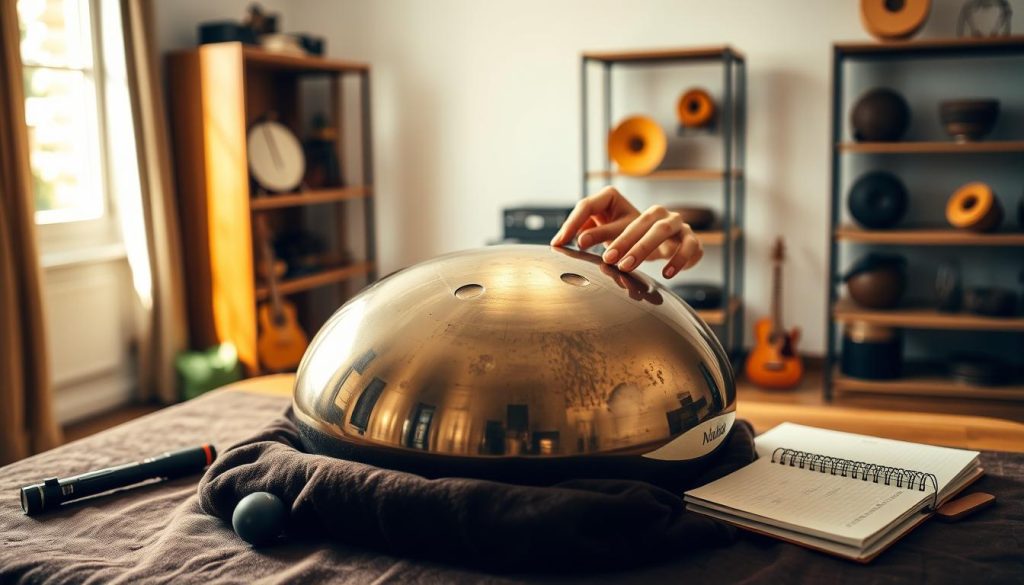
Start by checking the tuning. In fact, 63% of disputes concern this issue. Use a chromatic tuner to test every note on the instrument. Make sure the notes are stable and free of interference. A poorly tuned instrument can turn a beautiful melody into an unpleasant experience.
Listen carefully to the resonance of each note. Check for crosstalk, a form of interference between notes. Beginners often overlook this detail, but it is crucial to the instrument’s sound quality.
Inspect the Instrument’s Physical Condition
Inspect the handpan’s physical condition carefully. Pay particular attention to the central crown, where 92% of damage occurs. This area is often knocked during transport.
Use a flashlight or UV lamp to examine the surface. This can reveal hairline cracks, deep scratches, and signs of corrosion. These defects can compromise the instrument’s durability and sound.
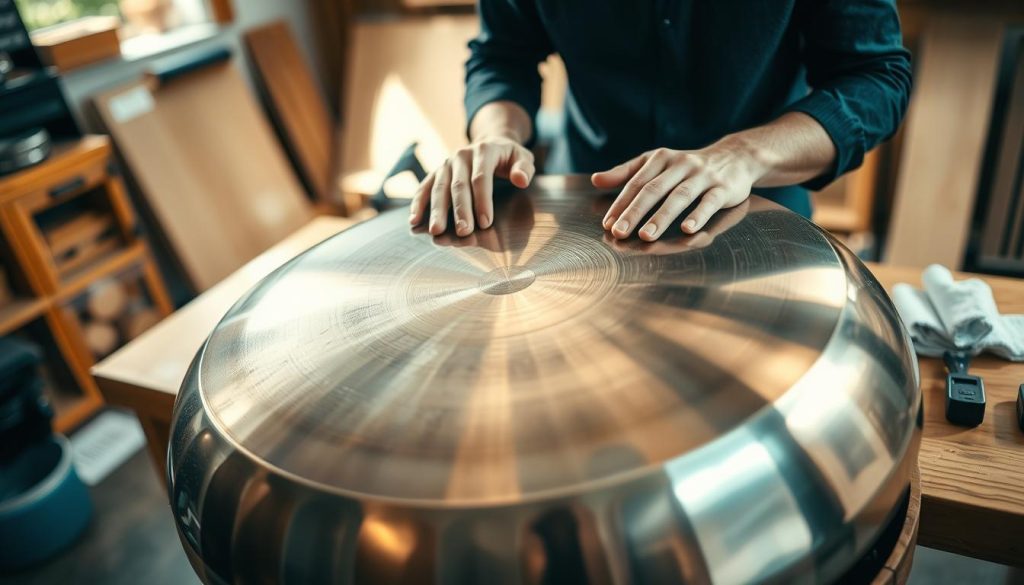
Run your hand over the entire surface to feel for irregularities, dents, or distortions. These signs may indicate a significant impact or a poorly executed repair. They can affect how the instrument plays.
Check the instrument’s interior too. Carefully shine your phone’s light through the central opening, called the Gu. This will let you inspect the inside for rust or hidden repairs.
Finally, be aware that a full retuning costs an average of €150 to €400. If the instrument has tuning problems, you will need to include this additional expense in your budget.
Checking the Tuning and Sound Quality
Checking an instrument’s tuning and sound is essential to ensure it performs well. Every buyer should follow several important steps.
Use a Chromatic Tuner and Listen to the Resonance
Learn to use a chromatic tuner to check every playing area on the instrument. Make sure all the notes in the scale are properly tuned to the standard reference frequency of 440 Hz. Some models may instead use 432 Hz, depending on the maker’s preference.
Listen carefully to how long each note resonates. Check that the central notes ring for at least 8 seconds. Resonance that ends too quickly may signal a structural problem or a tuning issue that requires professional attention.
Recognize Common Sound Problems
Learn to recognize common sound problems. Crosstalk, dissonance between adjacent notes, and unwanted vibrations can affect sound quality. Listen for notes that sound out of tune or lack sustain, as these may reveal tuning or manufacturing problems.
Use specialist apps such as SoundProfile 3.2, which analyzes acoustic characteristics using a seven point protocol. Record audio clips of the instrument you are testing and compare them with recordings of professional reference models. This will help you assess its sound quality objectively.
Finally, a full retuning can cost between €150 and €400. Professional retuning techniques such as cold hammering offer durability of three to five years with a two year warranty.
Inspecting the Instrument’s Physical Condition
An instrument’s physical condition can tell you a great deal about its quality and durability. Before making a choice, it is crucial to inspect it carefully. This will help you identify problems that could affect your musical experience.
Look for Dents, Scratches, and Cracks
Inspect every part of the instrument’s surface methodically. Start with the central crown, where 92% of damage occurs. This area is particularly vulnerable to knocks during transport.
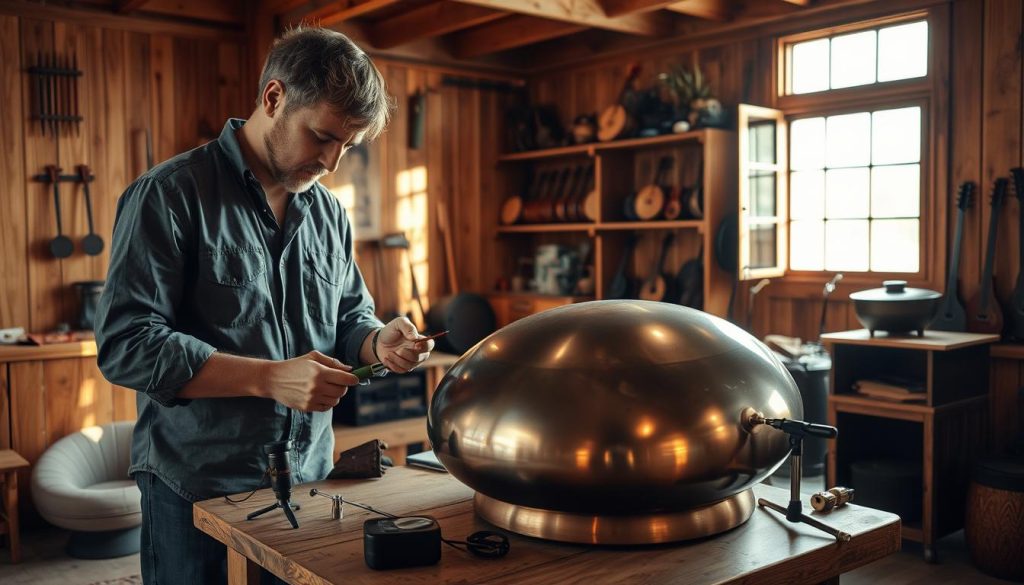
Use a powerful flashlight to inspect the instrument with light shining across its surface. This will reveal hairline cracks that are invisible to the naked eye, deep scratches, and any signs of corrosion. These defects can compromise the instrument’s structural integrity and sound.
Beware of touch up paint that may conceal serious impact damage. Run your hand over the entire surface to detect irregularities, dents, and distortions. These signs may indicate that the instrument has suffered significant impacts.
Examine the Materials and Structural Strength
Check that the instrument’s edges are free of chips. Such damage can alter its resonance and create weak points. These may worsen over time and compromise your future instrument’s durability and sound quality.
Look carefully for oxidation or rust. These may indicate that the instrument was stored in an overly damp environment and that its previous owner did not maintain it properly.
If possible, measure the metal’s thickness with calipers. Makers’ standards allow a maximum variation of 0.3 mm. Even a small distortion can affect tuning and playing quality.
Consider instruments made from nitrided steel for their greater durability. Avoid models whose notes have been hammered as an improvised repair, since such repairs can weaken the steel and shorten the instrument’s life.
Finally, carefully shine your phone’s light through the central opening, called the Gu. This will allow you to inspect the inside for corrosion or structural damage.
Checking the Handpan’s Age and History
Assessing an instrument’s age and history can help you avoid costly mistakes. Both are essential to making a wise purchase. Here are the key points to consider when reviewing its history.
Identify the Production Date and Edition
The first step is to identify when the instrument was made. Early models made before 2010 often have technical characteristics associated with the craft methods of that period. Nitriding techniques have changed considerably since then, improving resistance to impacts and corrosion.
Ask the seller for the instrument’s certificate of authenticity. This document can establish its production date and confirm that it is an authentic instrument from a reputable maker rather than a counterfeit.
Ask for Maintenance Records and Details of Any Repairs
It is also crucial to ask the seller for the instrument’s complete maintenance records. These should detail any repairs and retuning, as well as its storage conditions. In fact, a DGCCRF study found that 58% of sellers fail to mention significant repairs.
Prepare for a structured conversation with the seller by asking open ended questions. For example: “Can you describe how the instrument was stored?” or “How often did you have it retuned?” Such questions can elicit more precise information.
Be wary of vague or overly general answers about the instrument’s history. A careful owner knows their instrument’s story and should be able to provide specific details about its use and upkeep.
It is also wise to compare the seller’s statements with the records of authorized workshops, if possible. Contact the maker directly to verify authenticity, especially if the instrument’s resale history cannot be confirmed.
Finally, check whether the maker’s warranty is still valid and can be transferred to you. Some makers offer warranties covering manufacturing defects for several years, which may protect you if a problem arises.
Take the instrument’s age into account when assessing it. Older tuning methods differ from current standards, and materials vary by production period. These factors may influence the sound quality and durability of the instrument you are considering.
| What to check | Details |
|---|---|
| Certificate of authenticity | Helps verify the production date and authenticity |
| Production date | Models made before 2010 have specific technical characteristics |
| Maintenance records | History of repairs and storage conditions |
| Questions for the seller | Prepare open ended questions to obtain precise information |
| Maker’s warranty | Check its validity and whether it can be transferred |
Assessing the Price and Comparing It With a New Handpan
Assessing the price of a used musical instrument is a crucial step for any buyer. Understanding its value can help you avoid unpleasant surprises. A used model in good condition should generally cost between 40% and 70% of the price of a new one.
New instruments cost between 1,000 and 3,000 euros, while used ones range from 700 to 2,000 euros. It is important to compare these prices to make sure you are getting a good deal.
Factors That Affect the Used Price
Several factors affect the price of a used instrument:
- Age of the instrument: Older models may have sentimental or historical value.
- Overall condition: A well maintained instrument will sell for more.
- Maker’s reputation: Established names such as PANArt or Halo may command higher prices.
- Rarity of the model: Limited editions and rare models are often more expensive.
- Included accessories: A protective case or other accessories may add value.
- Custom modifications: Engravings or unique finishes can affect the price.
Negotiate a Fair Price Safely
When negotiating, it is essential to prepare sound arguments. Here are a few tips:
- Compare the asking price with that of a similar new model.
- Be wary of unusually low prices, which may hide problems.
- Make a comparison chart to support your request for a lower price.
- Take a balanced approach, allowing room to negotiate by 10% to 15%.
- Use secure payment services such as PayEscrow or MusiProtect to protect your purchase.
Following these steps will help you negotiate a fair price safely with the seller and improve your chances of making a good purchase.
Where Can You Buy a Used Handpan Safely?
Finding a quality musical instrument depends greatly on where you buy it. It is crucial to choose reliable platforms and sellers. This helps protect both the quality of the instrument and the security of your purchase.
Specialist Platforms and Music Stores
Explore platforms such as Zikinf and Greenmusicians, which dominate the used handpan market in France. These sites offer advanced filters for maker, key, and condition. They also provide verified seller ratings and 14 day refund guarantees to help protect your purchase.
Explore Handpan Village, a community platform with an 82% success rate. Its mentoring system lets experienced members guide new buyers in their search for a quality instrument.
Visit music stores that specialize in percussion. These shops are often good places to find used instruments. They may offer warranties or repair services for added peace of mind.
Recommended Communities and Facebook Groups
Join private Facebook groups such as Handpan Instruments and Handpan Instrument Lovers. These communities reduce fraud risks by 67%. Members share trustworthy sale listings, and you can ask sellers questions.
Also attend trial events organized by enthusiasts. These gatherings let you try several models in person, a rare opportunity in the world of acoustic instruments.
Finally, read online reviews and ask other musicians for recommendations. Their experiences can guide you toward trustworthy sellers and help you avoid costly mistakes.
| Where to buy | Advantages |
|---|---|
| Specialist platforms | Advanced filters, verified ratings, refund guarantees |
| Music stores | Warranties, repair services, expert advice |
| Facebook groups | Active community, reduced fraud, trustworthy listings |
| Trial events | In person testing, access to various models, advice from other musicians |
Pitfalls and Scams You Must Avoid
Caution is essential when buying musical instruments. Many buyers have unpleasant experiences because of questionable practices. It is important to recognize the signs of a scam or an unreliable seller.
Recognize Fraudulent Listings and Suspicious Sellers
Learn to identify fraudulent listings by watching for these telltale signs:
- Blurry photos or photos taken from only one angle.
- An unusually low price without a credible explanation.
- No certificate of authenticity.
- Vague descriptions without technical details about the instrument.
Be wary of resellers who buy instruments legally but disregard the community’s unwritten rules. They quickly resell them at a substantial profit, targeting buyers seeking limited editions such as Halo models or first generation PANArt Hangs.
Avoid Buying Without a Trial or an Authentic Video
Stay alert to offers that seem too good to be true. For example, a first generation PANArt Hang offered for €799 may raise doubts. In addition, 23% of instruments sold as handmade are actually low quality mass produced items. Use magnetic tests to check the quality of the steel.
Never buy an instrument based on a single photo. Fraudsters often use stolen images to create appealing listings. Use Google’s reverse image search to check whether the photos are authentic.
Always ask for a recent video of the seller playing the instrument. Ask them to include something proving the recording was made specifically for you, such as that day’s newspaper or another distinctive item.
Also be wary of sellers who claim to be selling for a friend. This may be a way to avoid answering technical questions while pressing you to pay quickly using an insecure method.
Trust your instincts. If something seems suspicious or the seller is evasive, do not ignore these warning signs. There will always be other good deals on the market.
Tips for Trying a Used Handpan
Trying an instrument before buying is a crucial step. It lets you make sure it meets your expectations. Here are some tips for making the most of the trial.
Prepare for Your Visit and Plan Your Questions
Before visiting the seller, prepare for the meeting. Make a list of questions to ask. For example:
- What is the instrument’s history?
- What materials were used to make it?
- Why does the seller want to part with it?
- Is any after sales service available?
These questions will help you understand the instrument and its overall condition. Also take time to download a tuning app to your phone. You can use it to check the accuracy of the notes during the trial.
Stay Safe and Bring Someone to the Trial
Consider bringing a friend or family member when you visit. They can support you and offer a second opinion on the instrument. Their presence can also help keep you safe, especially if the seller seems unreliable.
When you arrive, take time to examine the instrument. Check for rust, scratches, and dents. You can also shine your phone’s light through the central opening to inspect the inside.
Play every note, even if you are a beginner. This will help you assess the sound quality. Pay attention to how the instrument makes you feel. A good instrument should give you chills, while a poor quality model will lack that magic.
Finally, do not be afraid to say no and leave if the instrument is not right for you. A trustworthy seller will understand that buying an instrument is a significant investment. Trust your instincts and feel free to look for other used options.
| Tips | Details |
|---|---|
| Preparation | List questions to ask the seller |
| Companionship | Bring a friend for greater safety |
| Tuning app | Download an app to check the tuning |
| Inspecting the instrument | Check its physical condition and play every note |
| Listen to your feelings | A good instrument should stir your emotions |
| Confidence | Do not be afraid to say no if it is not right for you |
Caring for Your Handpan After Purchase
Taking care of your instrument is essential to preserving its lifespan and sound quality. Regular maintenance helps preserve the magic of every note and prevent future problems. Here are some practical tips for keeping your instrument in excellent condition.
Clean It Regularly and Protect It Against Oxidation
Establish a regular care routine. Wipe the instrument with a soft microfiber cloth after every playing session. This removes fingerprints and moisture, which can encourage surface corrosion.
For a deeper clean, prepare a mild solution of water and white vinegar in a 3:1 ratio. Avoid harsh chemicals that could damage the finish and alter your instrument’s acoustic properties.
Protect your instrument from changes in temperature and humidity. Store it in a dry place away from direct heat. Use silica gel packets in its case to control moisture and prevent rust from forming on the steel.
How Often to Arrange Professional Retuning
Plan for professional retuning about every two years. This helps keep your instrument in good condition. Retuning costs an average of €80 to €150. Watch for signs that it is needed: shorter resonance, dissonance between adjacent notes, or difficulty playing in tune with other instruments.
Choose cold hammering for retuning. This method lasts three to five years with a two year warranty, compared with thermal correction, which lasts only two to three years with a one year warranty.
Check your instrument’s tuning every month. Use apps such as TunerPro to spot tuning drift quickly. This will help you act before problems worsen and require more expensive repairs.
Think of maintenance as an investment in your instrument’s lifespan. A well maintained instrument retains its market value and develops a patina and richness of sound that improve over time.
Conclusion
Investing in an instrument can transform your musical experience. With 94% satisfaction, a carefully chosen instrument can become a lasting companion. This market is evolving thanks to secure platforms and accessible analysis tools.
- Check the tuning with a chromatic tuner.
- Inspect the physical condition, paying particular attention to the central crown.
- Assess the sound quality by listening to each note’s resonance.
- Verify the instrument’s age and complete history.
- Compare its price with the new instrument market.
Remember that 94% of buyers say they are satisfied with their purchase. This figure reflects the quality of this market. Join communities of enthusiasts and share your experiences to help protect future buyers.
Use the available resources to make an informed choice. Approach your purchase with confidence. Every check you make and every question you ask brings you closer to the instrument that will stir your musical soul.
Embrace this adventure with enthusiasm: this instrument’s enchanting sounds are waiting for you to reveal their full magic.