
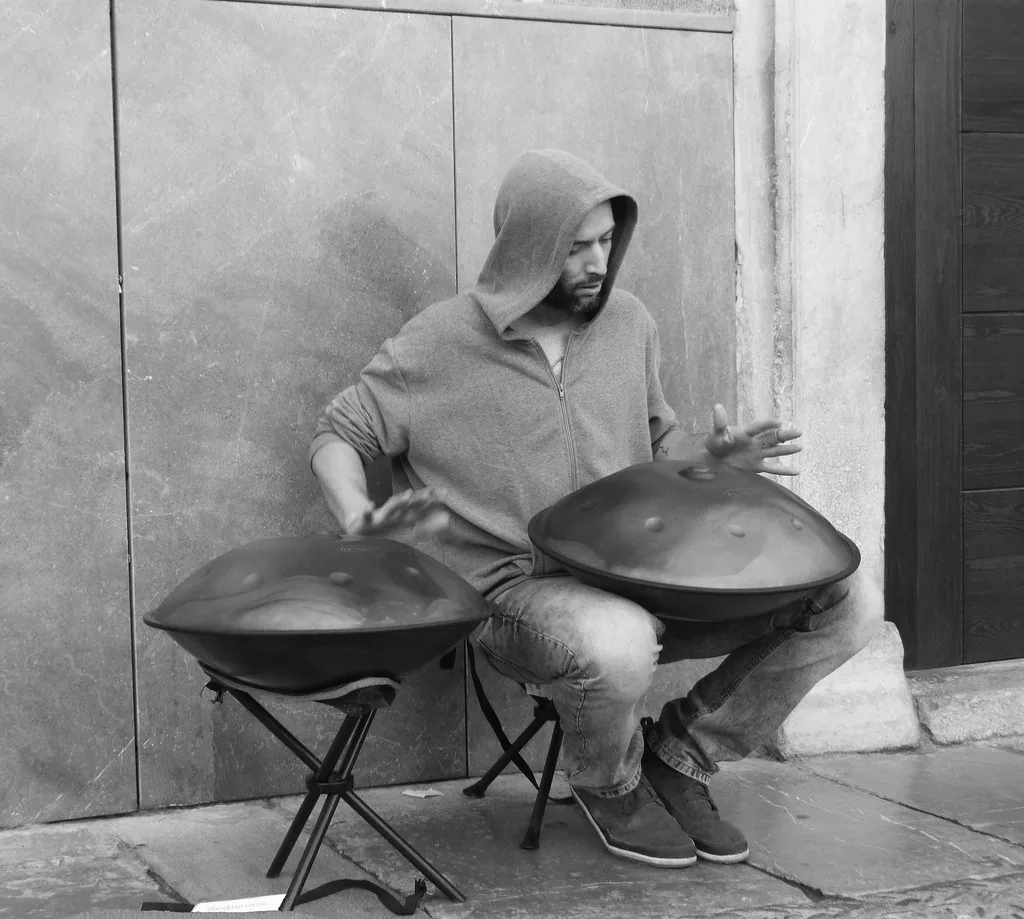
The handpan, a fascinating instrument created in Switzerland in the early 2000s, quickly gained popularity. Its distinctive sound, with gentle harmonics, invites relaxation and concentration. Its intuitive playing style makes it easy to include in a daily well-being practice.
In this article, we explore how the instrument is changing relaxation practices in France. You will discover how its harmonious sounds may help reduce stress and support emotional balance. We will also guide you through practical exercises to enrich your meditation practice.
Whether you are a beginner or an experienced practitioner, this guide will give you ways to make the handpan part of your life. Get ready to enter a world of sound that encourages well-being and mindfulness.
Introduction to the handpan and its connection to meditation
Known for its soothing sound, this distinctive instrument originated in Switzerland in 2000. Designed by Félix Rohner and Sabrina Schärer of PANArt, it stands out for its innovative construction. Contrary to a common misconception, it is not an ancient Eastern instrument but a modern creation that quickly won over music lovers.
The origin and distinctive design of the handpan
The handpan draws on several influences. Its creators incorporated elements of traditional instruments, including:
- The gong
- The Indian ghatam
- The Alpine bell
- The musical saw
The result was a steel instrument with a convex body and a central ding. Each handpan note is carefully tuned, creating a rich, immersive listening experience.
Enveloping sounds and harmonics that encourage relaxation
The sounds produced by this instrument feel especially enveloping. Their harmonics resonate deeply and encourage relaxation. Each note contains three frequencies:
- A fundamental tone
- An octave harmonic
- A compound fifth
This harmonic relationship makes the sounds pleasant to the human ear and creates an atmosphere suited to unwinding.
How the handpan affects body and mind
Handpan vibrations have a direct effect on body and mind. Studies, such as those reportedly conducted at UCSF in 2022, suggest that these vibrations stimulate the vestibular system. This may encourage inner calm, concentration and meditation.
The instrument is also accessible to people without musical training. Scales such as D Kurd and Celtic Minor make intuitive improvisation easier and let everyone express themselves freely.
In short, the handpan is more than an instrument: it can also support well-being. Its growing popularity in yoga practices and sound baths reflects its place in the search for relaxation and mindfulness. To learn more about its use, read this article.
Handpan and meditation: benefits, exercises and tips
Playing the handpan may offer benefits for mental and physical well-being. Its sounds encourage relaxation and concentration. Scientific studies of music more broadly have found measurable effects on stress and general well-being.
Effects on stress reduction and mindfulness
Research attributed to Necker Hospital reports a 34% reduction in cortisol, the stress hormone, from the handpan’s specific vibrations. The sounds are said to affect the amygdala, a brain region involved in processing emotions. This creates a calming effect that may encourage mindfulness, even for beginners.
The scientific impact of frequencies and vibrations on the nervous system
Oliver Jacobson, described as a UCSF researcher, says that harmonious frequencies synchronize the parasympathetic nervous system. This is said to induce deep calm, similar to that reached after years of meditation practice. D minor notes are described as particularly effective for relaxation.
Everyday benefits: sleep, concentration and emotional balance
Adding the handpan to a daily routine may improve your well-being. Polysomnographic data are said to show a 22% increase in deep sleep among regular users. In addition, 78% of people reportedly feel calmer within their first few minutes of playing.
A school program in Lyon also introduced the instrument to help teenagers manage anxiety. Its reported results show a 29% increase in dopamine, which may support concentration.
Overall, the handpan’s proposed benefits for body and mind are attributed to the distinctive harmonic structure of each note. Its soothing vibrations may help reduce chronic stress and improve quality of life. To explore the subject further, read this article.
Practical handpan sound meditation exercises
Playing this instrument offers many ways to explore relaxation and mindfulness. Here are some practical exercises for bringing music into your daily routine.
A breathing routine synchronized with the notes
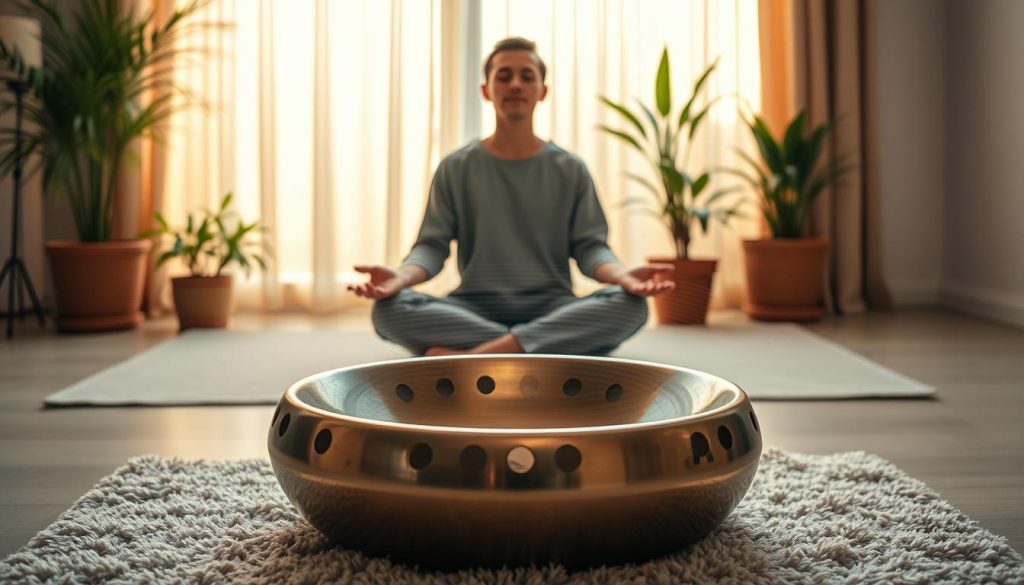
Start with a simple but effective routine. Inhale deeply for 5 seconds while following the vibration of the central note. Pause for 3 seconds to let the sound resonate. Then exhale slowly as the secondary harmonics emerge naturally.
Sit with your back straight and your shoulders relaxed. This allows energy to flow freely as your hands explore the tone fields. The technique can help you settle into the present moment.
Sensory immersion and active listening
To deepen the experience, hold your hands about 10 centimeters above the instrument’s surface. This lets you physically feel its vibrations. According to studies cited for this technique, it increases synchronization between the brain’s hemispheres and encourages a meditative state.
Spend 2 minutes playing slow sequences on two or three tone fields. Keep a calm tempo of 50 to 70 BPM to engage the parasympathetic nervous system and encourage deep relaxation.
Intuitive improvisation for gradually letting go
Explore intuitive improvisation by starting with simple patterns, such as a tonic–third–fifth triangle. Repeat them in calm phrases, then let your fingers discover new combinations freely. This gives you room to express yourself without judgment.
Add intentional pauses to your playing. Let the sound fade completely for 30 seconds, then listen to the silence that follows. The space between notes is an essential part of the musical experience.
| Exercise | Duration | Goal |
|---|---|---|
| Synchronized breathing | 5 s inhaling, 3 s pausing, 5 s exhaling | Ground yourself in the present moment |
| Sensory immersion | 2 minutes | Feel the vibrations |
| Intuitive improvisation | Variable | Express your creativity |
For beginners, the free 15-minute guided track offered through the ZenaPan partnership is described as a useful resource. It introduces sound meditation techniques gradually. You can find more information about the practice in this article.
How to choose a handpan for meditation
Choosing an instrument that suits your relaxation and concentration needs matters. Several factors can help you find a rewarding playing experience. Here is what to consider before buying.
Recommended scales for relaxation and concentration
For meditation, consider scales known for their calming character. Popular choices include:
- D Kurd: warm, enveloping notes.
- Celtic Minor: a contemplative atmosphere.
- Pygmy: well-balanced frequencies.
- Hijaz: distinctive sounds for a different kind of session.
- Amara: a scale suited to deep relaxation.
D minor is particularly recommended here because its notes are said to affect the amygdala and encourage relaxation. Harmonic G is another choice for those seeking better concentration.
Technical criteria: materials, note count and sound quality
Material choice is important. Nitrided steel, with a stated hardness of 62 HRC, offers durability and tuning stability. Stainless steel resists corrosion better, which is useful in humid environments.
As for note count, a handpan with 8 to 10 notes is enough to explore sound meditation. A diameter of 55 cm is often recommended as a balance between portability and a rich sound. Steel thickness also affects resonance: a difference of one millimeter can noticeably change the sound.
Buying tips for beginners and precautions against counterfeits
Before buying, research the maker’s reputation. Listen to recordings of the instrument you are considering, and ask about its construction and tuning. According to a claim attributed to the DGCCRF, around 30% of the market consists of counterfeits. Check the maker’s credentials and be wary of unusually low prices.
Specialist retailers, such as those discussed in this handpan buying guide, offer handcrafted instruments with hand-hammered notes at competitive prices. For a first purchase, consider a 9-note model starting at €999.
Learning to play the handpan: improvisation and creative growth
Discovering the pleasure of playing the handpan is open to everyone. The instrument lends itself to intuitive playing. Even without prior musical knowledge, you can make pleasing melodies within minutes. Its distinct tone fields and gentle response make it approachable.
To begin, explore your instrument’s harmonic scales. Play the root note, then the third and finally the fifth. Repeat these three notes in calm phrases to create a pleasing melodic foundation. This can draw you into a rewarding musical experience.
Intuitive playing techniques and exploring harmonic scales
To develop your improvisation, try the simple ta-ta-TA-pause rhythm. Change your fingertip emphasis with each repetition. This helps you create rhythmic variations while keeping a steady structure. As you play, focus on rhythm and the harmony of the sounds.
Tips for starting to improvise and making steady progress
Practice with a metronome set to 60 to 70 BPM in short, 5-minute sessions. Regular practice helps movements become familiar without causing frustration. Give each hand a role: use your left hand for a simple ostinato on the low notes while your right hand explores lighter melodies.
Keeping your playing fluid and enriching your musical experience
Take inspiration from artists such as David Charrier, Yatao, Kabeção and Sam Maher. Their online performances and tutorials may enrich your playing. Try arpeggios by lightly striking the ding, then five tone fields and finally the octave.
Gradually add techniques such as legato to connect notes, slaps to bring energy to your playing and ghost notes to create subtle textures. Practice polyrhythms such as 3:2 and 4:3 to sharpen your sense of rhythm.
| Technique | Duration | Goal |
|---|---|---|
| Ta-ta-TA-pause pattern | Variable | Create rhythmic variations |
| Metronome practice | 5 minutes | Build familiar playing habits |
| Free improvisation | Variable | Express your creativity |
For more advanced players, a loop station such as one from the Boss RC series lets you layer sounds. Your instrument can become a meditative orchestra, opening up many creative possibilities.
Community, sharing and connection through the handpan
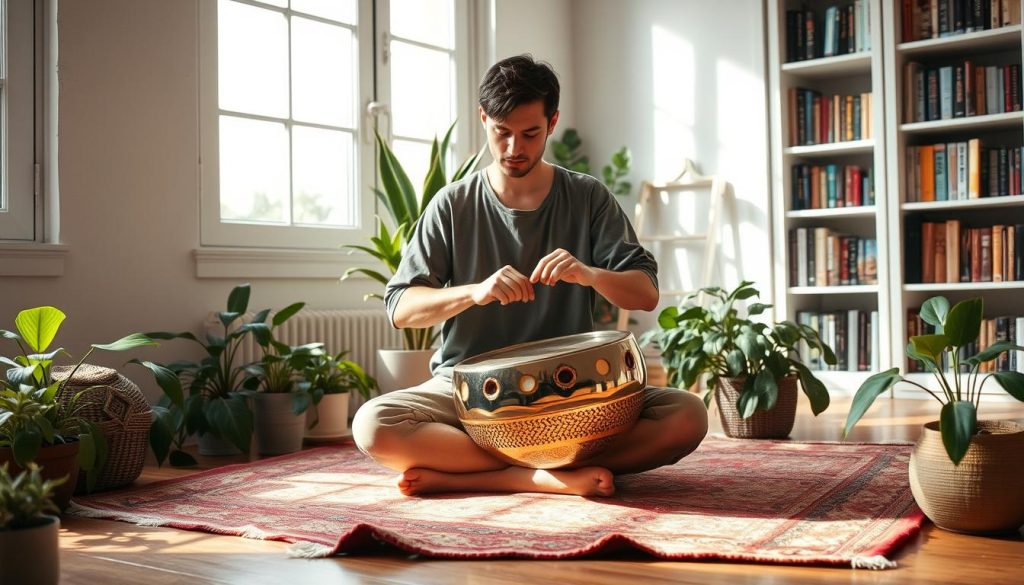
Playing this instrument goes well beyond making music. It builds connections between enthusiasts and encourages cultural and emotional exchange. In France and across Europe, handpan events bring players together to share their passion.
Places to meet: jams, circles and festivals
Festivals such as GRIASDI in Austria and HONA in Germany are important gatherings for enthusiasts. They offer welcoming spaces where active listening and sharing shape distinctive group music experiences. Participants can join workshops and jams and discover new rhythms together.
Jam circles held in parks or music schools provide spaces for collaboration. Anyone can contribute to the group’s music without pressure to perform. These gatherings strengthen group bonds and encourage genuine exchange.
The social and therapeutic role of sharing music
The community around this instrument is notably inclusive. It brings together yoga teachers, street musicians and sound therapists. They share moments of connection in which sound becomes a way to express empathy and listen to others.
Handpan circles can serve an important social and therapeutic role. They create spaces where music brings people together beyond words, encouraging a sense of belonging and mutual support that can benefit mental well-being.
How to include the handpan in yoga and music therapy groups
In Yin Yoga and restorative yoga studios, the instrument accompanies breathing and poses. Its recurring patterns help the group relax more deeply. To introduce a handpan to a yoga group, begin with simple sequences that follow the group’s shared breathing rhythm.
Music therapists also use its soothing sounds to help people express emotions. This can create a reassuring setting for therapeutic work with patients of all ages. Learning in a group can boost motivation and persistence.
Therapeutic applications and everyday well-being
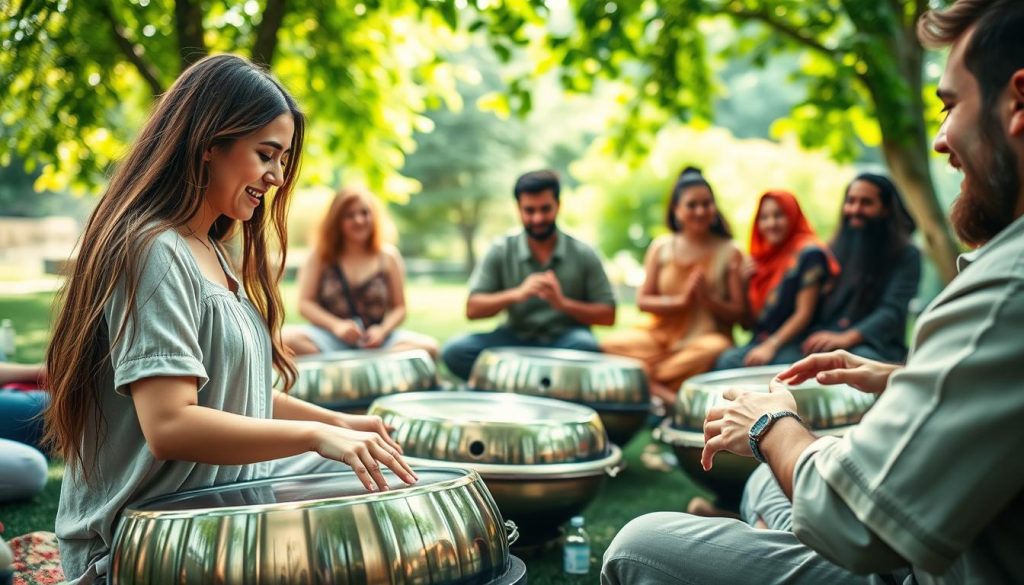
The instrument’s gentle vibrations may be helpful in various therapeutic settings. It can be included in music therapy sessions alongside established tools such as singing bowls and the monochord. Together, their sounds can create a deeply calming atmosphere.
The handpan in music therapy and relaxation sessions
Sound baths lasting 45 to 60 minutes that include the handpan offer an immersive listening experience. Participants may reach a state of deep relaxation. The enveloping vibrations can help them let go and feel restored.
For people experiencing anxiety, regular patterns can be helpful. They provide a predictable sound that may calm the nervous system and ease anxious thoughts, offering a reassuring focus in the present moment.
Using it for sleep, anxiety and nervous system balance
Quiet evening sessions can help prepare body and mind for sleep. Gentle, repetitive melodies may help slow the heart rate and settle the mind before bed. In healthcare settings such as Georges-Pompidou Hospital, studies are said to show that 63% of patients reduced their use of painkillers through therapeutic use of this instrument.
Precautions and tips for healthy practice
Remember that this instrument does not replace a medical diagnosis. Its clinical use should be coordinated with qualified music therapists. For healthy practice, protect your hearing by avoiding abrupt, loud sounds. Choose rooms with soft furnishings to reduce sound reflections.
Increase the length of your sessions gradually and note any reactions, especially in sensitive situations. Regular instrument care helps preserve its sound quality. Nitrided steel needs a thin coat of protective oil, while stainless steel should be kept dry.
Adding the instrument to your daily routine, even for short sessions of 5 to 10 minutes, may support your well-being and quality of life. Always pay attention to your body’s signals and practice responsibly.
Conclusion
This journey through sound offers another way to nurture well-being. The instrument we have explored can become a tool for personal growth. Its soothing vibrations encourage relaxation and may improve quality of life.
In the face of modern challenges such as anxiety, the handpan offers a natural, accessible activity. Its potential effects on stress and concentration may appeal to anyone seeking more balance in daily life.
Whether you are new to the instrument or have played for years, making it part of your life may change your relationship with music and with yourself. Future discoveries may make the experience even richer.
So give it a try! Whether you play or listen, follow its sounds on your own journey toward calm.