
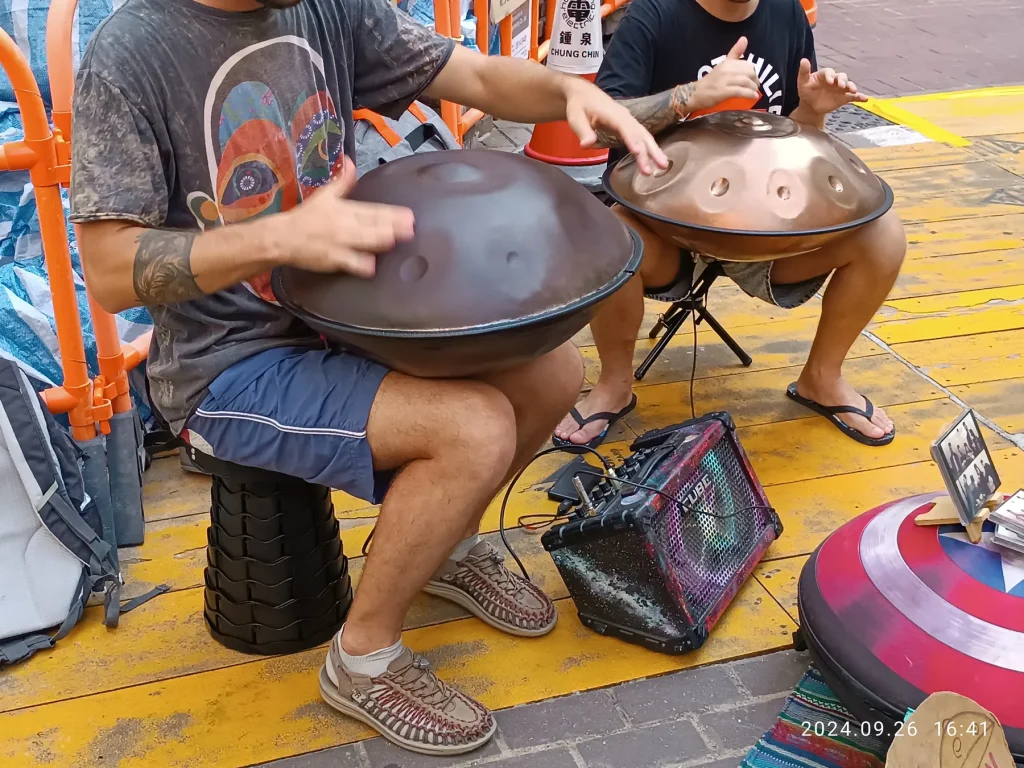
The handpan is a fascinating acoustic musical instrument. It emerged in the early 2000s following the development of the Hang®. Its distinctive sound is attracting more and more enthusiasts in France and around the world.
This guide is designed to help beginners navigate the complex world of handpans. Choosing your first model can be exciting, but often confusing. With so many materials, scales and prices to consider, it is essential to be well informed.
You do not need to learn everything at once. Instead, you can work out how to make the right choice, step by step. Each section of this guide covers fundamental criteria: origins, uses, sound quality and much more.
The market has grown rapidly, from a handful of makers to more than 300 today. That has made the instrument more accessible, but also harder to choose. Take time to absorb this information before making your purchase.
Introducing the handpan: origins and characteristics
The handpan is a remarkable acoustic instrument. It is a melodic percussion instrument made from two circular metal shells joined together. Tuned to a fixed scale, it has a set of notes arranged around a central note called the Ding.
The lower shell usually has no notes, although some models have what are called bottom notes. Every handpan has an opening in its lower shell called the Gu, which amplifies the instrument’s sound. Unlike a piano, which offers all the notes, a handpan has a limited number of notes, generally between 8 and 12, although some models have more than 30.
The notes do not progress in semitones; larger intervals separate them. Around the outer circle, they follow a rising zigzag pattern. This layout makes improvisation easy and intuitive, making the handpan an excellent choice for beginners.
Handpans differ from steel tongue drums, which have tongues cut into their surface. A handpan is shaped and hammered throughout, giving it a richer tone and longer sustain. Many people still use the term “hang drum,” but a handpan is not a drum. The Hang®, created in Switzerland in 2001 by PANArt, is the direct predecessor of the modern handpan.
The handpan is mainly played with the hands, although some musicians use special mallets to vary its sound. This opens up a wide range of musical expression and makes it a versatile instrument.
Why buy a handpan? Uses and motivations
People buy handpans for many different musical reasons. Before choosing one, define how you mainly intend to use it. This instrument can enrich everyday life in several ways.
Common uses include:
- Personal relaxation: The handpan’s long sustain, gentle scale and moderate volume make it well suited to unwinding.
- Yoga and sound therapy: These practices often call for a stable tone, soothing harmonics and an expressive low note.
- Concerts or group playing: Live performance calls for a clear sound and precise tuning.
- Creative exploration: An intuitive scale and versatile format encourage musical freedom.
Your intentions directly affect your choice of material, number of notes and sustain. Someone seeking relaxation might prefer a gentle sounding model, while a concert musician might want an instrument with greater projection.
The handpan is accessible to beginners and experienced musicians alike. Everyone can find a use that suits their ability and interests. Beyond making music, the instrument can also be an investment in personal well-being.
| Use | Desirable characteristics |
|---|---|
| Personal relaxation | Long sustain, gentle scale, moderate volume |
| Yoga and sound therapy | Stable tone, soothing harmonics, expressive low note |
| Concerts or group playing | Clear sound, precise tuning, compatible pitch standard |
| Creative exploration | Intuitive scale, versatile format |
Understanding handpan scales
The scale is the defining feature of a handpan. Each instrument is tuned to just one scale, which shapes its mood and musical possibilities. Choosing a scale is therefore crucial, and it should suit your tastes and playing experience.
Types of scales and their moods
Scales generally fall into three broad families:
- Minor scales: Often introspective and meditative, scales such as Kurd and Celtic can evoke deep emotions.
- Major scales: Bright and cheerful, scales such as Ionian are ideal for creating a positive mood.
- Exotic scales: Mysterious and colourful, scales such as Hijaz and Pygmy offer a less familiar musical experience.
As a set of notes, each handpan scale gives the instrument its own character. A scale might create a joyful, mystical, relaxing or even melancholy atmosphere. Choose one that speaks to you personally.
Choosing a scale for your tastes and ability
Choosing a scale is, above all, a matter of taste and feeling. Major scales, often associated with cheerful sounds, can be ideal for beginners. Minor scales may sound more melancholy and suit reflective moments.
For a richer musical experience, Eastern scales offer ethereal, mysterious sounds. If you are starting out, D minor is often recommended. This versatile, easy-to-learn scale can sound both melancholy and energetic.
Remember that handpans are generally built around a diatonic scale. That makes intuitive playing possible even without prior musical knowledge. Before deciding, listen to different scales on YouTube or makers’ websites to discover which one moves you most.
Handpan tuning: 432 Hz or 440 Hz?
An instrument’s tuning can greatly affect its tone and resonance. Handpans are mainly available in two pitch standards: 432 Hz and 440 Hz. Each has distinct advantages that may shape your musical experience.
Advantages of 432 Hz
432 Hz is often called a “natural frequency” and is claimed to be in harmony with the universe and nature. Many musicians describe it as calming, making it appealing for relaxation, yoga and meditation.
Some musicians also say this tuning gives them a stronger emotional experience or greater artistic intuition. However, a handpan tuned to 432 Hz is generally incompatible with most other instruments, which are tuned to 440 Hz.
Advantages of 440 Hz
440 Hz is the international reference pitch. It is the practical choice if you play with other musicians, whether in a concert group or a symphony orchestra. It makes joining different musical ensembles easier.
A sound tuned to 440 Hz is often perceived as more intense and dynamic. Some musicians, however, find it less enveloping than 432 Hz. If you are unsure, choose 440 Hz to keep the option of playing with other musicians later.
Listen to recordings made at both pitch standards. This can help you decide which one best suits your ear and musical plans.
Sustain: why it matters and how to choose
Sustain is an important concept when choosing a handpan. It is the length of time a note continues to ring after it is struck. It plays a key role in the instrument’s rich, distinctive sound.
Longer sustain creates deeper resonance and more opportunities to experiment with harmonies. Excessive sustain, however, can cause sounds to overlap in unwanted ways and reduce musical clarity.
In music, sustain describes the period during which a sound’s amplitude decreases after its initial attack. A good handpan needs an appropriate amount: a note should neither stop too soon nor ring so long that it muddies the harmony, particularly during fast playing.
For a handpan, an ideal sustain is generally said to be between 8 and 12 seconds. Short sustain can make the sound choppy, while excessive sustain can create dissonance. Your preferred sustain depends partly on your playing style, making it a matter of both taste and quality.
Beginners are often advised to choose a handpan with medium sustain. This lets you practise striking notes without too much overlap. Short sustain can be difficult to manage, while long sustain takes more control to prevent notes from masking one another.
Listen carefully to demonstration recordings before buying. Pay attention to how long each note rings to assess an instrument’s sustain.
The material also affects sustain. Stainless steel, for example, generally sustains longer than nitrided steel. Here is a summary:
| Material | Type of sustain |
|---|---|
| Nitrided steel | Short |
| Stainless steel | Medium |
| Ember steel | Long |
Materials and their effect on sound
The material used to make a handpan directly affects its sound quality, durability and price. The two most common steels are nitrided steel and stainless steel. Each has characteristics that suit different musicians’ needs.
Nitrided steel and stainless steel
Nitrided steel is valued for its clear, incisive tone. It feels responsive and percussive to play, which suits musicians who like rhythmic compositions. Nitrogen treatment creates a protective layer that improves corrosion resistance. It can also give a handpan a rich, deep sound with pleasing harmonics.
Stainless steel stands out for its long, enveloping sustain. It suits meditative music and relaxation. Stable and easy to maintain, it appeals to those seeking a durable instrument. It can also produce a slightly brighter sound that suits fast, rhythmic music.
Which material suits which buyer?
The right material depends on what you want from the instrument. Choose nitrided steel if you favour a percussive, articulate sound. Stainless steel may be better if you want an enveloping, meditative sound.
Material thickness matters too. Most makers use 1.0 mm steel, while some choose 1.2 mm. Although thicker steel is harder to hammer and costs more, it is often considered to produce a gentler sound.
Beginners should try handpans made from different materials before deciding. This helps you discover which sound you prefer. Each material has qualities that affect the playing experience.
For more information about handpan materials, read this article.
How many notes should you choose?
When choosing a handpan, the number of notes is an essential consideration. More notes expand your musical palette and melodic possibilities, but make tuning more delicate for the maker. An instrument with more notes may also demand more skill from the player.
For a first purchase, it usually makes sense to balance simplicity with musical range. “Classic” handpans with 8 to 10 notes are often considered the most versatile. They suit beginners while leaving room to progress.
Handpans with 9 notes or fewer
Models with 9 notes or fewer are often recommended for beginners. They are quick and intuitive to start playing without necessarily limiting musical expression. Some sellers include the central Ding in their note count, which can be confusing. A handpan advertised as having “9 notes,” for example, may have 8 outer notes plus the Ding.
A 9-note handpan lets you explore the instrument quickly while offering a satisfying range of sounds. Playing techniques can create variety even with fewer notes, so a limited note count does not necessarily limit expression.
Handpans with 10 notes or more
Handpans with 10 or more notes are generally aimed at intermediate or experienced players. They offer more musical possibilities, but every additional note makes tuning more delicate for the maker and may make the instrument harder to master.
Models with many notes, particularly those with bottom notes, are often intended for experienced musicians. They offer greater variety but can make striking the notes more complicated. Beginners may therefore prefer a 9-note handpan as a balance between simplicity and musical range.
The right number of notes depends on your ability and ambitions. A 10-note model is often an excellent choice if you want room to progress and explore different sounds. For more information about the options, read this article.
Sound quality: tuning, crosstalk and note balance
A good handpan stands out for its rich sound. Accurate tuning is one of its main qualities. With proper handling, a well-tuned model should stay in tune for at least two years.
Each handpan note produces three tuned tones: the fundamental, the fifth and the octave. Together they create the harmonic richness that makes the instrument enjoyable to hear.
It is also useful to understand crosstalk, sometimes called sympathetic resonance. This occurs when striking one note unintentionally causes a neighbouring note to vibrate, potentially disrupting the harmony. Unwanted crosstalk should be distinguished from deliberate resonance, which can add harmonic richness.
Note balance is another key consideration. You should be able to hear each note clearly without others overpowering it, even when several are played together. Test this by playing each note on its own and then in combination with others.
Each outer tone field should produce the same sound regardless of where it is struck, except at its central dimple. Beginners should look for an instrument with minimal unwanted crosstalk, which can be hard to control without experience.
Finally, demonstration recordings in which every note is played slowly and separately can help you judge tuning accuracy and unwanted crosstalk. Listen carefully so you can make an informed choice.
Handpan prices: what determines the cost?
Handpan prices reflect the labour, technical difficulty and expertise needed to make a stable, harmonious instrument. Understanding these factors helps you distinguish a fair price from a misleading offer.
Factors affecting the price
Several factors determine a handpan’s price:
- Number of notes: The more notes an instrument has, the more delicate its tuning becomes.
- Low notes: Bass notes require lengthy, complex work.
- Tuning quality: Precise tuning takes repeated passes and careful adjustments.
- Maker’s reputation: Established craftspeople invest in training, sound research and after-sales service.
Be wary of handpans offered at unusually low prices. They may have unstable notes, uneven sustain, excessive crosstalk or poor-quality steel.
Indicative price ranges
Here are some indicative handpan prices:
- First quality handpan: between €900 and €1,400.
- Mid-range handmade model: between €1,400 and €2,000.
- High-end model: €2,000 to €5,000 or more.
About 90% of handpans are priced between €1,200 and €2,500. Quality does not always rise with price, however. You may find an excellent instrument for €1,200 or a poor one for €2,500.
A good handpan is about more than its sound. After-sales service, especially retuning, matters too. Each instrument is unique and takes several hours of manual work to achieve a harmonious sound, which helps explain its price.
Before buying, check the maker’s reputation. Treat an unusually low price without a technical explanation as a possible sign of compromised quality.
Buying a handpan: a guide to avoiding poor choices
Buying a handpan can be the start of a rewarding musical journey. Think about the purchase over the long term. These steps can help:
- Listen to recordings: Discover different sounds and playing styles.
- Try the instrument: If possible, test several models to find one that suits you.
- Rent before buying: Get to know the instrument without committing to a purchase.
- Choose a versatile instrument: Give yourself room to explore different musical moods.
Over time, many musicians want to broaden their musical palette. After a few months of playing, you may have a clearer idea of what your first instrument lacks. You might consider:
- A second scale for a different mood.
- Notes on the lower shell for greater depth.
- A handpan made from another material to explore a different tone.
The aim is to buy well, without necessarily buying more. Here is one possible path over 24 months:
- 0 to 3 months: Discover and try an intuitive scale.
- 6 to 12 months: Consider a complementary second instrument.
- 12 to 18 months: Add low notes or explore a handpan made from another steel.
- 18 to 24 months: Arrange retuning and explore more advanced playing.
Musicians often sell their first instrument to help fund one better suited to their skills. To protect its resale value, keep proof of its history, including invoices, demonstration recordings and retuning records.
Do not rush. Give yourself time to think and avoid regrets. Renting before buying or choosing a seller with a money-back guarantee can reduce the risks of your first purchase.
How do you choose a reliable maker or seller?
Choosing a handpan maker can seem complicated, but it is an important part of buying well. The market has grown from 30 to 40 makers in 2012 to more than 300 today. This has made the instrument more accessible, but also harder to choose.
Most handpans come from Europe and Asia. Instruments made in Asia are often more affordable, though quality varies. Some Asian makers nevertheless produce instruments comparable in quality to those made in Europe.
A good handpan is about more than its sound. Reliable after-sales service is equally important. An instrument can drift out of tune over time, making access to retuning valuable. A trustworthy maker or shop provides support that helps your instrument last.
Common types of seller include:
- The independent maker: You get direct contact and a unique instrument, but waiting times can be long.
- The specialist shop: It may offer a wide selection, opportunities to try instruments, rentals, personal guidance and centralised after-sales service.
Check whether the maker or seller offers a local retuning service. This will help you keep the instrument in good condition over time.
Makers sell in different ways. Some use waiting lists, others hold flash sales, and some can make an instrument quickly. Waiting lists for highly sought-after makers can fill in minutes, so keep an eye on availability.
You can contact a maker through details listed with their YouTube recordings, their Facebook page or their website. The handpan community can help you find them too.
Before buying, ask about after-sales service and what to do if the instrument goes out of tune. Clear answers can prevent unpleasant surprises.
| Criterion | European maker | Asian maker |
|---|---|---|
| Price | High | Affordable |
| Quality | Generally high | Variable |
| After-sales service | Often excellent | May be limited |
| Waiting time | Variable | Often shorter |
Buying a new handpan: steps and advice
Buying a handpan takes some preparation. Research your options thoroughly before contacting a maker. Communities such as French handpan connection include enthusiasts who can share their experiences.
Tastes vary, but some makers are widely recognised for their quality. Your ears are the best judge. Listen to several recordings to develop a sense of what you like.
There are two ways to receive your instrument. The maker can ship it to you. If so, budget for delivery and make sure the handpan is well protected in a sturdy case.
You can also collect it in person. I particularly enjoy meeting the craftsperson: it adds something to the purchase and helps me understand the work and care that went into the instrument.
Ask the maker all the questions you need to. Find out about maintenance, suitable products, things to avoid and the retuning process. These details will help you enjoy your new instrument.
Take care with deposits requested to join a waiting list. Check that other customers have received their instruments before paying one. Ideally, the maker will ask for payment once your handpan is ready and has shown it to you in a short recording.
If you have researched a maker thoroughly and the community confirms they are reliable, you may consider paying in advance. Be more cautious with little-known or brand-new makers, while recognising that everyone has to start somewhere.

Buying a used handpan: essential precautions
A used instrument can be an excellent opportunity, provided you can recognise a trustworthy seller and a credible listing. A good seller is transparent and readily supplies photos, recordings, information about the notes’ frequencies and details of the instrument’s overall condition.
The instrument’s history should also be clear: its purchase date, original maker and any maintenance or retuning records. Consider sellers who are active in handpan communities, musicians’ groups or specialist forums.
Before buying, request a recent recording in which each note is played slowly and separately. This will help you assess the sound. Watch for these warning signs:
- No recording is supplied despite your request.
- Photos are blurry, scarce or clearly copied from another site.
- The price is unusually low without a technical explanation.
- The seller refuses an in-person handover, especially for an expensive instrument.
- The listing is overly generic or full of errors.
Meeting the seller in person is strongly recommended for two reasons. First, you can check that they actually have the instrument. Second, you can play it and compare it with the impression you formed online. A handpan can sound very different in person than it does in a recording.
If you can only buy online, be especially careful. Research the seller and check whether they are known in the community or active on social platforms such as Facebook. Ask for extra photos and recordings. A photo of the instrument beside a specific object can help establish that the seller possesses it.
You can also offer to collect the instrument in person and see how the seller responds. Favour an in-person meeting and use care on platforms such as Le Bon Coin and eBay, where scams have been reported.
Before buying a used handpan, check:
- Photos and recordings of the exact instrument.
- Its history and note layout.
- Whether you can try it in person, if practical.
Allow for possible additional costs, such as retuning, which generally costs €100 to €200. An instrument may lose about 25% of its value after two years, a useful consideration when assessing the price.
A used handpan can be a great purchase if you stay alert and gather enough information. Check the seller’s reliability and ask questions. For more advice on buying a handpan, read this article.
Maintenance, precautions and essential accessories
Caring for your handpan helps preserve its sound and extend its life. Follow these precautions to keep it in good condition.
- Protect your instrument: Keep it out of direct sunlight and heat, which can affect its tuning. If it becomes hot, let it cool to room temperature before playing.
- Use your hands: Play the handpan with your fingers. Avoid sticks or other objects, and wash your hands before playing to help prevent corrosion.
- Avoid moisture: If the instrument gets wet, dry it immediately with a cloth and then oil it, unless it is made from stainless steel.
- Remove jewellery: Take off rings, watches and other accessories before playing to avoid scratching the surface.
- Store it properly: Do not leave the handpan permanently in its case or backpack, as this can encourage rust.
- Oil it regularly: Depending on its material, regular oiling helps protect a handpan from corrosion.
- Watch the temperature: Temperature affects the sound. In cold weather notes become sharper; in hot weather they sound duller.
A suitable case is usually included with a purchase. There are two main types:
| Case type | Advantages |
|---|---|
| Hard case | Better protection against knocks |
| Soft case | Lighter, cheaper and easier to carry |
Playing regularly and caring for your instrument support its longevity and tuning stability. Give each note the attention it deserves to appreciate its full richness.
Conclusion
A handpan is a purchase worth thinking through. Consider your sound preferences and the essential technical factors. Take your time: too many musicians regret an impulse purchase.
The market has grown, so there is no need to seize the first opportunity. A poor-quality instrument can be hard to resell. Choose carefully.
Key considerations include the scale, 432 Hz or 440 Hz tuning, and sound quality, particularly sustain, note balance and crosstalk. Remember to consider the material and number of notes too.
Listen to plenty of recordings, try different instruments if possible and ask the handpan community for help. With patience and good information, you can find an instrument that suits your musical interests.