
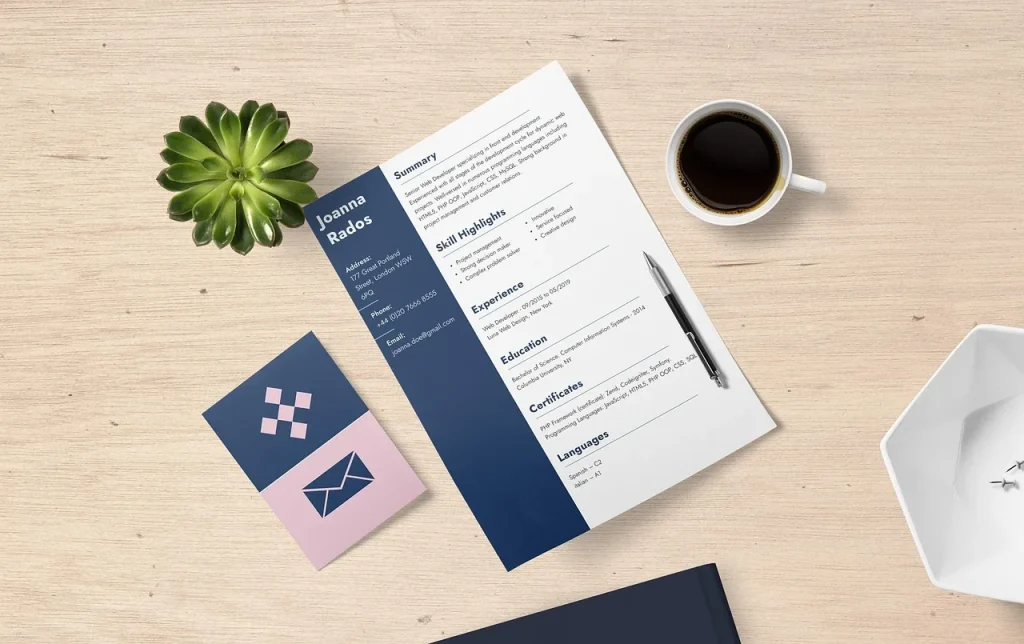
Practical and immediately applicable, this introduction presents a clear template for structuring a resume that highlights your musical practice and teaching skills.
In France, a strong resume should show your teaching experience, key skills, and suitability for the role from the outset. Recruiters examine your musical education, the methods you teach, and your students’ concrete achievements.
This guide lays out a step-by-step plan: a readable layout, priority sections, ATS optimization, and evidence of results. It explains how to combine your command of instruments, classroom experience, and teaching skills to demonstrate your value.
You will find format options, sample opening statements, and lists of skills employers expect. A passion for music should be backed by evidence — concerts, projects, or certifications — included with care.
The goal is clarity and effectiveness. A ready-to-use sample structure closes this section to support your learning and help you prepare for your next classes.
Understand what recruiters in France expect today
Recruiters want to see within seconds whether your teaching and musical background fits the advertised role. The top of your resume should display a specific title, your role as a music teacher, and your key skills.
The first quarter of the page should reveal your strengths in teaching and music. State the levels you teach, your instruments, your command of music theory, and the concrete results your students have achieved.
What a resume should show at a glance
Include keywords from the job description and a short sentence summarizing your value. Select five to eight relevant skills and display them prominently.
Match your strengths to the job description
Analyze the posting and use its terminology (stage, levels, curricula). Order your experience and skills according to the role’s priorities.
“Tailor your resume: if the posting calls for choir direction and music production, put them at the top of your skills and experience.”
- Quick indicators: levels, instruments, digital tools.
- A targeted summary showing your achievements and value.
- Keywords that match the job description for ATS screening.
Resume template for a music production teacher
Start with a clear title, then arrange the sections to show your teaching and musical value immediately. Prioritize clarity, technical keywords, and evidence of student progress.
Essential sections and the best order
- Title and targeted summary (goal and value).
- Key skills (instruments, music production software, music theory).
- Professional experience: employers, dates, duties, and student outcomes.
- Education and certifications (Orff, Kodály, teaching qualifications).
- Achievements, portfolio, professional development, and references.
Examples of effective titles and opening statements
Clear titles: “Music Teacher – Music Production and Piano,” “Music Educator – Choir and Ableton Live,” “Private Music Teacher – Guitar and Theory.”
Short opening statement: “Seven years of teaching experience, a 30% increase in ensemble participation, and music production integrated into formative assessment”. This wording shows experience, impact, and technical skills.
Adapt the template for schools and private lessons
Describe your students (ages and levels) and activities (music production workshops, orchestra, choir). For a high school, emphasize curricula and assessment. For private lessons, highlight personalized teaching and rapid progress.
Layout: readable typefaces, action-oriented bullet points, aligned dates, and discreet links to your portfolio.
Choose the right resume format for a music teacher
Your chosen structure should make your teaching and musical strengths visible. A clear format helps recruiters quickly identify your skills, achievements, and experience.
Chronological, functional, or combination: when to use each
Chronological: ideal if you have a continuous history of working in schools. Show how your responsibilities developed and what your students achieved.
Functional: choose this if you are changing careers or have a varied work history. Put your technical and teaching skills before dates.
Combination: the most versatile option. It pairs a list of key skills with a dated work history. It is particularly useful when you have major achievements to highlight.
Practical examples by role
- Private teacher: show your instrumental or music production specialty, student outcomes, retention, and scheduling skills.
- School teacher: align your resume with curricula, assessments, concerts, and collaborative work.
- Online teacher: highlight lesson design, video conferencing tools, learning platforms, and engagement data.
Choose the format for the role you want. Clarity comes first: adapt the presentation to demonstrate your value quickly and increase your response rate.
Prepare your material before writing
Before you write, gather all the concrete evidence that will support your application in music and teaching.
Start by listing your qualifications, institutions, and dates. Note key modules related to music theory and pedagogy. Then prepare your certifications: state teaching credentials, Orff, Kodály, and music production.
Gather references from people who have agreed to provide them (school leaders, colleagues, parents), with their contact details ready to share. List your achievements: concerts, competitions, published music production projects, and measurable results (a 30% rise in participation, re-enrollment rates).

Identify your distinctive strengths and organize your materials
- Key strengths: styles, instruments, music production software, group management.
- Evidence: audio tracks, recital videos, programs, and assessments.
- Tailoring: analyze the posting to identify role-specific keywords and adjust your skills.
Tip: keep a selective portfolio and quantified examples. This speeds up writing and shows the real value of your experience with students.
Write your professional summary or objective
In one line, explain what distinguishes you as a teacher: your methods, instruments, and results.
Summary: best if you have experience. It emphasizes achievements, technical skills, and your impact on students.
Objective: useful for recent graduates or career changers. It states your career direction and the role you seek.
When to choose each one
- Summary: an established professional backed by figures (participation rates, exam results).
- Objective: a targeted application, career change, or entry into teaching.
Strong wording and examples
Use short, active, specific sentences. Tailor keywords to the role.
- Example 1: Eight years of music teaching experience, leadership of music production workshops, and a 25% improvement in student progress through collaborative planning.
- Example 2: Versatile teacher specializing in piano and theory, with improved end-of-year exam results.
- Example 3: Teaching young people and adults: differentiated instruction for different learning styles and individualized support.
Advice: cite a concrete measure and add a brief note on your teaching philosophy. Avoid clichés and stay focused on the role.
Structure and highlight your professional experience
Present your experience systematically: give the employer, dates, and teaching context. Briefly explain the students’ levels, the subjects taught, and the role’s objectives.
Describe your music teaching with impact
Use action verbs: coordinated, designed, led, assessed. Describe the classes, workshops, and ensembles you directed. Specify how you used digital or music production tools and differentiated instruction.
Quantify student progress and class outcomes
Add figures: participation rates, improvements in music literacy, conservatory admissions. For example: “80% of students advanced two levels in music theory.” End each experience entry with a quantified achievement.
Connect your duties to the music curriculum and job requirements
Show how your lessons align with the school’s music curriculum. Mention coordination with colleagues, communication with parents, and standardized assessments. This demonstrates the value of your professional experience for the role you seek.
Key skills to highlight
Choose clear skills that show your musical practice and teaching ability.
Theory, instruments, and digital tools
List your music theory knowledge (harmony, music literacy, sight-reading) and your principal instruments. State your proficiency levels and certifications.
Specify music production software and tools: Ableton Live, Logic Pro, Pro Tools, MuseScore, and audio interfaces. Give an example of a career path that incorporates them into teaching.
Classroom management and a positive learning environment
Explain your routines, rules, and feedback methods. Show how you create a positive learning environment that motivates students.
Adapt teaching to different learning styles
Describe lessons adapted to visual, auditory, and kinesthetic learning styles. Give concrete examples: formative recordings, recorded accompaniments, and improvisation workshops.
| Skill | Details | Impact on students |
|---|---|---|
| Music theory | Harmony, music literacy, sight-reading | Measurable progress over six months |
| Music production software and technology | Ableton, Logic, Pro Tools, MuseScore | Recording projects and independence |
| Classroom management | Routines, constructive feedback | Positive learning environment |
| Learning styles | Visual, auditory, kinesthetic | Adaptation, motivation, and independence |
Education, qualifications, and professional development
A well-structured education section demonstrates your commitment and highlights your musical skills. List your main qualifications first: institution, year, specialization (pedagogy, ensemble direction, music production), and honors if relevant.
Next, state your teaching license or certification and the issuing authority (for example, the Ministry of Education). Mention pedagogical certifications, such as Orff or Kodály, or the CAPES teaching qualification and competitive exams, where applicable.
Add recent professional development: workshops on formative assessment, music production conferences, and choral conducting seminars. Explain their classroom impact: methods tested, student progress, or new activities introduced.
Memberships, academic projects, and continuing education
- Membership in professional associations and participation in a local network.
- Dissertations or applied projects (for example, a music education project).
- Recently attended workshops and conferences, and their classroom applications.
| Item | Example | Impact on students |
|---|---|---|
| Master’s degree in music – pedagogy | National conservatory, 2018 | Programs aligned with school stages |
In closing: connect each qualification and course to skills and achievements that demonstrate your value for the role. End with a line about your commitment to ongoing professional development.
Certifications, awards, and distinctions
Qualifications and artistic awards complement and confirm your teaching skills. This section shows that recognized achievements support your musical background.
Licenses and certifications
- State teaching license — year and education authority (state where it is valid).
- Certified methods: Orff, Kodály, and other pedagogical training applied in the classroom.
- Technical certificates (music production and production software) related to workshop practice.
Awards and artistic achievements
- Competition prizes (orchestra or choir), with the date and your role.
- Published recordings and concerts directed: describe their scale and educational benefits.
- Teaching awards or honors for an educational project.
Why these details make a difference
These credentials strengthen your credibility for the role. They demonstrate your standards, illustrate your achievements, and help explain students’ progress.
| Item | Example | Impact |
|---|---|---|
Practical advice: include excerpts or a link to your portfolio (performance recordings work well) and a short summary explaining how your certifications and skills fit the duties of the role. For an example of a polished presentation, see this artistic resume example.
Portfolio and artistic achievements
A well-built portfolio turns your musical projects into quick, convincing evidence for a recruiter. It should show both your practice and your teaching impact.

Include audio and video links and ensemble projects
Choose short, relevant excerpts: audio clips, concert videos, scores, and programs. Favor pieces that show your technique, direction, and teaching.
Give context for each link: your role, the project’s goals, student outcomes, and feedback from parents or colleagues.
- Clear, short links that fit the layout.
- Ensemble projects: choir, orchestra, small ensembles, music production workshops.
- Add figures: number of events, audience size, awards.
| Item | Example | Role | Impact |
|---|---|---|---|
| Audio excerpt | School concert 2023 | Director | Audience of 300, local repeat performance |
| Workshop video | Music production workshop | Facilitator | Student independence and practical skills |
| Score and program | Chamber music project | Accompanist | Measured technical improvement |
| Professional website | Online portfolio | Curator | Mobile access, clear metadata |
Organization: create a dedicated section on your website or a PDF folder linked to your resume. Keep the visual design consistent across your resume and portfolio to strengthen your application.
Optimize your resume for ATS and keywords
Applicant tracking systems classify and filter applications based on job-specific terms. To pass this screening, match the language of your application to the job description and avoid non-text content.
Place the main keywords (music, teaching, skills) strategically:
- Title: short and consistent with the job posting.
- Summary: a concise sentence with targeted keywords.
- Skills: a standardized list (for example, Ableton, theory, group management).
- Experience and education: use terms from the job description naturally.
Choose a simple layout: readable font, standard headings, bullet points, and white space. Take care to avoid complex tables, images, logos, and multiple columns that interfere with automated parsing.
Examples of useful keywords: music, teaching, students, skills, experience, role. Adapt each term to the vocabulary of the institution you are applying to.
Test your file: export it as a PDF or text file, check how an ATS simulator parses it, and review the consistency of dates, titles, and contact details. Finally, proofread it and seek an outside opinion to confirm that the content matches the posting.
Professional layout and readability
Layout turns your background into a clear message. Arrange the sections so recruiters see your skills first, followed by your experience and achievements.
Typefaces and white space: choose a readable sans-serif font and generous line spacing. Balanced margins and well-ordered headings make scanning easier. Make sure heading sizes guide the reader’s eye.
Action-oriented bullet points and strong verbs
Use short bullet points beginning with action verbs: coordinated, designed, led. Add a quantified result when possible to show the value of your work with students.
Ideal length and alignment
Use one page if you are starting out, or one to two pages if you have substantial experience. Align dates, roles, and institutions consistently. Avoid heavy graphics: clarity matters for readers and ATS tools alike.
- Example skills block: Instruments | Music Production Software | Pedagogy.
- Maintain sufficient contrast, use bold for headings, and italics for details.
- Make sure the printable version is crisp, with suitable margins.
For an example of a professional presentation suited to a music career, see this musician resume template.
Adapt your resume to the teaching context
Tailor your application to the intended audience so the relevance of your teaching approach is immediately clear.
All ages: give examples of lessons suited to children, teenagers, adults, and older learners. Briefly describe a typical lesson (goals, duration, materials) and its expected impact on students.
Online music teaching: mention platforms (Zoom and learning platforms), lesson design, interactive tools, and remote assessment methods. Give a concrete lesson example and a measure of success (completion rate or satisfaction).
Community education: highlight inclusion and accessibility. List workshops, local partnerships, and social outcomes (participation and local benefits).
Collaboration, engagement, and events
Highlight your role in group projects: choir, orchestra, and interdisciplinary workshops. Specify how you coordinated them, what you did, and what they achieved (concerts, festivals, competitions).
| Context | Content example | Impact measure |
|---|---|---|
| All ages | Playful music theory course over eight sessions | Participation up 20% |
| Online | Interactive music production workshop on a learning platform | 85% completion rate |
| Community | Intergenerational workshop | 50 participants, three local partnerships |
Common mistakes to avoid
An overly vague resume quickly hides your value from recruiters.
Generalities and vague jargon. Avoid empty phrases that say nothing about your methods. Technical language without context does not help: it obscures your skills and creates confusion.
No measurable results. Do not leave your outcomes unquantified. Include student progress, participation rates, or concrete achievements to demonstrate your impact.
Quick checklist
- Give one quantified example for each position.
- Remove jargon that lacks context.
- Tailor each resume to the role.
- Check dates, job titles, and whether achievements can be verified.
- Proofread for spelling and consistent terminology.
Conclusion: remove nonessential details and organize your application so it is easy to read. This section helps you make your final checks before sending it and improves your chances of securing an interview.
Download and customize your template
Download a clear file and adapt it to each posting to save time on applications. Start by choosing a format that highlights your musical education, teaching experience, and instrumental or technical skills.
Showcase your skills and experience alongside other candidates
Rearrange the sections to match the posting: put key skills first, then relevant experience. Update your summary and ATS keywords.
- Include quantified achievements and carefully selected portfolio links.
- Check that the formatting remains stable after PDF export.
- Prepare a short version for quick applications and online platforms.
- After applying, send a personalized follow-up message.
| Step | Action | Why |
|---|---|---|
| Choose a format | Chronological or combination | Clarity for recruiters |
| Customize | Summary and keywords | Pass ATS screening |
| Check | PDF and consistent headings | Stable, verifiable presentation |
Conclusion
Close your application with a short summary that reinforces your approach: clear structure, a focus on the role, and ATS optimization. Highlight your skills and experience with measurable evidence.
Revisit the essentials: a strong summary, specific skills, tailored experience, and certifications. Support them with an achievement or example of student progress.
Attach a concise portfolio and carefully proofread your application before sending it. Continuing education and local engagement strengthen your profile. Every application is an opportunity to demonstrate your value and advance as a music teacher.