
Purpose of this guide: this article helps you choose a computer music production course that fits your career goals. It provides a clear overview of the options in France, from short modules to longer programs.
What is computer music production? The computer becomes an instrument for music production, composition and mixing, whether in a home studio or a professional studio.
The market is changing: according to Sacem, electronic music accounts for approximately 17% of contemporary music. Paris offers a range of options (Studio Capitale, Formation MAO Paris, AIMP, Gobelins and university workshops).
What you will learn here: how to compare your goals, course format, budget, duration, skill level and distance from a training center, as well as the key skills, costs and career opportunities in audio, production and live performance.
Finally, this guide emphasizes the importance of a sound teaching framework: regular feedback, measurable goals and tangible progress, rather than simply accumulating equipment.
Understanding computer music production in France today and its career opportunities
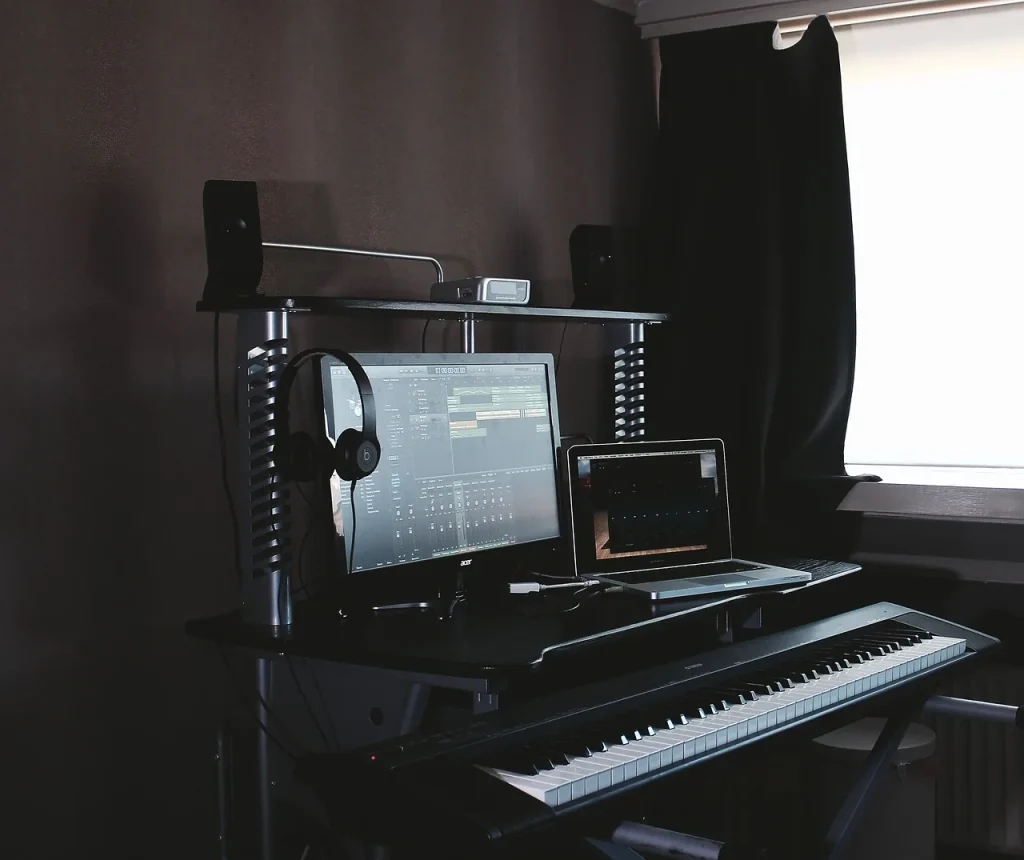
The computer is now at the heart of the modern studio, from composition to mixing.
Computer music production means composing, arranging and recording with sequencers, plugins and virtual instruments. The computer becomes the central interface for controlling samples, effects and production software.
In practice, it lets you create demos, organize sessions in a digital audio workstation, record tracks and apply basic processing before exporting. These skills help you get started in a studio.
Career opportunities: audio assistant, beatmaker, producer, sound editor, mixing technician or content creator. Jobs can be found in studios, audiovisual production and live entertainment.
The production process covers composition, recording, mixing and finishing for different listening formats. Contemporary music increasingly blends genres, so musicians need a broad range of technical skills.
A training center or structured computer music production course provides an essential framework: measurable goals, regular feedback and a network for testing your productions in real-world settings.
Define your goal: music producer or audio engineer
Before choosing a path, decide whether you want to lead a music project or master audio technology.
Producer / beatmaker
Role: create melodies, develop arrangements and build a distinctive sound through sound design.
The producer focuses on composition and production. They shape the groove and identity of a track.
Audio engineer
Role: capture high-quality audio, manage microphones and acoustics, then finish the sound through mixing and mastering.
The engineer ensures that recordings meet technical standards and sound right for professional listening.
- Shared skills: basic recording and mixing knowledge is useful in both professions.
- Specializations: producers explore composition and arrangement in greater depth; engineers focus on acoustics and mastering.
- Self-assessment: identify whether your strength lies in creativity or technology to help choose your course.

| Criterion | Producer | Engineer | Recommended path |
|---|---|---|---|
| Focus | Composition, arrangement, identity | Recording, mixing, mastering | Practical modules and real projects |
| Key skills | Harmony, groove, software, sound design | Recording techniques, acoustics, processing, mastering | Computer music production classes and studio workshops |
| Career goal | Produce tracks and music | Post-production, live sound, professional studio work | A training center suited to your level |
Afpa and computer music production: What training options are available?
From weekend modules to year-long programs, each format targets a specific skill.
Overview of formats: options include individual classes, intensive courses lasting a few weeks, programs lasting several months and longer courses spanning several years.
Specific examples can help you choose: Gobelins offers 30 hours over five days (Pro Tools and Ableton Live). Studio Capitale charges €190 for ten classes, while Formation MAO Paris offers two-hour sessions for €60.
In Marseille, AGESCA offers courses of 35 hours per week. CFPM offers a program that may be funded through the CPF: nine months per year for one to three years (prerequisite: three years of practice).
Alternatives and eligible training centers
Universities (such as the Ableton workshop at Paris-Saclay), technical schools, regional centers and teaching studios provide other options. Compare the number of teaching hours, the balance of practical and theoretical work, and access to a training center’s technical facilities.
- Who these courses are for: people seeking a fast introduction, a skills refresher, specialization in a particular program or professional training.
- Common admission criteria: musical ability, application materials, motivation and the basic equipment needed for independent work.
Key skills for successful computer music production training: From computer to studio
Key skills range from setting up a digital audio workstation to producing a final mix that works across different playback systems.
Software and virtual instruments
Mastering a digital audio workstation means managing its setup, tracks, routing and auxiliary channels. Keyboard shortcuts speed up production and mixing.
Training covers Ableton Live, Pro Tools, Logic Pro and VSTs, including synthesis, orchestral libraries and drum machines.

Creation and composition
Music creation covers harmony, rhythm, groove and arrangement. The goal is to produce usable demos at a training center or in a studio.
Recording, audio mixing and mastering
Recording requires preparing the session, choosing microphones and setting input levels. Mixing addresses tonal balance, dynamics, stereo placement and effects (equalization, compression and reverb).
Mastering standardizes levels, manages perceived loudness and checks how the result sounds on headphones, speakers and consumer playback systems.
“Effective training turns tools into habits and ideas into productions ready to be heard.”
| Skill | Goal | Recommended equipment |
|---|---|---|
| Digital audio workstation | Efficient workflow, routing, session templates | Computer and audio interface |
| Virtual instruments | Sound design, textures | VST plugins, MIDI keyboard |
| Recording & mixing | High-quality recording, clear mixes | Microphone, reference headphones, speakers |
| Mastering | Competitive deliverables | Loudness measurement, reference listening setup |
Compare training paths: Schools, short courses, coaching, online learning and self-study

Choosing a path means weighing the pace, cost and level of guidance that suit your project.
Established schools and training centers
Structured learning, immersion and networking.
SAE, Abbey Road Institute, Berklee and ICON Collective offer intensive programs. Fees generally range from €8,000 to €35,000, and the commitment lasts several months or years.
Short courses, workshops and coaching
Short courses cost between €200 and €4,000. They focus on practical work but are brief. Private coaching (€15 to €200 per hour) offers a personalized assessment that can help you overcome a specific difficulty.
Online courses and free resources
Online courses (€300 to €1,500) offer flexibility and good value if they include feedback on your productions.
YouTube remains a free way to learn software, but it often lacks a structured learning path and personalized feedback. Combine these resources to make steady progress.
| Path | Advantage | Drawback |
|---|---|---|
| Schools & centers | Immersion, networking, qualification | High cost, long duration |
| Short courses / workshops | Fast, focused practical learning | Limited duration |
| Coaching | Tailored support and feedback | High hourly cost |
| Online / YouTube | Flexibility, moderate cost | Variable quality, lack of follow-up |
“Base your choice on your goal: if you are aiming for a technical audio career, prioritize schools and short courses. If you want to become a producer, look for composition and sound design classes with creative feedback.”
Budget, funding and admission: CPF, AFDAS, Pôle emploi and required skill levels
Training costs vary enormously: from a few dozen euros for a single class to tens of thousands of euros for a complete program. Schools often charge €8,000 to €35,000, short courses €200 to €4,000, coaching €15 to €200 per hour, and online courses €300 to €1,500.

Indicative costs and examples
Specific examples: €190 for ten classes (Studio Capitale), €60 for two hours (Formation MAO Paris), and 35 hours in one week (AGESCA). CFPM offers a program lasting nine months per year for one to three years. It may be funded through the CPF if you meet the entry requirements.
Funding and entry requirements
Main funding options: the CPF for employees and self-employed workers, AFDAS for intermittent entertainment workers, and Pôle emploi assistance depending on your status. Agreements with a training center may cover some or all of the cost.
Entry requirements may include prior experience, an interview, technical tests or a professional portfolio. Prepare a schedule covering several weeks, a detailed budget, a quote from the center and a clear career plan.
“Combine targeted modules with a structured program to make the most of your budget and learning time.”
Practical tip: compare teaching hours against price, the amount of instructor support and access to technical facilities. Contact providers to check CPF or AFDAS eligibility and ask about upcoming sessions.
Where to study: Paris, Marseille, Lyon, Strasbourg and beyond
Your city shapes the options available, from short workshops to year-long programs and intensive sessions. Choose a training center based on your preferred format and project goals.
Courses and centers: From home studios to professional studios
In Paris, consider AIMP for weekly classes, Gobelins for 30 intensive hours (Pro Tools, Ableton), Paris-Saclay University for Ableton workshops, and collectives such as Le 40e Rugissant. Studio Capitale offers class packages, while Formation MAO Paris offers short sessions.
In Marseille, consider AGESCA for intensive courses, CFPM if you are looking for a program that may be funded through the CPF, or studios that charge by the hour for recording and mixing.
Adapt your training to your city, equipment and goals
In Lyon, options range from Groove Center to individual lessons at home and courses supported by AFDAS or Pôle emploi. In and around Strasbourg, universities and local schools make the city a useful place for focused computer music production training days.
Check which equipment and software are available (Logic Pro, Ableton, Pro Tools). Taking a trial class lets you assess the teaching style and whether the equipment suits your home studio.
“Choose a center that offers tangible projects (EPs, live recordings) so you can turn what you learn into finished work.”
Conclusion
: a good balance of guided practice and regular assessments helps you progress faster. Aim for tangible projects, technical feedback and structured support to turn your efforts into results.
To summarize the process: define your goal (producer or audio engineer), choose a suitable format, work out your budget and funding options, then plan your learning over several weeks or months.
Success depends on guided practice: composition, audio mixing and recording should be developed through assessed exercises and workshops at a training center.
Take action: shortlist two or three courses, contact the providers, check the required skill level and set aside time to enroll. Computer music production opens up creative and career opportunities throughout France.