
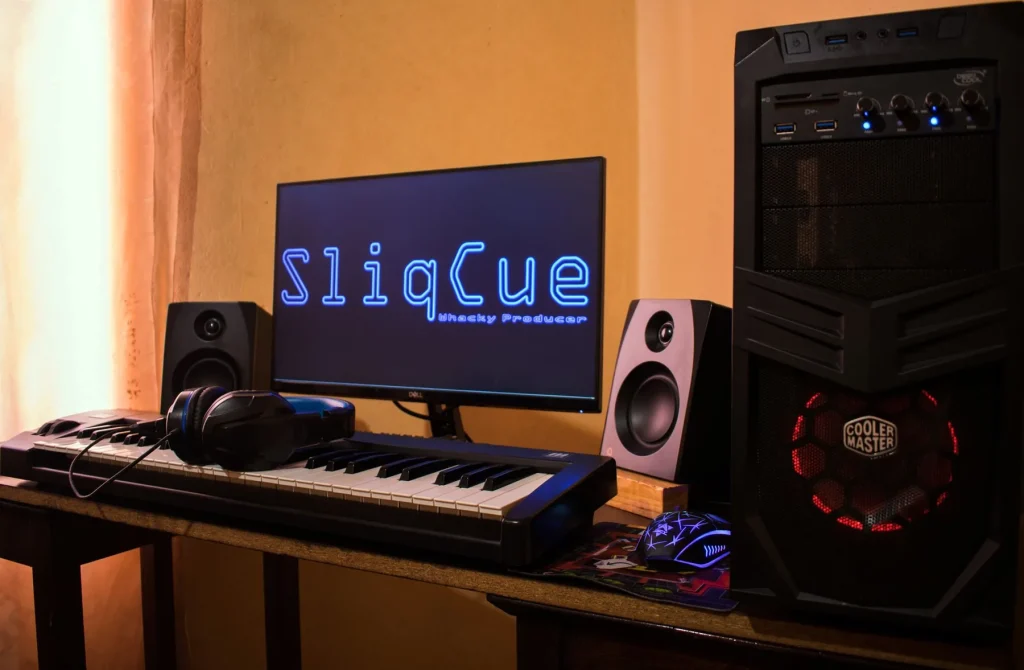
Computer music has radically transformed the process of contemporary composition, offering new creative possibilities through electronic music technologies and computer-assisted music. Composition software and sound synthesis tools have become indispensable to composers, allowing them to explore new sonic territory and create unique works.
Using computer music to calculate sonic structure and development
Through music programming and digital sound creation, computer music enables composers to calculate the structure and sonic development of their contemporary compositions precisely. This approach offers new ways to create unique and experimental musical works.
Music programming allows composers to manipulate musical elements, such as rhythms, harmonies and melodic patterns, with mathematical precision. Using specialized programming languages, composers can create complex algorithms that generate original compositions according to defined parameters.
Digital sound creation allows composers to design unique sounds and sonic textures with advanced sound synthesis software. They can modulate and manipulate each sound component to create innovative, immersive soundscapes. These technological tools allow composers to explore new creative approaches and experiment with new sounds.
Computer music allows composers to calculate the structure and sonic development of their compositions and preview them before performance. This gives them precise control over the final result and lets them refine their works. Composers can also vary parameters such as dynamics, spatialization and sound effects, creating complex, immersive compositions.
| Benefits of computer music for calculating sonic structure and development |
|---|
| Mathematical precision when manipulating musical elements |
| The ability to create complex algorithms that generate original compositions |
| The creation of innovative, immersive soundscapes through sound manipulation |
| Precise control over previewing and revising compositions |
The following quotation highlights the importance of computer music in the creative process:
“Computer music opens up new creative possibilities, allowing composers to move beyond the limits of traditional music and explore uncharted territory.” — Luc Rondeleux
In conclusion, computer music plays an essential role in calculating the structure and sonic development of contemporary compositions. Through music programming and digital sound creation, composers gain an unprecedented level of precision. These new music technologies offer countless possibilities for music creation, allowing composers to explore unknown territory and push the boundaries of sound art.
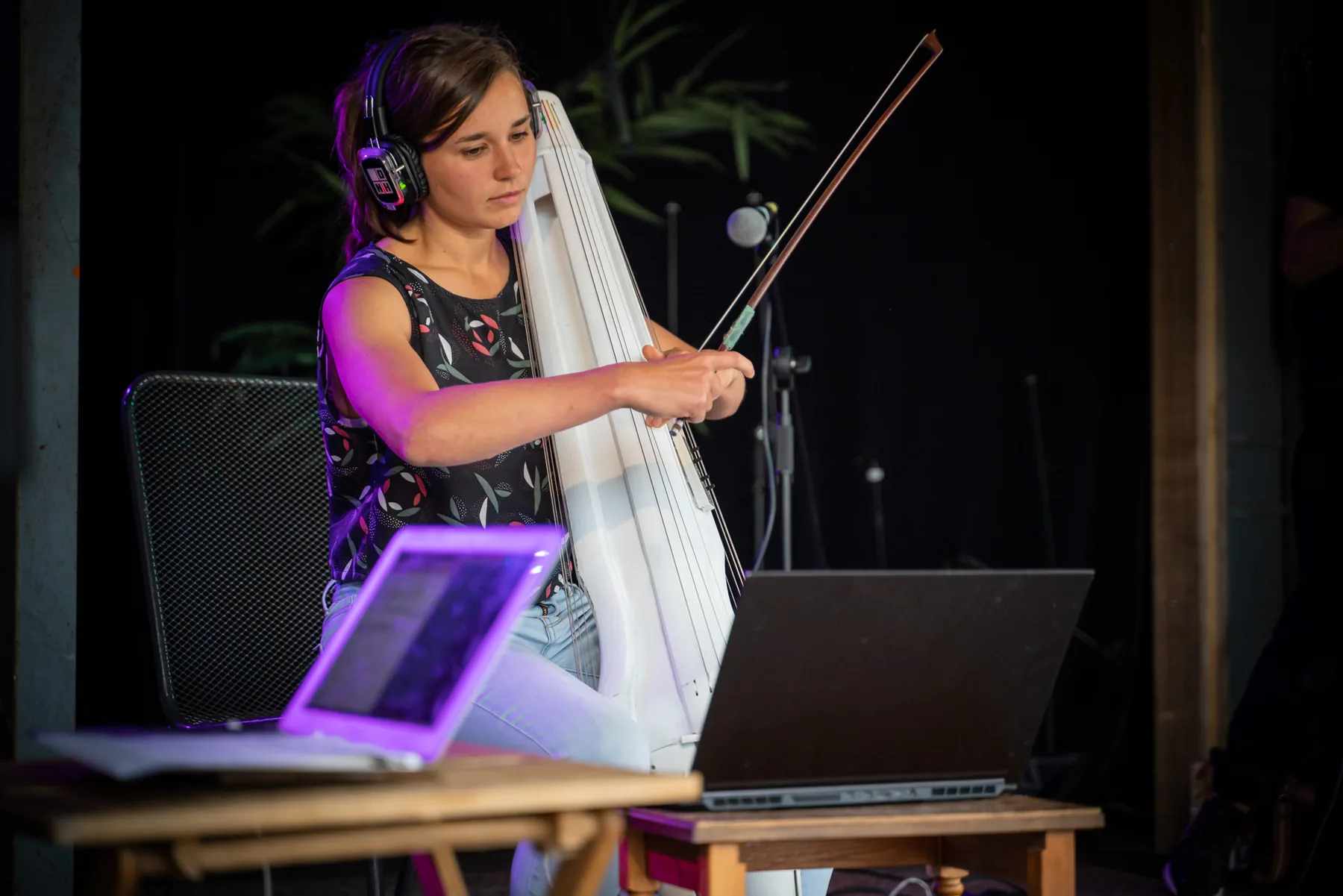
Computer music offers composers new aesthetic possibilities, particularly through sound design and electronic music technologies. Sound design involves precisely manipulating and shaping sounds to create unique, immersive soundscapes. Thanks to technological advances, composers can now experiment with a variety of sounds and textures, opening up new creative possibilities.
Electronic music technologies also play an essential role in exploring new musical aesthetics. Synthesizers, sequencers and production software allow composers to create original compositions by combining different sonic elements and manipulating their timbres and rhythms. These tools offer unprecedented creative flexibility and allow artists to push the boundaries of traditional music.
Sound design and electronic music technologies are also used in other artistic fields, such as film and video games. Composers can collaborate with directors and developers to create immersive, compelling soundtracks that enhance the visual experience. These collaborations connect different art forms and allow new aesthetic possibilities to be explored.
In conclusion, computer music offers composers new aesthetic possibilities through sound design and electronic music technologies. These tools make it possible to create original compositions, explore new sounds and textures, and collaborate with other artists to push the boundaries of music creation. This development opens up new creative possibilities and gives rise to innovative, exciting contemporary music.
References:
- Rondeleux, L. A history of computer music between macroform and microcomposition.
- Laliberté, M. Computer music: utopias and realities.
- Darmon, Theureau and Lemouton. Designing an augmented quartet: ergonomics and collaboration between composers and instrumentalists.
The impact of computer music on other fields
Computer music has a significant impact on other fields, such as acoustics and the psychology of perception, thanks to advances in music technologies. These advances extend the boundaries of music creation by making use of new possibilities offered by computing.
In acoustics, computer music makes it possible to explore and model the properties of sound more precisely. With specialized software, composers can manipulate and control the acoustic characteristics of sounds, opening up new creative possibilities. This technology also allows researchers in acoustics to study interactions between sound and the environment and to improve sound capture and reproduction technologies.
In the psychology of perception, computer music plays a key role in studying and understanding how people perceive and respond to music. Advanced technologies make it possible to conduct detailed experiments and analyses of the cognitive and emotional processes involved in listening to music. This research contributes to a better understanding of music’s impact on our brains and mental well-being.
Computer music therefore has an impact across disciplines: it offers new possibilities for artistic creation and the scientific understanding of music. Bringing together music technologies, acoustics and the psychology of perception enables new advances and discoveries, stimulating innovation and creativity in these interconnected fields.

| Field | Impact of computer music |
|---|---|
| Acoustics | Precise modeling of sound properties. |
| Psychology of perception | Detailed study of the cognitive and emotional processes involved in listening to music. |
“Technological advances in computer music open up new creative and scientific possibilities, stimulating innovation and research in fields such as acoustics and the psychology of perception.” — Luc Rondeleux
Future developments in computer music
- Integrating artificial intelligence into music composition.
- Developing motion capture technologies for musical performance.
- Exploring the possibilities of virtual and augmented reality in sound creation.
With these future projects and continuing technological advances, computer music will continue to evolve and transform how we perceive and experience music.
Collaboration among composers, instrumentalists and computer music researchers
Collaboration among composers, instrumentalists and computer music researchers is essential to contemporary music design processes. It encourages exchange and cooperation among the different participants. In a world where technology and art come together, bringing creative minds together is crucial to pushing the boundaries of music composition.
Composers contribute their expertise in composition and music design. They are the creative leaders who bring their musical ideas to life. Instrumentalists, meanwhile, have a thorough knowledge of instruments and their sonic possibilities. They bring their artistic sensitivity and skill to performing compositions.
Computer music researchers play a key role in this collaboration by contributing their technological expertise. They develop and adapt the computer tools used in music composition. Their knowledge of new technologies and specialized software helps open up new creative approaches and enrich the musical experience.
By working together, composers, instrumentalists and computer music researchers can create unique, innovative works. This collaboration makes it possible to explore new sonic possibilities, push the boundaries of composition and create an immersive musical experience for audiences. Through this interaction, contemporary music continually evolves and reinvents itself.
| Composers | Instrumentalists | Computer music researchers |
|---|---|---|
| Contribute their expertise in composition and music design | Have a thorough knowledge of instruments and their sonic possibilities | Develop and adapt the computer tools used in music composition |
| Serve as creative leaders who bring musical ideas to life | Bring their artistic sensitivity and skill to performing compositions | Use their technological expertise to open up new creative approaches |
| Collaborate to create unique, innovative musical works | Push the boundaries of composition and explore new sonic possibilities | Enrich the musical experience through new technologies |
Complete table
Collaboration in designing an augmented quartet
One concrete example of collaboration among composers, instrumentalists and computer music researchers is the design of an “augmented quartet.” In this project, composers work closely with instrumentalists and researchers to rethink how technology can enhance a traditional string quartet.
“The augmented quartet is an experiment in symbiosis between the virtuoso and the machine, in which motion sensors built into the instruments make it possible to control sonic aspects of the performance in real time.” — Darmon, Theureau and Lemouton
This collaboration makes it possible to explore new forms of musical expression by bringing technological possibilities into instrumental performance. With motion sensors in string instruments, instrumentalists can interact with the sounds their instruments produce in innovative ways.
This type of project demonstrates the importance of collaboration among composers, instrumentalists and computer music researchers. Combining their skills and knowledge makes it possible to push the boundaries of composition and create unique, compelling musical experiences.
Conclusion
In conclusion, computer music plays a major role in contemporary composition by transforming music itself and opening up new creative paths for composers today and in the future.
In an article titled “A History of Computer Music Between Macroform and Microcomposition,” Luc Rondeleux explores the role of computer music in music creation. He explains that computer music makes it possible to calculate the structure and sonic development of compositions, transforming music itself. The author also emphasizes that using computer music opens up new aesthetic possibilities and has an impact on other fields, such as acoustics and the psychology of perception.
In another article titled “Computer Music: Utopias and Realities,” Martin Laliberté explores the concept of music design and its role in contemporary composition. He highlights the importance of long-term creative cognition in music composition and the value of studying interactions among composers, computer music designers and other participants in the creative process. The author also emphasizes the role of future operators and users in designing musical installations and products.
Finally, in a third article titled “Designing an Augmented Quartet: Ergonomics and Collaboration Between Composers and Instrumentalists,” Darmon, Theureau and Lemouton explore collective design processes in music. They examine a project to design an “augmented quartet” that uses motion sensors in string instruments. The authors emphasize the importance of cooperation among composers, instrumentalists and computer music researchers in this process.
In summary, computer music plays a crucial role in contemporary composition by making it possible to calculate the structure and sonic development of compositions. It opens up new aesthetic possibilities and has an impact on other fields, such as acoustics and the psychology of perception. Collaboration among composers, instrumentalists and computer music researchers is essential to music design processes.