
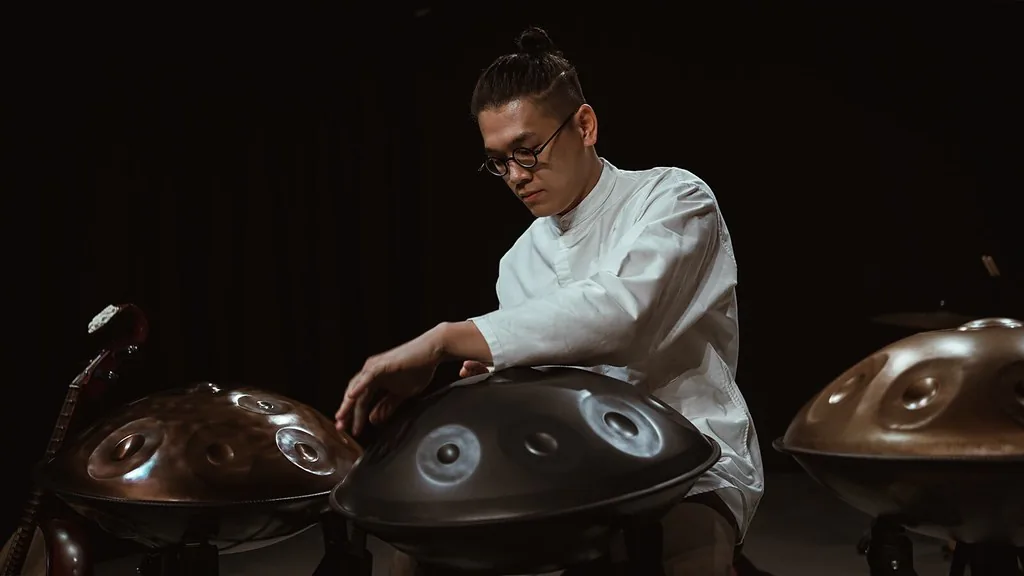
The handpan, a captivating instrument, offers far more than a musical experience. Its ethereal sounds resonate deeply and carry listeners toward a sense of inner peace. This sensory journey is the result of intricate craftsmanship and fascinating science.
In this article, we will explore why this unique instrument inspires so much passion. From the first notes to the enveloping harmonics, every sound invites meditation and relaxation. The handpan is also played intuitively, allowing anyone to create harmonious melodies without prior knowledge of music theory.
We will also look at the benefits associated with playing it, such as stress reduction and social connection. Created in Switzerland in 2000, this steel instrument continues to captivate musicians worldwide. Get ready to discover the mysteries of this unique sound experience.
Introduction to the handpan: a mysterious instrument with a captivating sound
With its mysterious appearance, the handpan is a musical instrument that inspires curiosity and wonder. This all-metal percussion instrument belongs to the idiophone family. Its distinctive shape resembles a flying saucer and immediately catches the eye.
Created in Switzerland in 2000 by PANArt, a company founded by Felix Rohner and Sabina Schärer, the instrument was first known as the Hang. That name is now protected, while the generic name handpan is used by many makers around the world.
Here are a few key points about this fascinating instrument:
- It is a percussion instrument with a captivating design.
- The handpan is played with the hands and requires no knowledge of music theory.
- Because of its origins, it is often compared with the steelpan of Trinidad and Tobago.
- It has become increasingly popular for relaxation and meditation.
- It offers an intuitive musical experience accessible to everyone.
With its rich history, the handpan has evolved from its roots in the Caribbean steelpan. In this article, we will take a closer look at its anatomy, how it works, and the magic of its sound.
Handpan anatomy: understanding its unique structure
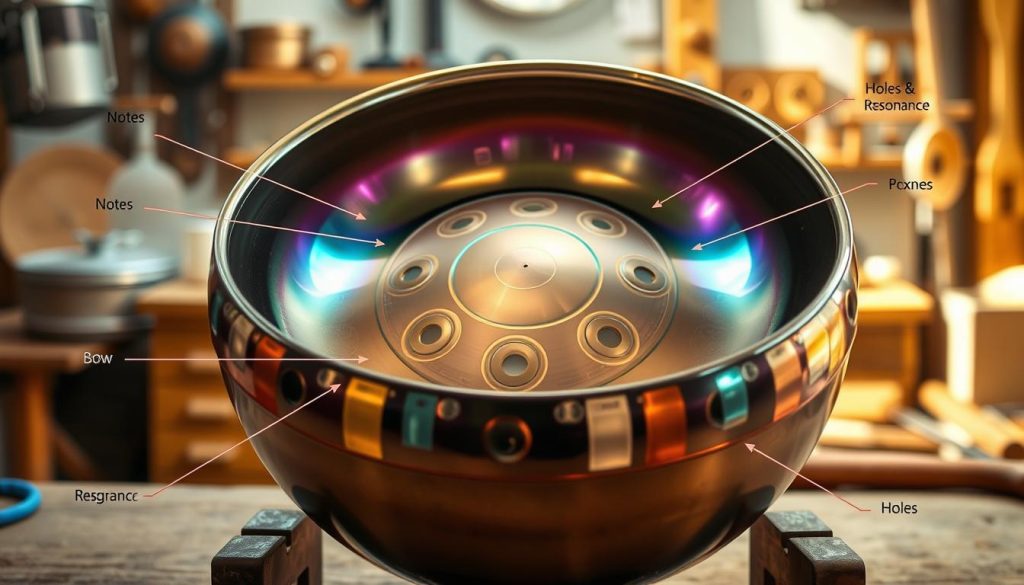
Exploring the handpan’s structure helps explain its appeal and how it works. This percussion instrument consists of two metal shells, usually made of nitrided steel or stainless steel. The shells are carefully joined to form an eye-catching lenticular shape.
The ding and tuned notes
At the center of the upper shell is the ding, the instrument’s lowest note. It may form a raised dome, called an apex ding, or a depression, called an inpex ding. A scale of notes surrounds the ding. Each note results from a precise combination of a tonefield and a dimple, carefully shaped by the maker.
Tonefields, dimples, and the shoulder
Tonefields are flat, oval or round surfaces surrounding the dimples. Musicians strike them with their fingers or hands to produce sounds. The dimple, a small depression at the center of each note, plays a crucial role in reducing unwanted frequencies and contributing to a more harmonious sound.
The shoulder is the flat area connecting the ding to the instrument’s untuned space between notes. It adds nuance to playing and allows musicians to explore different percussion techniques.
The lower shell and gü: a resonating chamber
The handpan’s lower shell contains the gü, an opening opposite the ding. This opening allows vibrations to escape, enhancing resonance. It also helps with the instrument’s final tuning, which is essential to an optimal sound experience.
| Element | Description |
|---|---|
| Ding | The central and lowest note, shaped as a dome or depression. |
| Tonefield | A flat area around a dimple that the musician strikes. |
| Dimple | A small depression that reduces unwanted frequencies. |
| Shoulder | The flat area between the ding and the untuned area. |
| Gü | An opening in the lower shell that acts as part of the resonating chamber. |
Handpan music: why sound physics makes its tones so captivating
Complex science lies behind the beauty of this instrument’s sound. Physics plays an essential role in how vibrations travel and resonate. When struck, each note creates a wave that passes through the metal and produces an enchanting sound.
Resonance and the propagation of vibrations
The handpan uses the principle of a Helmholtz resonator. This phenomenon amplifies the vibrations created when its steel surfaces are struck. As the musician plays, vibrations travel through the shell, influenced by its lenticular shape and the tension of the material.
The essential role of steel and its thickness
Sound quality depends heavily on the material used. Stainless steel, for example, produces bright, clear sounds. Nitrided steel, by contrast, offers warmer, richer tones. Steel thickness is also crucial. Shells measuring 1.0 to 1.2 mm thick offer the best balance between structural integrity and tonal quality.
Harmonic structure and richness
Each handpan note produces a fundamental pitch and several harmonics at the same time, creating a rich, complex sound. Larger note areas produce lower tones, while smaller ones produce higher tones. This relationship between note size and pitch contributes to the immersive experience the instrument offers.
The physics of sound, through resonance and the properties of steel, helps explain why this instrument is so captivating. Its vibrations create an enveloping atmosphere suited to meditation and relaxation.
| Element | Description |
|---|---|
| Helmholtz resonator | Amplifies vibrations created by striking the instrument. |
| Stainless steel | Produces bright, clear sounds. |
| Nitrided steel | Offers warmer, richer tones. |
| Shell thickness | Between 1.0 and 1.2 mm for optimal quality. |
| Harmonics | Each note produces a fundamental pitch and harmonics. |
Handpan craftsmanship: combining science and skill to create sound
Handpan craftsmanship brings science and creativity together. Every stage of production, from shaping to tuning, is essential to achieving a quality sound. Passionate makers use precise techniques to bring this unique instrument to life.
Shaping and forming the shells
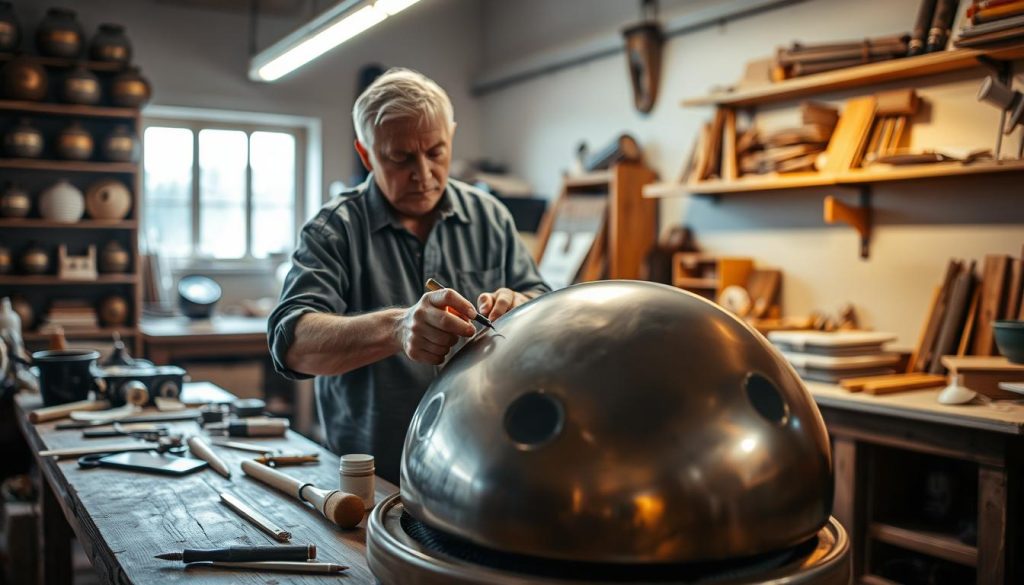
Shaping the steel shells is a meticulous process. Makers use a range of methods, from traditional hand hammering to pneumatic hammers and mechanical presses. The goal is to create a perfectly symmetrical bowl, which is crucial to optimizing its acoustic properties.
Precise tuning and meticulous work on the notes
Tuning a handpan is delicate work. Hundreds of hammer blows may be needed to adjust the curvature of each note field. This repeated process calls for a careful ear and a thorough understanding of vibration physics. Every detail matters in achieving the desired pitch and harmonic structure.
Heat treatments for tonal quality
Heat treatments play a key role in the instrument’s tonal quality. Controlled heating and cooling of nitrided steel or stainless steel help ensure durability and resonance. These steps allow makers to shape the timbre and provide an optimal sound experience.
Creating a handpan is therefore a complex process that requires exceptional craftsmanship. Each instrument is the result of dedicated work, often taking many hours and making every piece unique.
The emotional and neurological impact of handpan sounds
Every sound this instrument produces invites emotional and spiritual exploration. The impact of its vibrations goes well beyond listening alone. Rich, layered harmonics captivate listeners and create an immersive experience.
The hypnotic effect of harmonics and musical scales
Scales used on the handpan, such as the minor pentatonic and Dorian mode, convey feelings of calm and introspection. Their gentle, sustained tones encourage a deep emotional connection.
Psychoacoustics: how sound influences the brain
Psychoacoustics, the study of how sound is perceived, helps explain the appeal of handpan sounds. When listening to these tones, the brain releases dopamine and serotonin, neurotransmitters associated with joy and well-being.
Encouraging relaxation and activating the parasympathetic system
Musical loops played on the handpan help slow the heart rate and create a feeling of inner peace. Calm playing at 50 to 70 BPM encourages relaxed breathing and activates the parasympathetic nervous system.
Rhythmic patterns may also influence brainwave activity, encouraging the brain to enter a theta state associated with deep relaxation and meditation.
Together, these elements make regular handpan playing a valuable way to manage stress and support everyday emotional well-being.
| Element | Description |
|---|---|
| Harmonics | Create an immersive, hypnotic listening experience. |
| Minor pentatonic scale | Conveys feelings of calm and introspection. |
| Dopamine and serotonin | Neurotransmitters released and associated with joy. |
| Tempo of 50 to 70 BPM | Encourages relaxation and activates the parasympathetic system. |
| Theta state | A brain state associated with deep meditation. |

Playing the handpan: techniques, learning, and musical experience
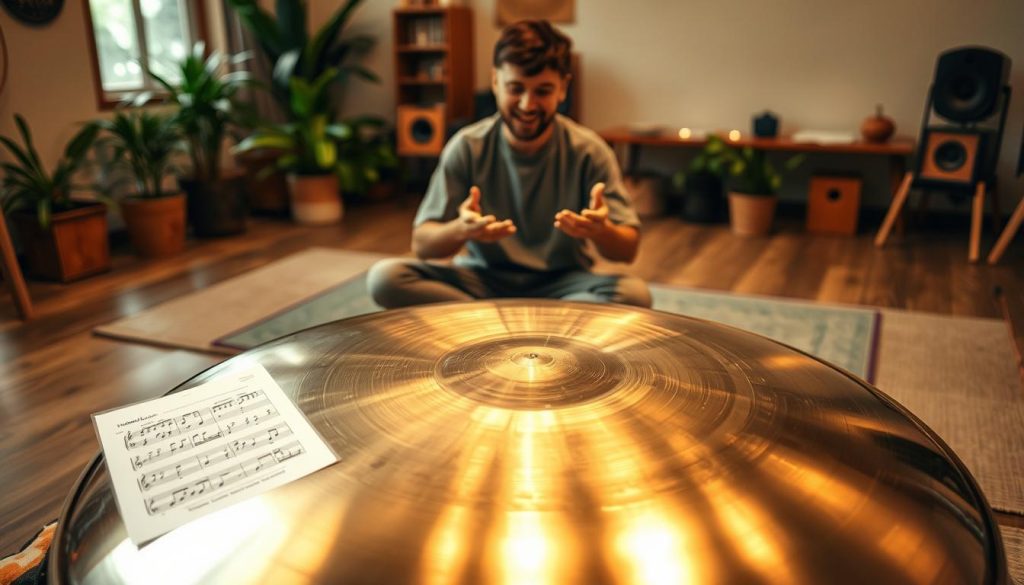
Playing the handpan is a unique experience, both tactile and intimate. Musicians strike the note fields with their hands and fingers to produce a variety of sounds and nuances. The instrument responds to gentle strikes, allowing considerable musical expression.
The notes are arranged in a circle, making this instrument accessible to beginners. This layout makes it possible to improvise immediately, without prior knowledge of music theory. Its ease of use and rich tones make it an ideal tool for musical exploration.
Intuitive playing techniques and tactile response
Handpan playing techniques are intuitive. Each note can be struck precisely to produce a wide range of sounds. The instrument’s tactile response is exceptional and supports nuanced expression, from pianissimo to mezzo-forte.
Improvisation and progress without prior knowledge
The handpan encourages improvisation. Musicians can create simple patterns in a setting suited to creative exploration. The experience of musical flow is rewarding and lets anyone follow the melody wherever it leads.
Popular scales and arrangements
Scales such as D Kurd, Celtic Minor, and Hijaz are particularly popular. They create distinct moods and make it easier to compose harmonious melodies. Artists such as Kabeção, Yatao, Sam Maher, and David Charrier inspire many musicians with their captivating performances.
For learning, tablature charts and simple structures are very useful. They help strengthen technique and rhythm. Beginners are advised to practice in short five-minute sessions, play at 60 to 70 BPM with a metronome, and give the two hands separate roles to develop their independence.
The handpan is thus an instrument that allows anyone to express themselves musically through improvisation or structured learning. Its accessibility and rich sound make it an ideal choice for music lovers.
The handpan’s popularity and evolution: from Switzerland to the world
The handpan’s history is one of continual evolution, reflecting its impact on the world of music. The instrument emerged in 2000 under the name Hang, thanks to Felix Rohner and Sabina Schärer, founders of PANArt. Inspired by the Caribbean steelpan, they spent years experimenting with and refining their creation.
Origins with Felix Rohner and Sabina Schärer
The story of these two makers is fascinating. Their quest to create an instrument capable of producing soothing sounds led to the birth of the handpan. It quickly attracted the attention of musicians around the world and became a symbol of creativity and innovation.
Global reach and the contemporary French scene
Since its beginnings in Switzerland, the handpan has spread impressively around the world. Hundreds of makers and craftspeople have emerged, each adding a personal touch to the instrument. In France, the contemporary scene is particularly active, with many musicians and handpan festivals contributing to its growing popularity.
Today’s makers and innovations
The handpan market is thriving. Well-known makers such as Ayasa Instruments and Yishama stand out for the quality of their creations. Festivals such as GRIASDI in Austria and Hona in Germany also bring the community together and encourage musical innovation.
Current innovations, including new materials and precise tuning techniques, are expanding the instruments’ sound possibilities. Brands such as Meinl Sonic Energy also help beginners enter this musical world, making the handpan more accessible than ever.
Handpan benefits for mental health, meditation, and relaxation
The handpan can be a valuable tool for mental health. Its use in sound therapy has shown that it can reduce stress and anxiety. The frequencies this instrument produces soothe the nervous system and create a space for relaxation.
The handpan’s rich, enveloping harmonics resonate with the body’s natural frequencies. This supports physical healing as well as emotional balance. In yoga studios, particularly during yin yoga and restorative yoga sessions, the instrument supports breathing and helps participants maintain suitable postures.
Sound therapy and its effects on stress
Sound therapy using the handpan allows people to explore states of deep relaxation. Sessions of 5 to 10 minutes can be enough to quiet internal noise and cultivate mindfulness. They can turn stressful moments into opportunities to regain a sense of calm.
Uses in music therapy and yoga
In music therapy, qualified professionals use the handpan to support patients in rehabilitation. Its use does not replace a medical diagnosis, but it is often coordinated with therapists to provide appropriate support.
The instrument also fits naturally into yoga practice. It enriches the experience by creating an atmosphere suited to meditation and relaxation.
Everyday practices for well-being
To enjoy the handpan’s calming effects, try adopting simple daily practices. Short meditation sessions with the instrument can change your routine and help you find moments of connection with yourself.
By making the handpan part of your daily life, you can create morning or evening rituals. These moments support mental and physical well-being and bring a sense of serenity to your day.
To learn more about healing frequencies and their relationship to well-being through sound, read the article here.
Choosing and caring for a handpan: practical advice for beginners and enthusiasts
Choosing a handpan is an important step for any musician, whether a beginner or an enthusiast. Several factors should be considered to ensure a rewarding musical experience. Here is a guide to help you make the best choice.
Key criteria: material, scale, and craftsmanship
When choosing an instrument, consider its material, scale, and build quality. Nitrided steel is often preferred for its rich, warm sounds, while stainless steel produces brighter tones. Craftsmanship matters just as much: look for instruments made by reputable makers who provide durability and precision.
Musical scales such as D Kurd, Celtic Minor, and Hijaz strongly influence playing style. Choose a scale that suits your musical tastes and inspires you. You can then explore different sounds and develop your playing.
Recommendations on makers and sellers
There are many handpan makers, but their instruments vary in quality. Seek out reputable makers and reliable sellers. Be wary of offers that seem too good to be true, as they may conceal poor-quality instruments. Look for makers who pay close attention to tuning and finishing, since these directly affect sound quality.
To make an informed choice, examine instruments and make sure they are properly tuned. Good harmony and a rich timbre are signs of quality. You can consult sites such as Shellopan for advice about makers.
Caring for and transporting the instrument
Caring for your handpan is essential to preserving its acoustic quality. After each use, wipe it with a microfiber cloth. Regularly apply a thin layer of protective oil, such as Phoenix Oil or Froglube, to prevent corrosion.
For transport, use a well-fitting case. Backpacks distribute the weight, while a hard case protects the instrument from impacts. Avoid direct exposure to sun, rain, and temperature changes, which can affect its tuning.
Choosing a handpan is a long-term investment. Caring for it helps ensure its longevity and preserve its exceptional acoustic qualities.
| Criterion | Description |
|---|---|
| Material | Nitrided steel for warm sounds; stainless steel for bright sounds. |
| Scale | Choose a scale that suits your musical style. |
| Craftsmanship | Choose reputable makers for quality and durability. |
| Care | Wipe the instrument after each use and apply protective oil. |
| Transport | Use a well-fitting case to prevent impacts and damage. |
The handpan community: sharing, meeting, and connecting through music
The handpan community brings together people from many backgrounds, from yoga teachers to street musicians. All share a passion for this fascinating instrument.
Gatherings and handpan improvisation sessions offer special moments. Musicians sit in a circle and improvise together. These sessions create unique collaborative soundscapes where everyone can express their creativity.
Festivals such as GRIASDI in Austria and the HONA gathering in Germany bring the global community together. These events strengthen connections among enthusiasts and offer opportunities to discover new talent.
Learning together is a fundamental part of this community. Peer feedback and sharing musical patterns boost motivation. A shared sense of rhythm helps musicians persevere.
As a social instrument, the handpan brings people together. Music becomes a universal language that crosses cultural and linguistic barriers, allowing participants to form deep connections.
When performing in public spaces, it is important to adjust the volume and obtain any necessary permits. Respecting the surroundings is essential to sharing music responsibly.
Finally, passing on knowledge and techniques within the community keeps this spirit of sharing alive. It is an integral part of the handpan experience and enriches everyone’s playing.
Conclusion: the handpan’s magic of science, emotion, and expression
The handpan offers a sound journey that touches both heart and mind. This exceptional instrument combines art, science, and emotion to create a unique experience. Every note reflects careful work and precise tuning, revealing the makers’ passion.
As they play and listen, musicians and audiences are transported into a world of harmony and beauty. The instrument’s power extends beyond music: it inspires, heals, and creates deep connections between people. It opens the door to a rewarding practice.
Whether you are a beginner or an experienced musician, exploring the handpan will reveal why its sounds are so fascinating. Choosing a quality instrument from a reputable maker is essential to fully enjoying the experience. The instrument’s future looks promising, thanks to continuing innovation and the growing passion of musicians worldwide.