
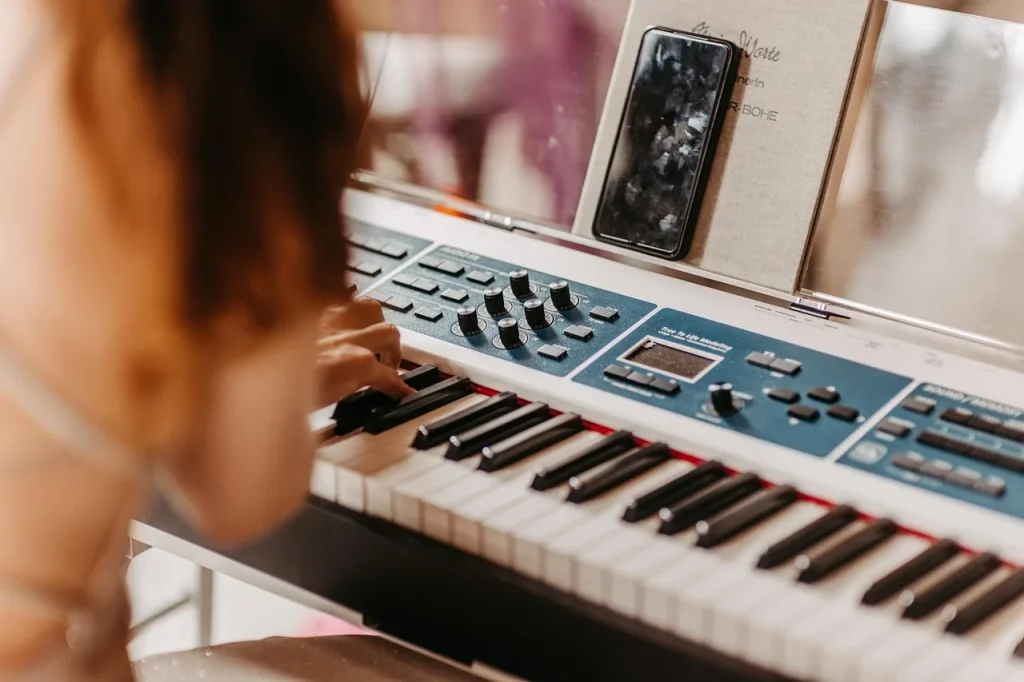
Quick overview: this article introduces local options for learning computer music production. It explains who these courses are for and how to choose one based on your needs.
Muzikadem, a nonprofit music school founded in 2008, has modern facilities, sound equipment, performance spaces and recording facilities. The organization has nearly 1,000 members and more than 370 students.
For personalized lessons, Apprentus makes it easy to contact verified teachers. You can filter profiles and book an appointment quickly.
Common goals include learning the basics of music software, structuring a track, becoming more independent and enjoying making music.
What this guide covers: local options, techniques, course formats, prices and enrollment. To learn about introductory music classes for children, see this page: introductory music classes for children.
Why choose computer music workshops in Villefranche-sur-Saône?
Local music production classes provide a practical setting for turning ideas into finished projects. Nearby lessons are easier to fit into your schedule and support steady progress. A local instructor cuts down on travel time and helps you choose the right tools from the start.
Personalized guidance: local providers offer courses tailored to each student’s level and needs. You can choose individual or group lessons at a school, at the teacher’s home or in your own home. Verified profiles and reviews help you select a reliable teacher.
- Various formats to fit lessons around your schedule.
- A practical approach to contemporary music: beatmaking, arrangement and production.
- Measurable goals and regular feedback to guide your work between sessions.
Local computer music workshops: schools, teachers and formats
Several local providers offer music production lessons for every level, from first steps to advanced projects. You can find lessons at a school, at a teacher’s home, in your own home and online.
Muzikadem: lessons for beginners and experienced students
Muzikadem offers individual and group computer music lessons in Villefranche and Pommiers. Sessions cover working with a computer, editing and recording.
Apprentus: private teachers and making contact
Apprentus is a platform for finding music and audio teachers. Use its filters to compare verified profiles, musical styles and budgets.
Making contact is free, and you can arrange an appointment quickly. Lessons can take place at the student’s home, at the teacher’s home or at a school.
Remote and online formats
Remote and online lessons offer flexibility when your schedule is busy. They allow for regular teaching support without travel.
You can combine formats: start online to make quick progress, then attend sessions at a school for hands-on work with equipment.
- At home: comfort and practice on your own computer.
- At a school: equipment and immediate support.
- Online: flexible hours and access to music teachers remotely.
Before booking, get in touch to explain your goals. A quick conversation can help you assess whether the teaching approach suits you and supports motivating progress.
Computer music workshops in Villefranche-sur-Saône: a practical guide
Every student has different goals: getting started, improving their skills or producing music.
Goals by level: getting started, improving and producing
Getting started: learn to use the software, explore its essential features and take your first steps toward creating music independently.
Improving: refine your workflow, develop your editing and mixing techniques, and organize coherent projects.
Producing: follow a session plan, set clear milestones and create a quality result ready for export.
What a typical lesson involves and the skills it develops
A lesson begins with an assessment of your needs and a discussion of your goals. Guided practice with focused exercises follows.
Each lesson includes a practice plan for the time between sessions and feedback on the work you have completed.
- Skills: critical listening, arrangement, track and effects management, automation and finishing touches.
- Progression: move from a simple project to a multitrack project, adding techniques gradually without overwhelming the learning process.
- Regular discussions to adjust the teaching approach and keep learning enjoyable.
| Goal | What you work on | Expected result |
|---|---|---|
| Getting started | Interface, basic recording, first loops | Ability to work independently on a simple track |
| Improving | Editing, basic mixing, project templates and shortcuts | Well-organized projects and efficient workflows |
| Producing | Complete arrangement, advanced mixing, professional export | A track ready to share |
Programs and techniques covered in computer music production
Courses combine technical learning with practical exercises to create real projects. Local classes include audio recording and editing in equipped rooms, while teachers found through Apprentus adapt the content to each student’s goals.

Software and tools
Getting started with Ableton Live: navigation, audio preferences, MIDI setup, and using Session and Arrangement views to organize a project.
Recording: choosing an interface, setting levels, monitoring audio and following good practices to capture clean takes.
Rhythm, composition and applied theory
Rhythm: programming drums, creating groove and adding a human feel to bring a rhythmic pattern to life.
Composition: building a track in sections (intro, verse, chorus, bridge) and finding ways to develop the arrangement.
Theory: keys, simple chords and bass lines to support the melody.
Music production and mixing
Music production: sound design, instrumental layers, creative automation, and managing delay and reverb.
Mixing: balance, equalization, compression, spatial placement and headroom before export.
“Using plugins thoughtfully improves computer stability and mix clarity.”
| Topic | Goals | Practical result |
|---|---|---|
| Ableton Live | Navigation, MIDI, Session and Arrangement views | An organized, exportable project |
| Recording | Interface, levels, monitoring | Clean takes ready for editing |
| Mixing & production | Sound design, equalization, compression | A balanced track ready to share |
Course options, prices and schedules in Villefranche
Muzikadem’s annual package combines regular individual instruction with group workshops. It alternates between week A, with a 45-minute individual lesson, and week B, with a 90-minute group workshop. The annual price is €725.
Mes premières notes offers a gradual start: 30 minutes for €615 per year or 45 minutes for €760 per year. Individual lessons run from September to February; from March, students alternate between lessons and workshops to develop listening skills and independence.
For group practice, the Groupe de musique module costs €415 per year for a 90-minute workshop every two weeks. Advanced options cost €525 per year for 45 minutes every two weeks, or €865 per year for 45 minutes each week.
| Option | Frequency | Annual price |
|---|---|---|
| Annual package (individual lesson + workshop) | Alternating weeks A and B | €725 |
| Mes premières notes | 30 or 45 minutes; workshops begin in March | €615 / €760 |
| Groupe de musique | 90 minutes every two weeks | €415 |
| Advanced | 45 minutes every two weeks | €525 |
| Advanced ++ | 45 minutes every week | €865 |
| Singing / piano and voice modules | Alternating individual and group lessons | €490 to €865, depending on age and format |
These options can suit students with different needs and learning rhythms. Talk to the team to choose the course and frequency that fit your artistic project.
How to find and compare computer music teachers
Comparing several profiles helps you find the support best suited to your goals. On Apprentus, use filters to sort teachers by level, budget and availability.
Use filters, verified profiles and reviews on Apprentus
Review verified profiles: qualifications, specializations and student feedback give you an idea of each teacher’s approach. Reviews can tell you about the consistency of students’ progress and their long-term satisfaction.
Practical criteria for choosing
- Musical styles taught and examples of completed work.
- Years of experience listed on the profile and open to verification.
- Teaching approach: ask for a plan showing how you would progress.
- Availability and formats: lessons at your home, at a school or online.
- Prices, compared against the content, frequency and training offered.
Contact several music teachers for free, ask your questions and arrange a trial session. A first lesson helps you assess whether you get along and whether the teacher meets your needs.
Who are these classes for? Children, teenagers, adults, musicians and beginners
There is an option for everyone, from young beginners to musicians looking to broaden their skills.
Apprentus offers tailored lessons for children, adults, beginners and professionals. Muzikadem welcomes beginners and experienced students and also offers introductory music classes for children aged 3 to 6.
Gradual goals make it easier to get started. Students benefit from simple exercises, ongoing support and regular feedback.
For experienced musicians, training focuses on incorporating production into an existing workflow. The emphasis is on export quality and making efficient use of practice time.
- Adaptation: pace, materials and feedback adjusted for age and level.
- Formats: individual and group lessons that encourage mutual support and inspiration.
- Results: greater independence, stronger creativity and real projects to share.
| Students | Goal | Suggested format |
|---|---|---|
| Children (ages 3 to 6) | Discovery and introduction to music | Short group workshop |
| Teenagers | Creative practice and a project | Individual and group sessions |
| Adults / students | Personal project and training | Flexible individual lessons |
| Musicians | Incorporate computer music production into their practice | Technical modules and guidance |
Equipment and studios: real working conditions
Working in an equipped space can quickly change the way you approach music production.
Equipped rooms: sound systems, instruments and performance space
Muzikadem provides rooms with sound systems and several instruments. These spaces are used for lessons, rehearsals and concerts.
Trying out combinations of sounds on site helps enrich arrangements. Access to a small stage lets you experiment with positioning and live dynamics.

Recording opportunities and preparing for the stage
The school offers recording opportunities in a controlled setting. Recording your tracks makes it easier to track your progress and build a portfolio.
Rehearsal rooms are useful for refining concert transitions and working on how musicians perform together. Lessons in a live setting improve your ability to handle stage monitoring and microphone placement.
Alternating studio sessions with practice at home can speed up learning. Attending student concerts lets you see the result of a course cycle and identify ways to improve.
- Get familiar with sound equipment and instruments.
- Document every session with notes, presets and exports.
- Use rehearsals to strengthen your stage presence.
Calendar, open days and enrollment in Villefranche-sur-Saône
Use the September events to visit the rooms, try the equipment and ask your questions.
Open days: Muzikadem holds enrollment sessions and tours on September 3, 6 and 10, from 10 a.m. to 7 p.m., in the town center. On Saturday, September 6, the team will also be at the community organizations fair in Pommiers from 9 a.m. to noon.
Plan your first appointment
Bring a project idea so you can get personalized advice from the first conversation.
Apprentus makes it easy to get in touch: start with a free conversation, then arrange your first appointment with the teacher to agree on a time and place. This lets you fit lessons around your pace and personal commitments.
- Plan ahead for the new school year to secure a place and start your training at the right time.
- Prepare questions about lesson content, the annual schedule and ongoing support.
- If possible, book a trial session to check whether the teaching approach suits you.
| Event | Date / time | Benefit |
|---|---|---|
| Muzikadem open days | Sept. 3, 6 and 10 • 10 a.m. – 7 p.m. | Tour, meet the team and enroll on site |
| Community organizations fair (Pommiers) | Sept. 6 • 9 a.m. – noon | Compare options and save time |
| First appointment (Apprentus) | Time and place to be arranged | Flexible scheduling around your commitments |
Guidance and coaching: individual lessons, group classes and workshops
Guidance in music production gives your sessions structure and helps you move more quickly toward a professional result.

Individual lessons: ideal for tackling a specific problem, overcoming a technical difficulty or checking a mix. This format allows you to progress quickly with personalized support.
Group sessions let you compare your ideas with other approaches. They develop your ear, stimulate creativity and provide varied feedback.
Apprentus offers tailored support, whether occasional or intensive. Muzikadem combines individual lessons and group sessions, with advanced modules and groups working on shared projects.
- Personalized work plan: clearly defined milestones and expected outcomes.
- Mixing advice and exercises: workflow, organization and focused technical tasks.
- Regular feedback: concrete improvements to tracks in progress.
Assess your course option after a few weeks and adjust the frequency. Weekly practice reinforces what you have learned and supports lasting progress.
Going further: music training and a bachelor’s degree in audio and music
Going further often means turning workshop experience into qualifications. A longer training program gives your development structure and can make it easier to enter the production and audio professions.
Degree programs: School of Audio Engineering (SAE)
SAE offers a bachelor’s degree in audio and music locally for the 2025–2026 academic year. This program cannot be funded through the French CPF training scheme.
Programs combine classroom teaching with practical experience in a company. This strengthens technical skills and professional conduct.
Choosing between production, live sound and audio for visual media
Specializations:
- Music & Live Sound (full-time study): stage and studio.
- Film, TV & Radio (work-study): postproduction and broadcasting.
- Audio for Animation (work-study): sound design for visual media.
Prepare in advance with focused workshops to strengthen your foundations. Check that your chosen specialization fits your artistic goals.
| Specialization | Format | Benefits |
|---|---|---|
| Music & Live Sound | Full-time study | Stage and studio skills; a portfolio |
| Film, TV & Radio | Work-study | Professional experience in postproduction |
| Audio for Animation | Work-study | Sound design and a workflow for visual media |
Tip: plan your budget, confirm how classroom study and company placements work, and use local lessons to turn your practice into a professional project.
Student reviews: enjoyment, teaching and results
Student feedback shows how these courses can affect confidence and creativity.
“Try it once and you’ll be hooked!” appears among reviews of computer music and drum lessons. Another review says: “A unique and rare school where you can make music from your very first notes.”
Comments emphasize an adaptable teaching approach. Teachers adjust goals to suit each student’s level and interests.
Students often mention the friendly atmosphere. They appreciate the personal setting, which helps them stay motivated.

Practical activities add to students’ satisfaction: recording, rehearsing on stage and completing projects give each lesson a clear purpose.
- Progress: from the first lesson to completing a track or a performance.
- Balance: technical discipline and the pleasure of playing help explain students’ enthusiasm.
- Tip: ask for examples of completed work or attend an event to form your own opinion.
| Aspect | What students say | Effect |
|---|---|---|
| Teaching | Adaptable, clear and encouraging | Quick progress and confidence |
| Atmosphere | Friendly and supportive | Lasting motivation |
| Practical experience | Performing, recording and projects | Tangible results after each lesson |
How to enroll: from first contact to first lesson
Before your first lesson, take time to list your expectations and tell the teacher about your current level.
Define your needs, set a time and confirm the booking
First contact: on Apprentus, you can contact the teacher for free to explain your goals, describe your level and discuss your constraints.
You then receive clear proposals covering content, price and available times. Confirm your chosen slot and prepare any requested equipment.
Check availability and location: at home, with the teacher or online
Confirm the location: your home for convenience, the teacher’s home or a school for equipment, or online to save time.
Before finalizing the booking, clarify cancellation and rescheduling terms to avoid complications later.
Preparation: list the topics you want to prioritize in your first sessions. Install the software and drivers, set up the interfaces and prepare a test project.
| Step | Action | Result |
|---|---|---|
| Make contact | Explain your needs and level | A suitable proposal |
| Schedule | Choose a time and location | First lesson confirmed |
| Prepare | Gather equipment and a list of priorities | Productive sessions |
| Follow up | Ask for a plan to track your progress | Regular assessment of progress |
Finally, complete your enrollment by providing the required administrative information and choosing a payment method. Students benefit from documenting their goals and achievements so they can make the most of feedback and training.
Conclusion
You can learn in a setting where equipment, verified teachers and flexible formats work together. Being nearby makes meetings, open days and trial sessions easier to attend. It makes learning more practical and motivating.
Options range from lessons at home to equipped schools and online support. Progress is tangible: learn to use software, complete a recording session and then create a track ready to share.
Keep your love of music growing with realistic goals and regular practice. To learn more, visit the facilities, talk with teachers and review verified profiles.
Ready to go further? Programs such as SAE’s bachelor’s degree are another option. Take the next step and schedule your first lesson.