
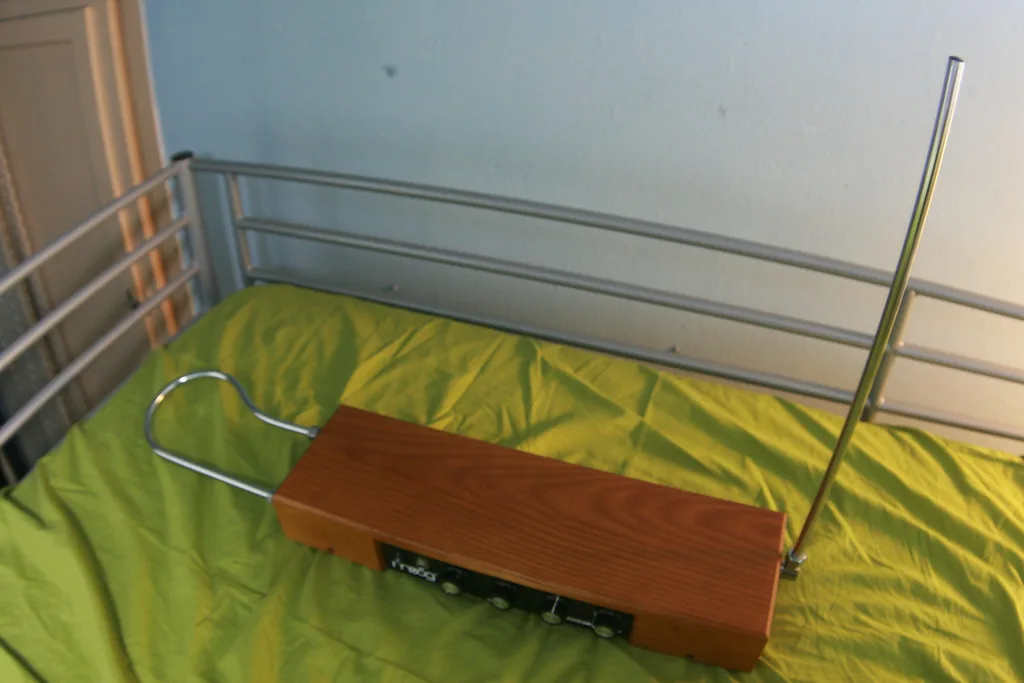
The theremin is one of the first electronic instruments. It was invented by Lev Sergeyevich Termen in the early 1920s. This instrument produces sound without being touched.
The musician controls pitch and volume by moving their hands through the air near its electromagnetic antennas. This way of playing brings technology and art together.
A patent for the theremin was filed in 1928. It describes how the instrument works using electromagnetic waves. This instrument helped shape modern electronic music.
It continues to inspire artists and composers around the world. To learn more about the evolution of electronic instruments, read this article about the evolution of musical instruments.
Introduction to the theremin
The theremin is a fascinating electronic instrument. Its unconventional playing technique captures the attention of musicians and audiences alike.
Unlike traditional instruments, it requires no physical contact. The musician moves their hands around two antennas to control pitch and volume without touching the instrument.
This unusual approach places the theremin at the heart of musical innovation. It creates a listening experience in which movement conveys emotion. Its sounds can evoke various instruments, including the violin, as well as the human voice.
The theremin remains a challenge for musicians. Clara Rockmore is one of the few performers to have mastered it exceptionally well. This electronic instrument is more than a curiosity; it represents a revolution in modern music. It offers a way to explore synesthesia and artistic expression that continues to captivate and inspire.
History of the theremin and its inventor
Leon Theremin, born Lev Sergeyevich Termen in St. Petersburg in 1896, played a key role in creating the electronic instrument that bears his name. His career began after the Russian Revolution, during a period of great change. In 1920, he presented the theremin, which captivated Lenin. This led to an order for 600 instruments for the USSR.
Leon Theremin’s life
Leon Theremin was always passionate about research and musical innovation. After presenting his invention, he became famous in Europe and the United States. He even opened a school in New York to teach people to play his instrument.
He also worked as a spy for the Soviet government. This double life reflects the complexity of his story.
Historical context and invention
The theremin’s creation was shaped by the turbulent historical context in which Leon Theremin lived. During the Russian Revolution, he sought to innovate. He used capacitive effects to create this unique instrument.
This invention brought technology and art together. It opened new paths for musical expression in the 21st century.
| Year | Key events |
|---|---|
| 1896 | Leon Theremin is born in St. Petersburg |
| 1920 | Invention of the theremin |
| 1922 | Lenin orders 600 instruments |
| 1929 | Launch of the first commercially available theremin |
| 1947 | Theremin develops a listening device for the KGB |
| 1991 | Theremin is invited to the United States for a documentary |
| 1993 | Leon Theremin dies in Moscow |
This instrument revolutionized music and left its mark on 20th-century art. The theremin continues to influence contemporary music.
Leon Theremin’s life, full of mystery and creativity, remains fascinating.
How the theremin works
The theremin is a unique electronic instrument. It works through electromagnetic waves. A heterodyne oscillator creates a distinctive electrical signal.
By moving their hands closer to the antennas, performers change the electromagnetic fields. They can then play notes at different pitches. It is an astonishing way to make sound without touching the instrument.
The principle of electromagnetic waves
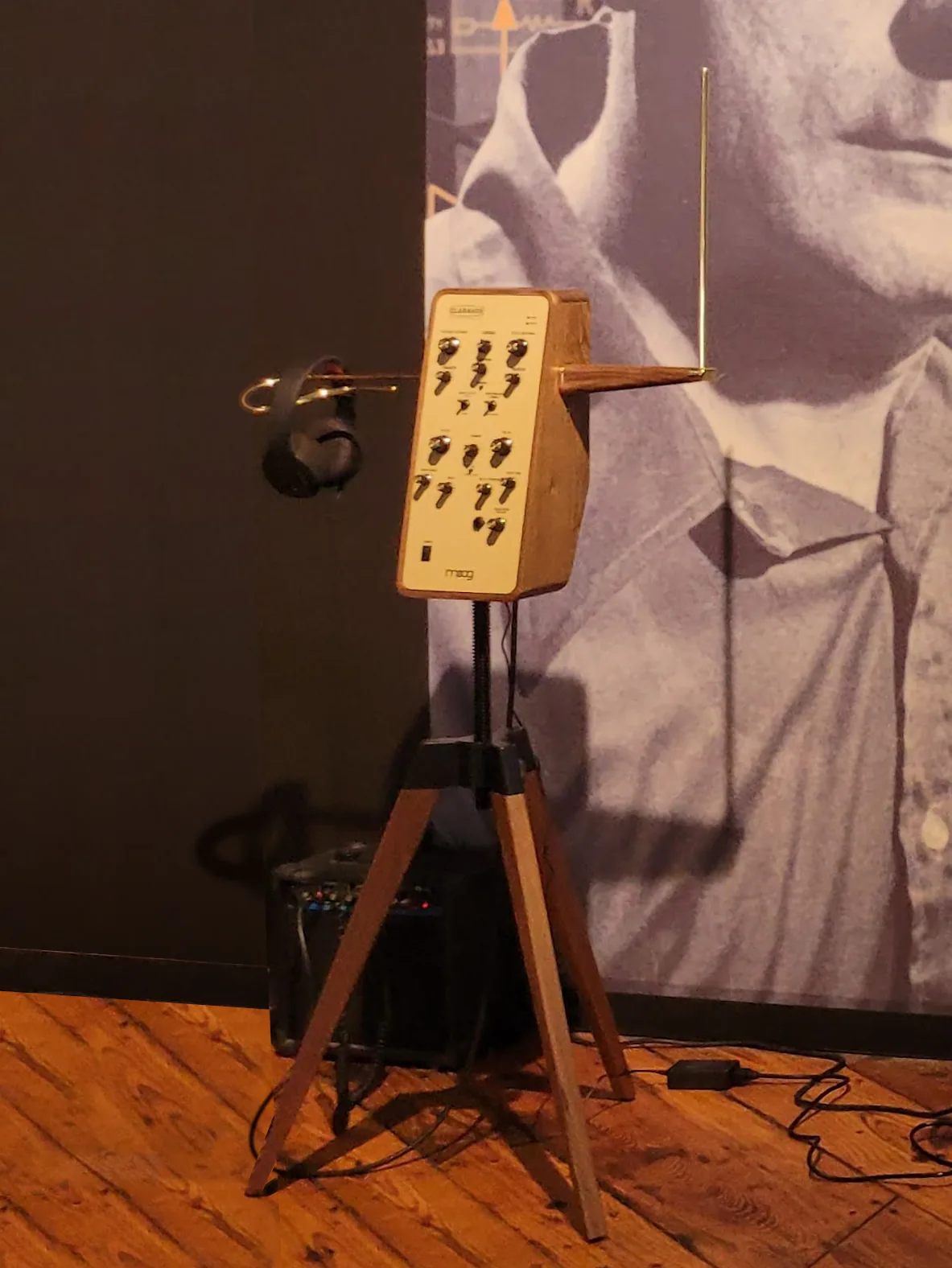
The theremin turns gestures into sound using electromagnetic waves. The performer changes pitch near the vertical antenna, while the horizontal antenna controls volume.
This interaction requires a thorough understanding of the theremin. Every movement matters when playing this instrument accurately.
Playing technique and gestural performance
The theremin’s playing technique is innovative. The performer must keep their body still and move only their arms. The result is a unique gestural performance.
Musicians develop their own styles. The instrument’s nuances make every performance captivating. The theremin thus opens new possibilities for musical expression.
| Characteristics | Details |
|---|---|
| Oscillator type | Heterodyne |
| Frequency range | Up to nine octaves |
| Use of the vertical antenna | Pitch control |
| Use of the horizontal antenna | Volume control |
Mastering the theremin is a major challenge, which helps explain its rarity in music. Each performance offers a chance to explore the instrument’s expressive range.
To learn more about how the theremin works, see this resource.
The theremin in electronic music
The theremin is one of the first electronic instruments. It greatly influenced contemporary music. Composers such as Edgar Varèse and Bohuslav Martinů used it, enriching classical and modern music.
The theremin’s sound moves many listeners. It inspires artists around the world. This instrument is a symbol of creativity and innovation.
Impact on contemporary music
Groups such as the Beach Boys and Led Zeppelin have used the theremin. This shows its appeal and its ability to fit different styles. In concert, its ethereal sounds evoke strong emotions.
Ensembles such as Contrechamps have celebrated the theremin and demonstrated its importance in contemporary music.
Use in film and popular culture
The theremin has also left its mark on cinema. In films such as “The Thing” and in the opening theme of “Star Trek,” it creates distinctive atmospheres that have captured the public imagination.
Today, the theremin continues to fascinate musicians and audiences. Its history spans nearly 100 years.
FAQ
What is a theremin?
How does the theremin work?
What is the theremin’s historical significance?
Who invented the theremin?
What role does the theremin play in contemporary music?
How is the theremin used in film?
What makes the theremin’s playing technique unique?
What genres of music use the theremin?
Source links
- https://www.hhi.fraunhofer.de/en/fraunhofer-hhi-the-institute/about-us/history-of-hhi/90-years-hhi/the-orchestra-of-the-future.html
- https://www.smithsonianmag.com/innovation/century-ago-this-eerie-sounding-instrument-ushered-in-electronic-music-180973126/
- https://en.wikipedia.org/wiki/Electronic_music
- https://www.thereminmuseum.org/howitworks