
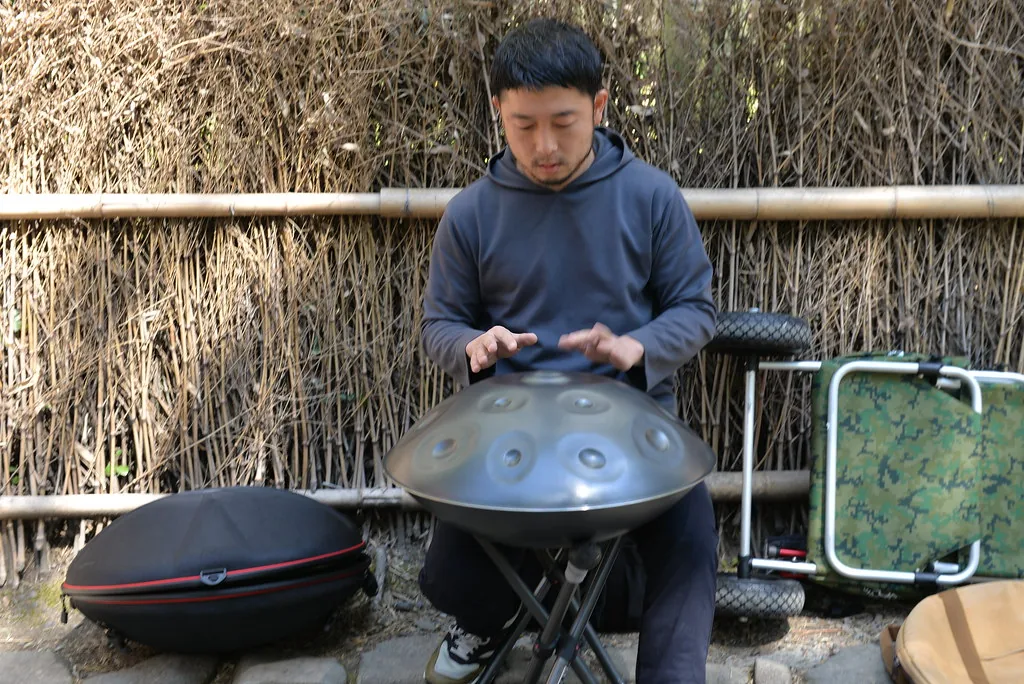
The handpan is a fascinating instrument that is attracting more and more enthusiasts. Emerging from the development of the Hang® in the early 2000s, it offers captivating, intuitive sounds. For a newcomer, choosing one can seem daunting. Between materials, scales and price differences, it is easy to feel lost.
This guide is designed to accompany every beginner on that journey. We will cover the essential factors without technical jargon. You will learn what a handpan really is, how to select a scale that suits you, how many notes to look for and which materials to consider.
The choice of scale is particularly important. Once you have bought the instrument, you cannot change its scale. Taking time to learn about your options is therefore crucial.
We invite you to read this article in order so you have the knowledge you need to make an informed purchase you will not regret.
What is a handpan? An introduction to the instrument and its distinctive features
The handpan is a melodic percussion instrument that has captivated musicians around the world. It originated in the early 2000s with the Hang®, developed by the Swiss company PANArt. The instrument has evolved over time, and today more than 300 makers offer their own versions.
Origins and history of the handpan
The Hang® was created by Felix Rohner and Sabina Schärer after years of research. Initially, it had between 8 and 9 notes. Its popularity grew rapidly, and it became a landmark in melodic percussion. Today, the handpan is known for its unique sound and its ability to create a calming atmosphere.
Structure, materials and note layout
The instrument’s structure is fascinating. It consists of two circular metal shells joined together. The upper shell has notes arranged in a circle around a central note called the Ding. The lower shell has an opening called the Gu, which helps project the sound.
The notes on the upper shell are not arranged chromatically as they are on a piano. They follow a zigzag pattern, making each handpan unique and tuned to a fixed scale. The main materials used, nitrided steel and stainless steel, affect the instrument’s tone, sustain and durability.
How the handpan differs from other melodic percussion instruments
It is important to distinguish the handpan from instruments such as steel tongue drums. Unlike those instruments, a handpan is shaped by hammering, giving it a richer tone and greater sensitivity to touch. It also produces softer, more enveloping sounds, often associated with meditation.
The term “hang drum” is often used, but handpan is the correct generic name. Hang® is a registered trademark, and the instrument should not be confused with a traditional drum. Its accessibility makes the handpan an excellent choice for people without musical training and allows anyone to explore their creativity.
Understanding the nature and distinctive features of the handpan is a crucial step before buying an instrument. To learn more, read this comprehensive article about handpans.
Handpan for beginners: how do you choose your first instrument?
Before buying a handpan, take time to think. Every choice you make will affect your musical experience. This is a decision that can shape how you practise and how much you enjoy playing.
Define your goals clearly before choosing. Do you want to use the instrument to relax at home, accompany yoga sessions or perhaps play in a group? Each purpose calls for different selection criteria.
Why a thoughtful choice matters
Choosing your first handpan is an important decision. Unlike some other instruments, its scale is fixed and cannot be changed after purchase. It is therefore best to resist an impulsive choice. A rushed purchase may lead to regret and the need to resell the instrument to buy one that suits you better.
Define your goals and intended uses before buying
Here are a few points to consider:
- If you want to play to relax, look for long sustain and a gentle scale.
- For yoga or sound therapy sessions, choose a stable tone and soothing harmonics.
- If you plan to play in a group, clear volume and a compatible tuning reference are essential.
- For creative exploration, choose an intuitive scale and a versatile format.
Your level of musical experience also matters. A beginner may prefer a scale that is easy to get to know, while an experienced musician may want to explore more complex scales.
Think about the musical style you want to explore, too. Melancholic sounds may lead you toward minor scales, while cheerful moods may be better served by major scales.
Remember that a handpan is a significant financial investment. Defining your goals beforehand can keep you from spending several hundred euros on an instrument that does not meet your expectations. Take time to write down what you want and need before continuing your search.

Understanding handpan scales: an essential consideration
A musical scale is an ordered sequence of musical notes, separated by specific intervals such as whole tones or semitones. For a handpan, the choice of notes is fundamental. Its metal shell can accommodate only around ten notes, compared with a piano’s 88. That choice determines all your future musical possibilities.
It is crucial to understand that the choice of scale is effectively irreversible. Once you have bought a handpan, its scale cannot be changed without completely retuning the instrument. This makes choosing carefully all the more important.
Types of scales available
Several types of scales are available for the handpan, including:
- Major scales: 7 notes with bright, cheerful sounds.
- Minor scales: 7 notes that create melancholic, introspective moods.
- Eastern scales: distinctive sounds evoking Asia or the Middle East.
- Pentatonic scales: 5 notes with a simpler sound, often chosen for their ease of use.
Recommended scales for beginners
Some scales are especially well suited to people starting their musical journey. The D Kurd scale, also known as Annaziska, is the most popular and most neutral of the minor scales. It allows fluid transitions between notes and makes it easier to create compositions.
Another appealing option is the Amara scale, or Celtic minor, which replaces the Bb3 note with a C5. This extends the range and offers useful versatility, particularly for styles from folk to jazz.
Other minor scales, such as Integral, Magic Voyage, Equinox and Pygmy, are also recommended. They are generally easier to get to know and let you produce beautiful sounds quickly.
How different scales feel emotionally
Every scale has its own sonic character. Minor scales encourage introspection and melancholy, while major scales suggest joy and brightness. Eastern scales can evoke distant, mysterious places.
Some Eastern scales, such as Hijaz and Akebono, are appealing but may confine your playing to very specific sounds. That can limit creativity over the long term.
To choose your scale, listen to plenty of demonstration videos online. They will help you discover which sounds move you and note the scales you like. Take time to refine your preferences before making a final choice.
Choosing the number of notes: balancing possibilities and sound quality
The number of notes you choose can transform your musical experience. Handpan descriptions most commonly use letter names for notes: A, B, C, D, E, F and G. Understanding this notation will help you read descriptions of scales.
There are two ways to count notes. Some makers include the Ding, the central note, in the total. Others use “X+1”, where X is the number of notes around the circle and “+1” is the central Ding. This can be confusing, so clarify the maker’s method.
Handpan note notation
The number of notes directly affects the instrument’s sound quality. The more notes there are, the more factors the maker must control. This raises the risk of tuning flaws, unwanted interaction between notes and uneven tone. The highest notes may also lack volume.
How note count affects quality, tuning and ease of playing
An instrument with too few notes can limit your harmonic possibilities. Your compositions may begin to feel repetitive, which can quickly become frustrating. Conversely, more notes offer a wider musical palette, enriching the playing experience and encouraging creativity.
A first-purchase recommendation: 8+1 to 9+1 notes
For a first purchase, a model with 8+1 or 9+1 notes is recommended. This offers an excellent balance between musical potential and sound quality. Many players and experts consider these options good value.
This recommendation has exceptions. Skilled makers can produce instruments with 10+1 notes or more without compromising quality. However, these models are often more expensive and can be harder for a newcomer to master.
In short, always clarify how the maker counts notes. Ask whether the stated number includes the Ding. Let your desire to explore music guide you, while looking for a quality instrument that is stable and enjoyable to play every day.
Handpan materials: nitrided steel, stainless steel and others
Material choice matters greatly for musical instruments. Two materials are particularly common in handpans: nitrided steel and stainless steel. Each has characteristics that affect the instrument’s tone, durability and price.
Characteristics and advantages of nitrided steel
Nitrided steel is valued for its clear, incisive tone. It feels responsive and percussive to play, making it ideal for musicians who enjoy rhythmic playing. Its notes have crisp articulation, allowing lively, engaging melodies.
Distinctive features of stainless steel
Stainless steel, by contrast, stands out for its long, enveloping sustain. Its gentle, stable sound suits meditative moods and relaxation sessions. It also naturally resists corrosion, making it a practical choice for anyone seeking a durable instrument that is easy to maintain.
Effects on sound, durability and price
The material directly affects a handpan’s price. Most makers use steel that is 1.0 mm thick, but some choose 1.2 mm steel, which offers a softer sound. This thicker steel is harder to hammer, however, and may increase the cost.
Nitrided steel handpans need regular care, including oiling to help prevent corrosion. Stainless steel requires less attention, which may be a deciding factor for a beginner.
In short, nitrided steel is an excellent choice if you want a more rhythmic, percussive playing style. For soothing sounds and easier maintenance, stainless steel is recommended. Both materials can make quality handpans; your final choice depends mainly on the sound you prefer and how you play.
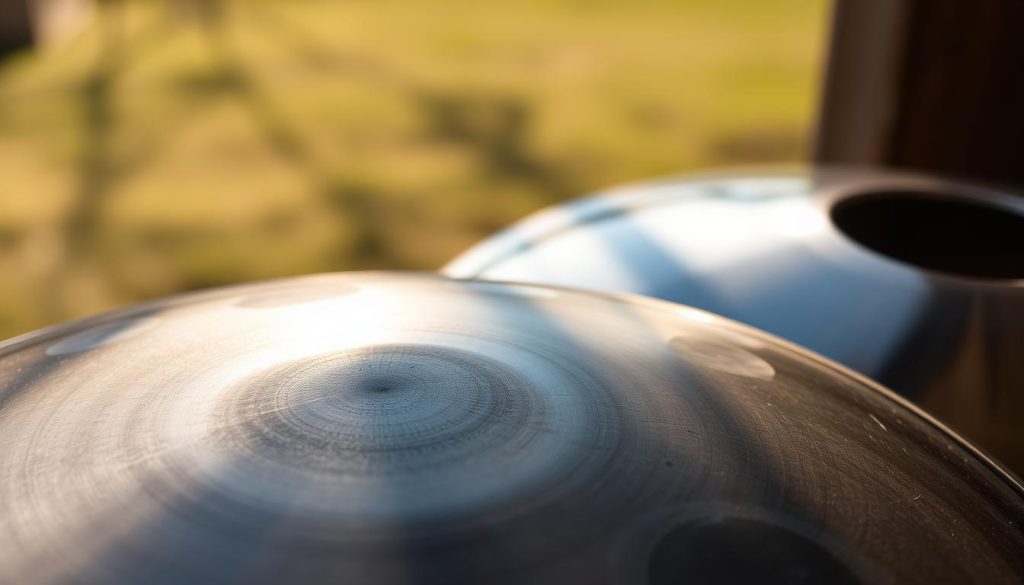
Tuning reference: 440 Hz versus 432 Hz
When choosing a handpan, the tuning reference is an essential consideration. The two main options are 440 Hz, the international standard, and 432 Hz, often treated as a more personal choice. Each has distinct implications.
Differences between 440 Hz and 432 Hz
The 440 Hz reference is widely used in music. It is the reference used by approximately 98% of handpan players. If you want to play with other musicians, it is therefore the more suitable choice.
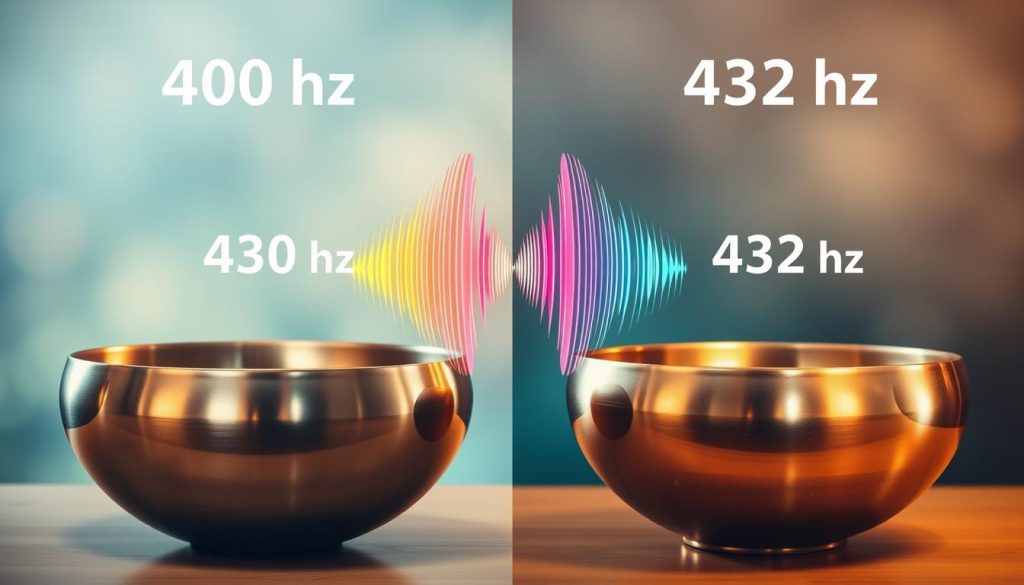
The 432 Hz reference is often perceived as softer and more relaxing. Some people claim it has calming effects, although these benefits have not been scientifically proven. A handpan tuned to 432 Hz has notes slightly lower in pitch than an instrument tuned to 440 Hz, which may affect your musical experience.
Compatibility with other musicians
Choosing an instrument tuned to 440 Hz makes it easier to play with other musicians. A handpan tuned to 432 Hz will not blend readily with instruments tuned to 440 Hz. That can limit your opportunities to make music with other players.
Choosing the right tuning reference for your needs
Beginners are generally advised to choose 440 Hz. It offers greater flexibility for group playing. If you plan a solo project focused on meditation or wellbeing, 432 Hz may appeal to you. Think about how you might use the instrument later: will you want to play with other musicians?
If you are unsure, 440 Hz remains the safest and most versatile choice for a handpan. Many experts and specialist shops share this recommendation. For more information about the differences between these tuning references, read this article here.
Handpan prices: budget, quality criteria and influencing factors
Buying a musical instrument calls for careful thought about your budget. A handpan’s price is not arbitrary. It reflects the time spent making it by hand, the technical difficulty of production and the quality of its materials.
Several factors affect the price. Note count matters: the more notes there are, the more complex tuning becomes. Low notes also require meticulous work. Tuning quality is essential, too. Precise tuning takes several passes and considerable expertise.
What affects the price: materials, note count and tuning
The maker’s reputation plays a major role. Established craftspeople invest in training, sound research and after-sales service. This helps ensure a certain level of quality.
Price ranges for a first instrument
For a first purchase, it is advisable to choose a quality model. Indicative price ranges are:
- €900 to €1,400 for a good entry-level instrument.
- €1,400 to €2,000 for a mid-range handcrafted model.
- Over €2,000 for high-end instruments, often with low notes or advanced layouts.
Beware of offers that seem too good: risks and pitfalls
Be wary of unusually tempting offers. An exceptionally low price often hides significant compromises, such as unstable notes, uneven sustain or poor-quality steel.
A good instrument needs more than a pleasant sound. It should also come with reliable after-sales service. A handpan can drift out of tune over time, so access to retuning matters.
A poorly tuned instrument will not produce the sounds you expect. It may lose its tuning quickly and could prove impossible for a professional to retune. Your initial investment might then be lost.
For a beginner, buying a handpan should be viewed as a long-term investment. Spending a little more on a quality instrument can bring years of musical enjoyment.
The market has changed. You no longer need to wait years or spend several thousand euros to own a good model. With more makers producing handpans, the instrument has become more accessible.
Choosing a maker and where to buy a handpan in France
Choosing a reliable maker and a suitable place to buy is crucial to a rewarding musical experience. The market has grown quickly, from 30 to 40 makers in 2012 to more than 300 today. This variety has made handpans more accessible, but it remains important to distinguish skilled craftspeople from lower-quality producers.
Established makers and their influence on quality
A good maker invests in training, sound research and quality materials. The result is durable, well-tuned instruments. Reliable after-sales service, including retuning, is another sign of professionalism. Choosing an established maker increases your chances of finding a quality instrument that will serve you for years.
Comparing European and Asian makers
European makers are generally known for craftsmanship and consistent quality. Asian producers often offer lower prices, but quality can vary. Some Asian makers have reached a level of excellence comparable to European makers. Check any maker’s reputation before buying.
Be aware of the risks of buying an instrument without local retuning support. If it goes out of tune, shipping it to Asia may involve high costs and long delays. A maker offering local support may therefore be preferable.
Where to try and buy: specialist shops, online stores and makers
In France, you have several options for buying a handpan:
- Instrument makers: they offer a direct relationship and unique instruments, but waiting times can be long.
- Specialist shops: these stores offer a broad selection, opportunities to try instruments, rentals and personal guidance. For example, Sound-Sculpture lets customers try and rent a handpan.
- Online stores: they offer access to varied catalogues and refund guarantees. Check the seller’s reputation carefully.
Visiting a specialist shop or maker to try instruments is advisable. Nothing replaces direct contact with an instrument when you want to feel its vibrations and hear its sound.
Finally, favour sellers with strong guarantees: an exchange policy, clear return terms and a local retuning service. The maker and place of purchase matter as much as the instrument itself. Good after-sales service and guidance can make all the difference to your musical experience.
Caring for your handpan: maintenance and precautions
A few simple habits will help preserve your instrument’s sound quality and lifespan. Good maintenance is essential if you want to enjoy playing it fully. Here is some practical advice for caring for your instrument.
Protection from moisture and corrosion
Protect your handpan from moisture. Never expose it to water or prolonged dampness. If it gets wet, dry it immediately with a soft cloth. Apply a protective oil regularly, especially if your model is made of nitrided steel.
Stainless steel models are naturally more resistant to corrosion. This makes them easier to maintain, which can be an advantage for beginners.
Handling it to avoid scratches and impacts
To avoid damaging the surface, always remove rings, watches and other jewellery before playing. Wash your hands to remove dirt and sweat, which can encourage corrosion. Play with your fingers only, without mallets or hard objects, to protect the metal.
Maintenance tips for your chosen material
Your instrument’s material affects how you care for it. Nitrided steel models need regular oiling, often after each use. Stainless steel handpans require less attention.
After each playing session, wipe your instrument with a soft cloth, then apply handpan oil. Remove any excess oil to avoid sticky residue.
Do not store your handpan permanently in a case or backpack. Use them only for transport. At home, choose a stand that lets air circulate and moisture escape.
Be aware that ambient temperature can affect your instrument’s sound. In cold weather, the metal contracts and the notes become higher in pitch. In warm weather, the sound becomes duller. These changes are normal and temporary.
Playing regularly and caring for your instrument help it last and preserve its beautiful sound. A well-maintained handpan can last many years, and these care routines quickly become habits.
| Factor | Precaution | When to check or care for it |
|---|---|---|
| Moisture | Never expose it to water | After any exposure |
| Scratches | Remove jewellery before playing | Every time you play |
| Storage | Do not store it in a case | At all times |
| Oiling | Apply a protective oil | Regularly, depending on the material |
For more advice on caring for your instrument, read this comprehensive article on handpan maintenance.
Practical tips for trying and choosing your handpan
To choose your future instrument, take time to listen. Start by exploring different scales online. Listen carefully and note the ones that move you. The sounds can vary considerably from one player to another, so explore the nuances of each scale.
Listen to different scales and playing styles before buying
Watch plenty of demonstration videos to refine your preferences. Note the names of scales you like and the notes they contain. Give your tastes time to develop. The same scale played in different ways may delight or disappoint you.
- Look for the scale’s name in video descriptions, titles or comments.
- Ask the player community on social media for recommendations.
- Make an initial shortlist of scales, then listen to different musicians playing them.
Try the instrument at a maker’s workshop or shop
Nothing replaces trying an instrument in person. Visit makers or specialist shops to feel the vibrations, touch and responsiveness of the notes. Take enough time to compare how different instruments feel and sound.
During your visit, ask about materials and scales. Every instrument is unique, and finding the one that suits you matters.
Use rentals or trial services to refine your choice
If you are undecided, consider renting an instrument. Shops such as Sound-Sculpture offer rentals. If you buy after renting, the rental cost is deducted from the purchase price. This reduces the risk of an impulsive purchase.
Take advantage of guarantees offered by some shops, such as the option to exchange your instrument within 30 days. This gives you more flexibility to find the right model.
Workshops and player meetups can also enrich your experience. You can discover different instruments and get advice from more experienced musicians.
Choosing an instrument takes time and patience. Listening to and trying many handpans is the best way to find one that truly suits your musical personality.
Conclusion
Investing in a new instrument can feel daunting, but it marks the start of a rewarding musical journey. This guide has shown why you should understand what a handpan is and define your goals before buying. Every choice, from scale to material, affects your musical experience.
Choosing your first instrument matters, but do not let fear of making a mistake stop you. Over time, you will refine your tastes and may consider other options. The pleasure of playing will come naturally, even without previous musical training.
Finally, choose a reliable maker and care for your instrument so it lasts. Enjoy the excitement of creating your first melodies. Begin your musical journey with confidence and joy, and may your handpan resonate with you for many years.