
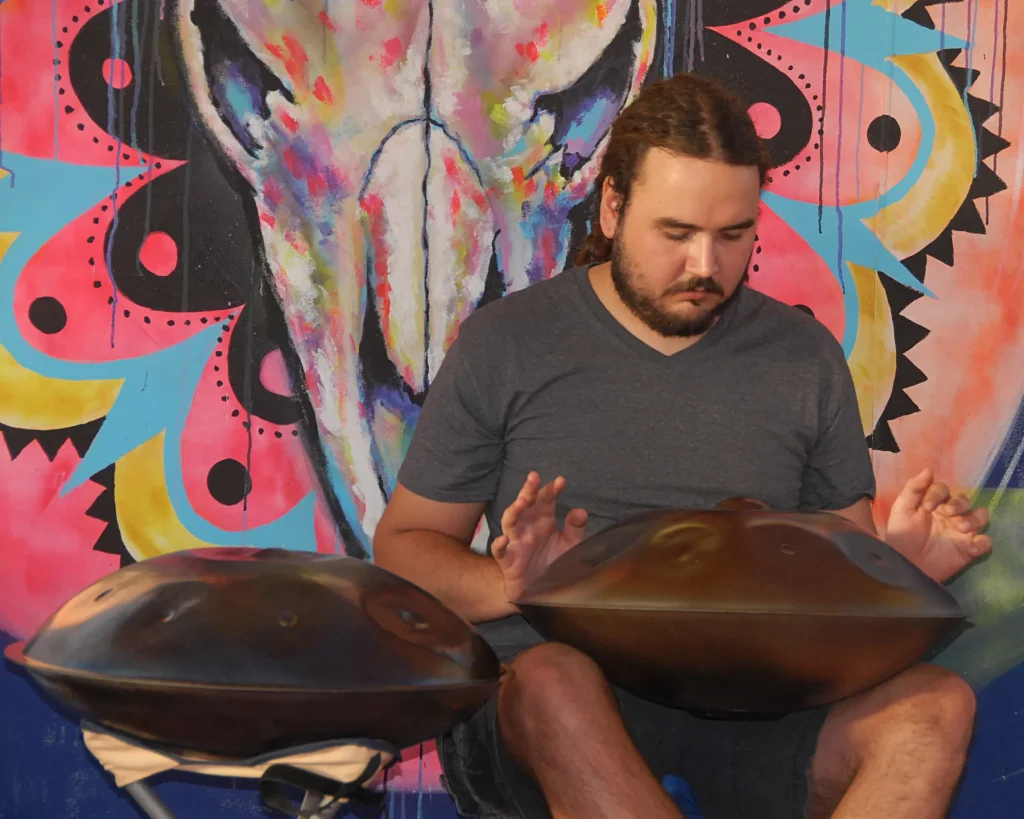
The world of handpans is attracting more and more people. But the question remains: can you really find an affordable model without compromising sound quality and durability? This guide explores that question.
Made by hand, the handpan is a percussion instrument often compared to a flying saucer. It consists of two steel shells, carefully hammered and tuned. Prices vary considerably, from €1,200 to €2,500 depending on the options.
Keep in mind that price does not always reflect quality. Some excellent models cost less, while some expensive ones fail to meet expectations. This guide will help you buy a handpan at a reasonable price while avoiding common pitfalls.
1. Understanding handpan prices: the market today
The musical instrument market has changed considerably in recent years. In 2001, PANArt’s Hang was the only model available. Today, the situation is very different. Many makers around the world offer a variety of options.
Handpan prices vary considerably. Most handmade models cost between €1,200 and €2,500. Some collector’s pieces, however, can exceed €10,000. At the other end of the market, entry-level factory-made models start at around €400, but their acoustic quality is often unpredictable.
A handpan’s price is not always a reliable indicator of its quality. Some unscrupulous makers charge high prices for poor-quality instruments. Other craftspeople offer excellent models at more accessible prices.
- In today’s market, prices range from €400 for low-end factory-made models to more than €5,000 for high-end handmade pieces.
- Most quality handmade handpans cost between €1,200 and €2,500.
- A handpan’s high cost reflects the manual work, the thousands of hammer blows needed to shape each note, and the many hours spent making it.
- A few years ago, you might have waited one to three years for a model, but the growing number of makers has increased supply.
- A handpan’s price depends on several factors: how it is made, its number of notes, its scale, the metal used, and the maker’s reputation.
Investing in a handpan is a long-term decision. It is best to budget for a quality instrument from the outset. That way, you are less likely to have to resell a disappointing model at a loss or give up playing it.
For more information about budgeting, read our price guide.
2. How to choose an affordable, quality handpan: essential criteria
Choosing a handpan can seem complicated, especially when you want both an affordable price and quality. Consider several factors to make an informed choice.
2.1. Build quality: handmade and factory-made instruments
The difference between a handmade model and a factory-made one matters. With handmade instruments, an experienced craftsperson hammers each note by hand. Although this takes time, it allows for precise tuning and rich tones.
Factory production, by contrast, uses machines to press the metal, often producing tones that are overly uniform and sometimes disappointing. Handpans costing less than €500 are often factory-made and generally do not offer satisfactory acoustic quality.
2.2. Number of notes: how it affects sound and price
The number of notes on a handpan directly affects its price. A basic nine-note model costs around €1,000. Each additional note can add €100 to €200, so a 12-note model will cost considerably more.
It is important to balance your budget with your musical needs. A well-tuned nine-note handpan already offers many melodic possibilities.
2.3. Musical scale: choosing one that suits your style and is available
The musical scale determines which notes are available on the instrument and the mood of the melodies you can play. Popular scales, such as D Kurd, often cost less because almost every maker offers them.
Rare or custom scales, on the other hand, can cost substantially more. Choose a scale that suits your musical style.
2.4. Metal type: nitrided steel, stainless steel, or Ember Steel
Three types of metal are commonly used to make handpans: nitrided steel, stainless steel, and Ember Steel. The last of these is newer and harder to work with, and can almost double the instrument’s price.
For a first purchase, consider a nitrided or stainless steel model. Experienced makers know these materials well, and they offer excellent value for quality.
| Metal type | Durability | Sound quality | Price |
|---|---|---|---|
| Nitrided steel | Good | Controlled | Lower |
| Stainless steel | Excellent | Long sustain | Mid-range |
| Ember Steel | Very good | Warm | Higher |
Taking time to assess these criteria will help you choose wisely. For more advice on choosing a handpan, read our complete guide.
3. Where to find reliable makers: options worldwide and online
When buying a musical instrument, it helps to know where to find reliable makers. The growth of the internet gives you several ways to buy a handpan.
First, specialist directories such as MasterTheHandpan let you compare the prices, scales, and materials offered by craftspeople around the world. These platforms provide an overview of the market and can help you make an informed choice.
Websites dedicated to the handpan can be good places to buy with confidence. They offer expert advice, a wide selection of instruments, and often a 14-day right to cancel. This gives you time to try the instrument before committing to it.
Be wary, however, of general retailers that sell handpans alongside unrelated products. Their prices may be slightly lower, but their after-sales support is often inadequate. That is a significant risk for a purchase of this value.
Physical music stores rarely stock handpans, and their prices are generally higher. Rent and other overheads contribute to the price of the instruments.
Before completing a purchase, check the website’s legal information. Make sure the company’s name, address, registration number, and the name of the person responsible for publishing the site are clearly stated. If they are missing, consider buying elsewhere.
To assess a maker’s reputation, read other buyers’ reviews and experiences on dedicated forums and in Facebook groups, such as French Handpan Connection. This can help you make an informed decision.
Finally, the handpan market has changed considerably in recent years. There are now many quality makers worldwide, giving you more opportunities to compare offers and find a model that fits your budget.
| Criteria | Options | Advantages | Disadvantages |
|---|---|---|---|
| Specialist websites | MasterTheHandpan, Lidah Drums | Expert advice, wide selection, right to cancel | Possible delivery wait |
| General retailers | Amazon, eBay | Often lower prices | Limited after-sales support, uncertain quality |
| Physical stores | Local music stores | Opportunity to try the instrument | Higher prices, limited availability |
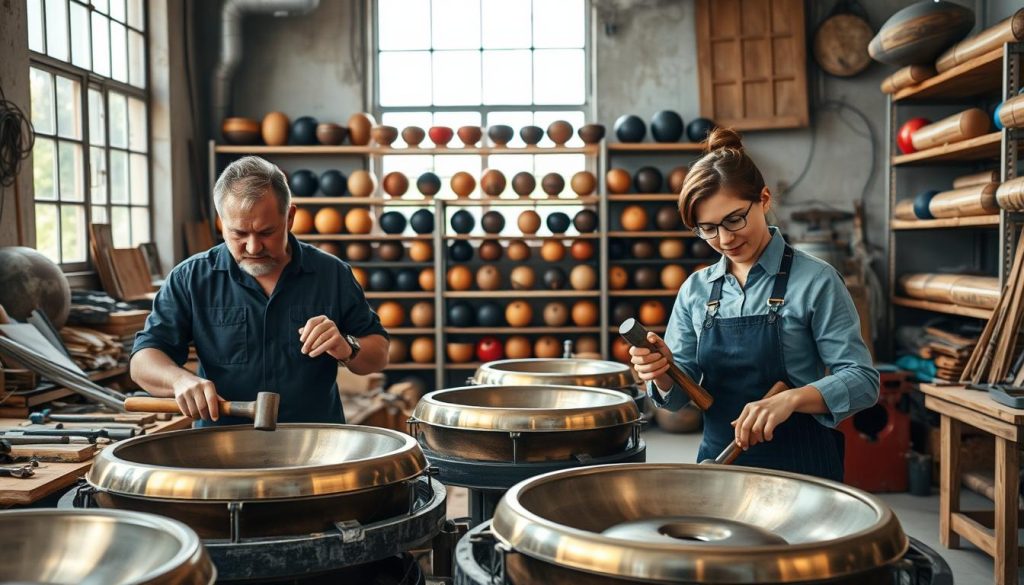
4. Contacting a maker: steps and good practices
Contacting an instrument maker can feel intimidating, but it is an essential step toward a successful purchase. Several methods can make it easier.
4.1. Ways to get in touch: websites, social media, and specialist communities
You can contact a maker through several channels:
- Contact details in the descriptions of YouTube videos.
- Professional Facebook pages, which often provide direct contact information.
- Makers’ websites, which usually have contact forms.
- Specialist communities such as MasterTheHandpan, which can help you find craftspeople.
4.2. Asking about scales, lead times, and prices
Prepare your questions before contacting a maker. Consider the following points:
- Write down the scales that interest you and specify the notes you want.
- Ask about production times and prices.
- Check whether the maker can produce your chosen scale, since not all makers can accommodate specific requests.
4.3. Using communities to check your choices
Enthusiast communities, such as French Handpan Connection on Facebook, can be valuable resources. Before making your final choice, share what you have found and ask other players for their opinions. This may help you avoid costly mistakes.
Listening closely to performance videos can also train your ear. It will help you distinguish well-made instruments from those that sound less convincing. Pay attention to tone, resonance, and the balance between notes.
Remember that makers receive many messages. Be patient and polite when you contact them. Respectful communication helps build the trust needed for a good purchase.
Finally, some videos become popular for reasons unrelated to sound quality. Listen carefully to the instrument instead of relying on view counts to judge a maker.
| Contact method | Advantages | Disadvantages |
|---|---|---|
| YouTube videos | Direct access to contact details | Detailed information is sometimes missing |
| Facebook pages | Direct interaction with the maker | Conversations can be less formal |
| Websites | Comprehensive information and formal contact | Response times vary |
| Specialist communities | Advice from other enthusiasts | Opinions may be biased |
Following these steps will leave you better prepared to contact a maker and make an informed choice. For more information about where to buy, read our guide to the best places.
5. How makers operate: waiting lists, flash sales, and availability
Understanding how makers operate is important for any handpan buyer. The buying process can differ considerably from one craftsperson to another. Some use a conventional waiting list, while others hold flash sales on social media.
Flash sales can be opportunities to buy a model quickly, often at an attractive price. They are frequently announced at short notice, however, so you need to act promptly.
Waiting lists work in different ways. Some makers temporarily close their lists to focus on existing orders. Watch for them to reopen so you do not miss an opportunity.
The most sought-after makers’ waiting lists can fill within minutes. Follow the makers that interest you and be ready to respond quickly.
Lead times also vary. Some craftspeople have waiting lists of up to a year, while others make batches of 20 instruments at a time. Ask each maker directly about their arrangements.
Patience is important. Although waiting times have fallen since the days when buyers often waited one to three years, obtaining a quality model may still take several months.
To stay informed, follow makers’ Facebook pages and subscribe to their newsletters. This will help you hear about flash sales and available instruments promptly.
Some makers cannot respond to every inquiry because they receive so many messages. Do not be discouraged; keep exploring your options and build a wider list of potential makers.
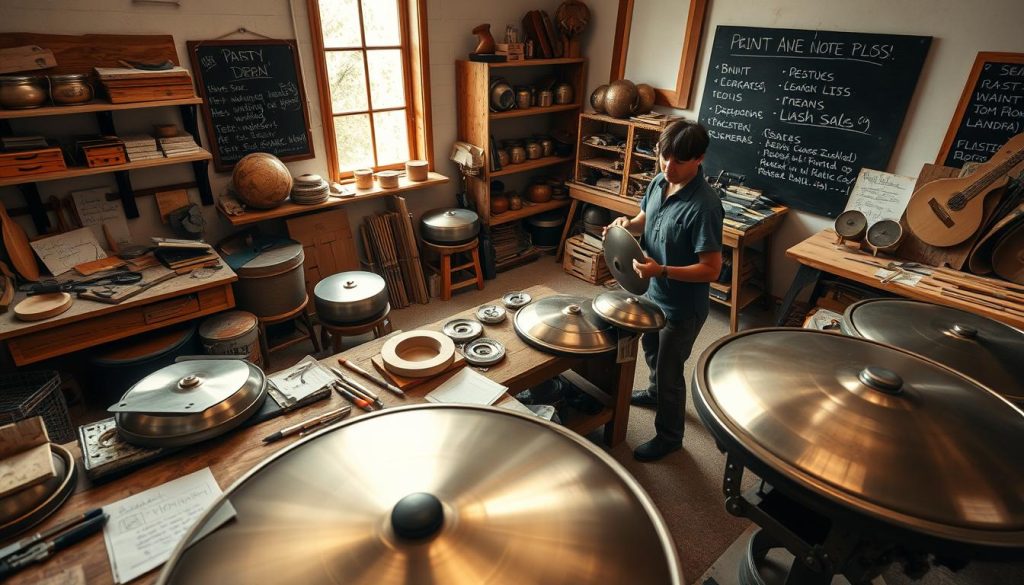
6. Details to check with the maker before buying
Before completing your purchase, ask the maker a few questions. This will help you make an informed choice and feel satisfied with your instrument.
6.1. After-sales support and adjustment or retuning
Make sure the maker provides reliable after-sales support. This includes the possibility of retuning the instrument if it accidentally goes out of tune. Ask what to do if that happens after purchase.
Retuning a handpan is delicate work that only a qualified craftsperson can perform. Check whether the maker offers this service and what it costs so you can plan for possible expenses.
6.2. Delivery options and protective packaging
Allow for shipping costs as well. Make sure the instrument will be protected in a sturdy case, such as those made by Hardcase Technologies. Your handpan needs protection in transit because an impact can deform this delicate instrument.
Where possible, collect the instrument in person. You can meet the maker, speak with them directly, and try the instrument before completing the purchase.
6.3. Care advice and precautions
Ask the maker for specific advice on caring for your handpan. Find out which products to use or avoid when cleaning the metal. It is also important to know how to prevent rust on nitrided steel.
Each metal needs particular care. For example, a stainless steel handpan is maintained differently from an Ember Steel model. Some cleaning products can even permanently damage the instrument’s surface.
| Details | What to check | Why it matters |
|---|---|---|
| After-sales support | Availability of retuning | Avoid unexpected costs |
| Delivery options | Protective case | Keep the instrument in good condition |
| Care advice | Products to use or avoid | Preserve sound quality |
Asking these questions will help you make an informed choice and enjoy your handpan to the fullest. For more information about buying an instrument, read our guide to new handpans.
7. Payment terms and tips for buying with confidence
When considering a handpan purchase, understand the maker’s payment terms. They can vary considerably from one seller to another, so ask for details.
Here are some points to consider:
- Some makers request a deposit when you order, while others require full payment in advance.
- Some careful makers request payment only once the instrument is finished and shown in a video. This can make the purchase more reassuring.
- Be cautious about deposits required simply to join a waiting list. Check with the community that other customers received their instruments after paying similar deposits.
- Research the maker before paying. Read reviews, find out how long they have been operating, and check whether the player community knows them.
- Do not be afraid to pay in advance if the maker is well established and has a good reputation. This is common with handmade goods.
- Take extra care with lesser-known or recently established makers, while giving them a chance to prove themselves.
- Communities such as MasterTheHandpan and French Handpan Connection can help you check a maker’s reliability if you are unsure.
Following this advice will help you approach your purchase with confidence. Make sure you understand the payment terms and ask the seller any questions you have. Good communication is essential to a positive experience.

8. Buying a used handpan: precautions and advice to avoid mistakes
The secondhand market can be an appealing way to buy a handpan at a lower price. You still need to be alert to the risks. Scams are common on platforms such as eBay, Leboncoin, and Facebook groups.
A poorly maintained handpan can go out of tune without any visible sign. To avoid unpleasant surprises, try to meet the seller. That lets you play the instrument and check that it suits you before committing.
If you must buy online, ask for photos of the instrument beside a specific object, such as a teaspoon. This helps confirm that the seller has the instrument. You can also offer to collect it in person and see how willing the seller is to cooperate.
Beginners are strongly advised against buying a used handpan without an experienced person to help them. The risk of being scammed or buying an instrument in poor condition is too high.
The MasterTheHandpan community has a Swap and Sale section in its Handpan Marketplace category. It can be a safer place for transactions between enthusiasts. Join to keep track of the offers posted there.
Finally, remember that a poor-quality or out-of-tune handpan is increasingly difficult to resell. It is often better to save for a few more months and buy a new model with the available guarantees. That can spare you problems later.
| Advice | Precaution | Reason |
|---|---|---|
| Meet the seller in person | Check the instrument’s condition | Avoid scams |
| Request specific photos | Confirm possession of the instrument | Check the seller is genuine |
| Join MasterTheHandpan | Access a safer sales space | Make transactions between enthusiasts easier |
9. Conclusion: patience and careful thought when buying an affordable handpan
A successful purchase takes a considered, methodical approach. You can find a quality model at a reasonable price if you are patient.
Do not rush your purchase. Waiting a few months for the right model is better than buying on impulse. The market has changed, and you no longer need to jump at the first opportunity.
Listen to plenty of recordings to train your ear. Identify the scales you like and look for reliable makers. Contact craftspeople with specific questions.
Use community resources such as French Handpan Connection and MasterTheHandpan to check your choices. Finally, share your experiences and advice in the comments to help our community.
A well-chosen handpan is a magical instrument that can bring you years of musical enjoyment.