
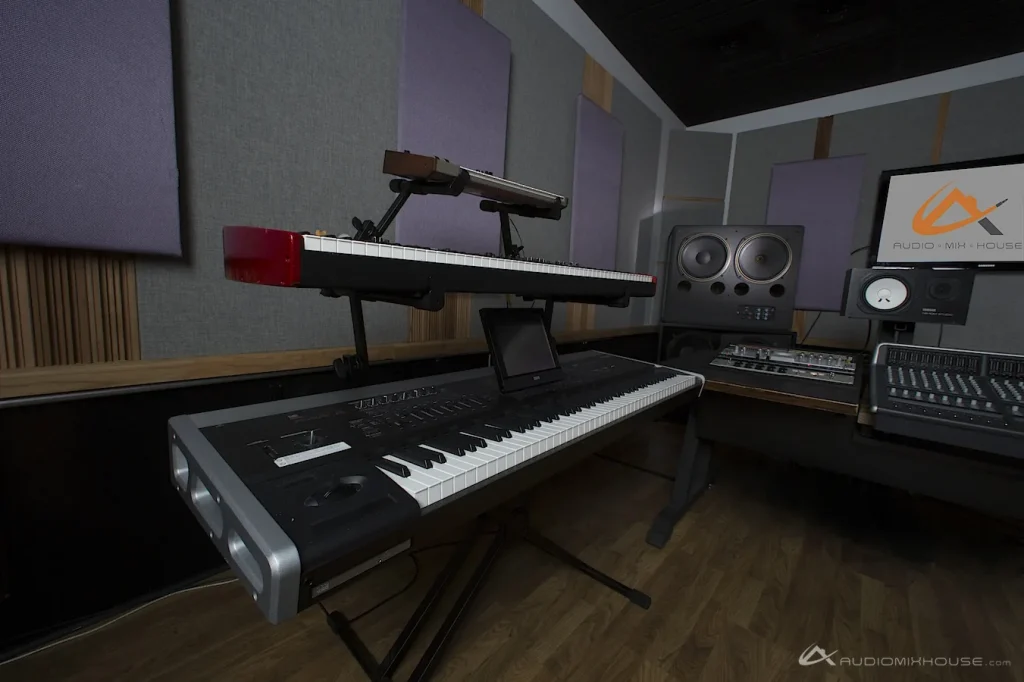
Since its beginnings, the home studio has played a crucial role in the democratization of music production. More accessible and easier-to-use computer equipment has shaped its history. At first, a home studio consisted of machines, instruments and computers joined by complex connections. As computing advanced, however, the software and hardware became simpler, more powerful and less expensive.
Today, a computer and the motivation to create music are enough to get started. This accessibility has opened the door to a generation of composers, allowing people to bring their music to life without spending a fortune on a professional studio.
The democratization of music production has also been helped by the proliferation of online tutorials. More and more artists produce their own music and record their work in a home studio. Well-known musicians such as Daft Punk have even released entire albums produced in their own creative spaces.
Yet this democratization has also drawn criticism. Some argue that greater accessibility has saturated the market with mediocre productions. Despite that criticism, music creation in home studios continues to advance.
The future of the home studio looks promising as artificial intelligence becomes part of the music composition process. Computers have transformed every aspect of music production, making it affordable and accessible for anyone to create a track.
In short, the history of the home studio reflects the democratization of music production. From the outset, it has enabled more artists to express themselves and share their music with the world.
The beginnings of the home studio
Early home studios were complex assemblies of machines, instruments and computers. Music enthusiasts had to invest in expensive equipment and learn to make complicated connections to record their compositions at home. This approach was often limited to professionals or the most dedicated amateurs.
As computing advanced, however, the software and hardware needed for making music at home became simpler and much more accessible. The first home studios appeared with the rise of personal computers and multitrack recorders. These tools let musicians record at home, although setting them up and using them effectively still required technical expertise.
Over time, computers became increasingly powerful and music production software became easier to use. Today, many personal computers can run music production programs, allowing musicians to create professional-quality tracks in a home studio. These technological advances have greatly reduced the barriers to making music at home, putting it within reach of music enthusiasts.
In short, early home studios involved complicated equipment setups and required technical expertise to record and produce music at home. Advances in computing have since made making music at home increasingly accessible, both financially and technically. Today, a computer and a passion for music can be enough to compose and record professional-quality tracks in your own home studio.
How the home studio has evolved
Home studios have changed considerably over time, thanks to advances in computing and simpler equipment. The first setups consisted of machines, instruments and computers joined by complex connections. Technological advances have since transformed the software and hardware involved.
Today, creating a professional-quality home studio is easier than ever. Computers are more powerful and music composition software is more accessible. Audio interfaces and microphones have also improved, offering better recording quality at an affordable cost.
The table below lists some essential equipment for a modern home studio:
| Equipment | Description |
|---|---|
| Computer | A powerful computer is essential for running composition and recording software. |
| Music composition software | Software such as Ableton Live, Logic Pro X and FL Studio lets you create and produce music tracks. |
| Audio interface | A good audio interface is needed to record instruments and vocals directly into a computer. |
| Microphones | High-quality microphones capture vocals and instruments accurately. |
“The democratization of the home studio has opened up new possibilities for aspiring artists and music producers. Access to a professional recording studio no longer requires a huge investment. With the right equipment and skills, anyone can now produce music at home.” — Jérôme Dupont, renowned music producer.
As home studios have evolved, amateur artists have found it easier to produce and record their own tracks. This has also encouraged the growth of online tutorials, which let artists learn and improve their music production skills at home.
As technology progresses, home studio equipment will probably become even more accessible and powerful. New developments, such as the integration of artificial intelligence into music composition, are opening up creative possibilities for artists.
In short, the evolution of the home studio has transformed the music industry by enabling people to record and produce their own music. Thanks to advances in computing and simpler equipment, making music at home is more accessible than ever. Whether you are an amateur musician or an emerging artist, a home studio provides a creative space for bringing your musical projects to life.
The popularity of the home studio
As it has become more accessible, the home studio has become a popular choice for artists who want to record and produce music at home. Music production, once largely limited to professionals with costly recording studios, has become more widely available thanks to technological advances and easier-to-use computer equipment.
At first, a home studio consisted of machines, instruments and computers joined by complex connections. Advances in computing have since simplified the software and hardware while making them more powerful and less expensive. Today, a computer and sufficient motivation can be enough to compose a quality piece of music.
This growing accessibility has opened the door to a generation of composers and allowed many artists to begin their careers in their own home recording studio. Even well-known artists such as Daft Punk have produced albums in a home studio. Self-production has become common, helped in part by online tutorials that have contributed to the democratization of music production.
Despite this growing popularity, some critics say the market is saturated with mediocre productions. Music creation in home studios nevertheless continues to advance, particularly through the integration of artificial intelligence into the composition process. The computer has become an essential music production tool, making it affordable and accessible for anyone to create a track.
| Equipment | Advantages | Disadvantages |
|---|---|---|
| Computer | Allows you to compose, record and mix music. | May need regular upgrades to meet software requirements. |
| Audio interface | Converts audio signals into digital data for the computer. | May require technical knowledge for the best setup. |
| Microphone | Allows you to record vocals and instruments with good sound quality. | Quality models can be expensive. |
The home studio continues to develop, giving artists the freedom to create and produce music at home. Its accessibility encourages creativity and lets people share their passion for music with the world.
Music production tools for the home studio
To work effectively in a home studio, you need music production tools that suit your needs. Fortunately, a wide range of options gives both aspiring artists and professionals the chance to make quality recordings without spending a fortune.
Here are some of the music production tools most commonly used in home studios:
- Music composition software: Programs such as Ableton Live, Logic Pro and FL Studio provide a full range of composition, recording and mixing tools for creating professional-quality music tracks.
- Audio interfaces: These devices connect instruments and microphones to a computer and help deliver high-quality sound in recordings. Brands such as Focusrite, PreSonus and Behringer offer audio interfaces for a range of budgets.
- Microphones: A good microphone is important for capturing vocals and instruments accurately. Popular models such as the Shure SM58 and Audio-Technica AT2020 offer excellent sound quality at an affordable price.
- Headphones and monitors: Good headphones or studio monitors are essential for accurate mixing. Brands such as Audio-Technica, Sennheiser and KRK offer options for different budgets.
It is also important to become familiar with mixing and mastering techniques to get the best possible results. Online tutorials, discussion forums and free or paid online courses can help you develop your skills and improve your work.
In short, a well-equipped home studio is essential for producing quality music. By choosing tools that suit your needs and learning composition and mixing techniques, you can create professional recordings at home.
| Tool | Popular brands |
|---|---|
| Music composition software | Ableton Live, Logic Pro, FL Studio |
| Audio interface | Focusrite, PreSonus, Behringer |
| Microphone | Shure SM58, Audio-Technica AT2020 |
| Headphones and monitors | Audio-Technica, Sennheiser, KRK |
The impact of online tutorials
Online tutorials have played a vital role in the democratization of music production by allowing artists to learn and develop their skills at home. These accessible resources now let aspiring musicians build a thorough understanding of music composition software, recording techniques, mixing and mastering.
The variety of online tutorials lets artists explore different genres and production styles. Whether you are interested in pop, hip-hop, electronic music or another genre, tutorials are available for each style. They also provide practical advice, tips and advanced techniques used by professionals, helping aspiring artists improve quickly and create quality productions.
Online tutorials also give artists access to a lively learning community. Video-sharing platforms let musicians interact, ask questions, receive constructive feedback and share their own knowledge and experience. This creates a collaborative learning environment in which artists can help and support one another on their musical journeys.
Example of an online music production tutorial:
“In this video, renowned producer John Doe guides you through the steps of creating a hip-hop beat in your home studio. He shares his composition, sampling and mixing techniques to help you create an authentic, powerful sound. Follow his advice and let your creativity flow as you produce your own professional-quality music.”
In short, online tutorials play a crucial role in the democratization of music production by helping artists learn and improve their music-making skills in their own home studios. They offer inspiration and knowledge, as well as a place to share within an ever-changing artistic community. With these accessible resources, more musicians can pursue their musical ambitions and make their voices heard in the modern music industry.
Despite its growing popularity, the home studio has its critics: some argue that the market is saturated with lower-quality productions. In their view, letting anyone record and produce music at home has led to an overabundance of mediocre tracks. Widely accessible music production software has made it easier to create and distribute music, leading to market saturation. Many emerging artists struggle to attract attention amid this vast amount of home-produced music.
Yet the sheer volume of music being produced does not necessarily mean that it is all poor quality. The democratization of the home studio has also helped many previously unknown talents emerge and share their music with the world. Some independent artists have gained recognition through productions made in their home studios and eventually signed with record labels or achieved international success.
Technology also continues to advance and offer new possibilities to artists working at home. Integrating artificial intelligence into music composition allows musicians to push their creative boundaries and explore new sounds. Although some question the quality of music produced in home studios, these technological developments have created opportunities for artists determined to build their own musical worlds.
| Advantages of a home studio | Disadvantages of a home studio |
|---|---|
|
|
The future of the home studio
The future of the home studio looks promising as artificial intelligence becomes increasingly integrated into music creation at home. Technological advances now give amateur artists powerful tools to compose, record and produce music in their own studios. Artificial intelligence offers many ways to expand aspiring artists’ creative capabilities.
Artificial intelligence has many potential uses in the home studio. Advanced algorithms can analyze thousands of tracks to identify patterns and trends, helping composers find inspiration and create distinctive melodies. AI software can also generate harmonies, rhythms and arrangements based on an artist’s preferences and musical style.
Artificial intelligence can also help improve mixing and mastering by automatically adjusting volume levels, equalization and compression to achieve a professional sound. This lets artists focus on creativity without having to master advanced production techniques.
With artificial intelligence becoming part of the process, making music at home is increasingly accessible to artists at every skill level. Intelligent software and tools provide valuable assistance, helping artists bring musical ideas to life without extensive technical expertise. The future of the home studio rests on this combination of human creativity and technological power.
| Advantages of artificial intelligence in the home studio | Potential disadvantages of artificial intelligence in the home studio |
|---|---|
| – Musical inspiration and the creation of distinctive melodies | – Risk of uniformity and a lack of originality if artists rely too heavily on artificial intelligence |
| – Help with mixing and mastering | – Need for additional skills to understand and use AI tools effectively |
| – Greater accessibility for artists at every skill level | – Risk of losing music’s human and emotional qualities through excessive reliance on artificial intelligence |
Conclusion
In conclusion, the home studio has played an essential role in the democratization of music production by allowing artists to record and create music at home at an affordable cost. Its history has been shaped by more accessible and easier-to-use computer equipment. At first, home studios consisted of machines, instruments and computers joined by complex connections. Advances in computing have since made the required software and hardware simpler, more powerful and less expensive.
Today, a computer and the motivation to create are enough to compose a quality piece of music. This accessibility has opened the door to a generation of composers. The growth of online tutorials has also helped democratize music production. Self-production has become common among artists starting their careers, and major artists such as Daft Punk have recorded albums in their home studios.
Some people nevertheless criticize this democratization, arguing that the market is saturated with mediocre productions. Even so, music creation in home studios continues to advance, particularly as artificial intelligence enters the composition process. Computers now play a part in every aspect of music production, making it affordable and accessible for anyone to create a track.