
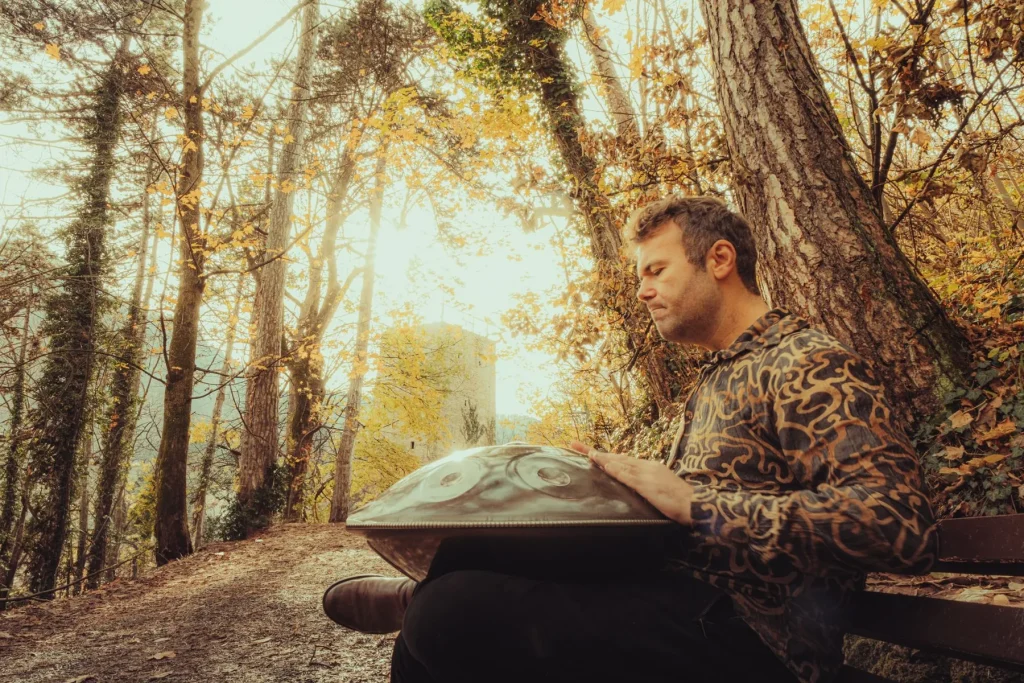
The handpan is a fascinating steel instrument played with the hands. Its unique design, made from two metal shells, creates a resonance chamber that produces harmonious sounds. Each instrument is tuned to a specific scale, making it almost impossible to produce dissonant notes.
This tutorial is perfect for beginners. It will guide you through the essentials of learning to play. You will discover how this intuitive instrument lets newcomers immerse themselves in music without any prior knowledge of music theory.
With regular practice, you will progress quickly. The exercises will help you master simple rhythmic patterns. This musical journey will transform your relationship with music and rhythm.
Introduction to the handpan and learning to play
Made from two metal shells, this instrument offers a distinctive sound experience. Known for being easy to play, it is accessible even to people with no musical experience. Each instrument is tuned to a particular scale, making it almost impossible to play a wrong note.
Musicians such as David Charrier, who has taught for more than 10 years, say this instrument is for everyone. The handpan community has grown considerably since the 2010s.
- Discover the fascinating history of this relatively recent musical instrument that has captivated the world.
- Understand why it is considered one of the most intuitive instruments for musical beginners.
- Learn that making a handpan requires exceptional craftsmanship.
- Know that each instrument is tuned to a specific scale, making it impossible to play a wrong note.
- Get familiar with essential terms such as the ding, tonefields and dimple.
- Discover that learning can be a deeply relaxing and meditative experience.
- Recognize that many well-known artists began by teaching themselves.
- Understand that this article will give you all the basics you need to begin your musical journey.
- Know that the community of players is welcoming and full of resources.
- Learn that this instrument suits all ages, from children to older adults.
How to position your handpan for comfortable playing
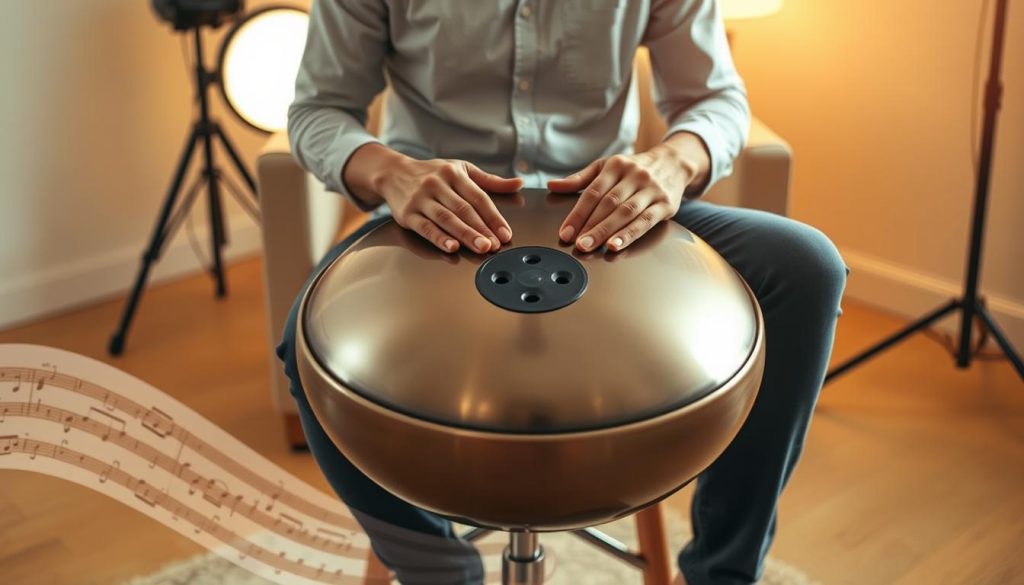
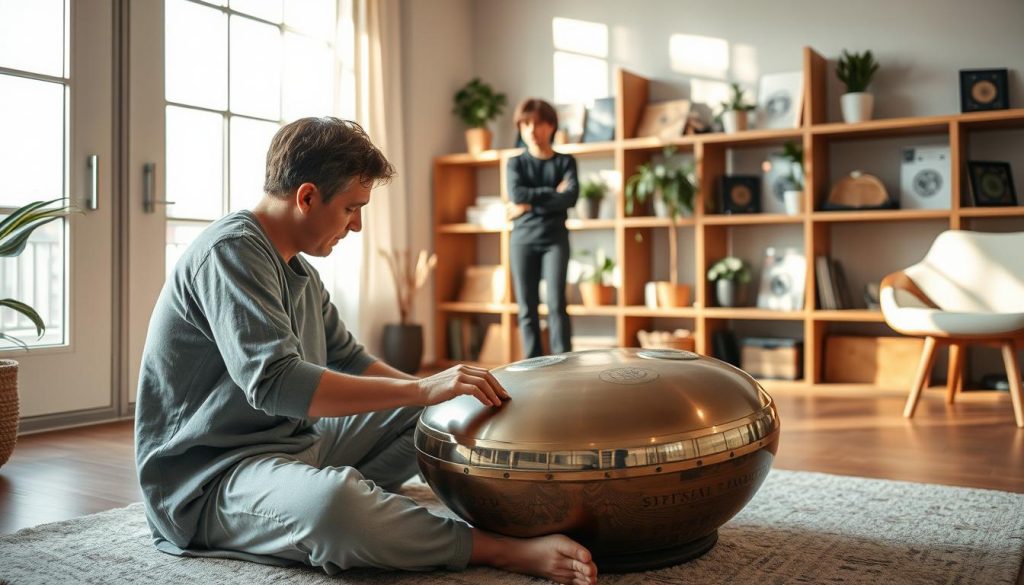
To play comfortably, it is essential to position the instrument properly. Start by sitting on a low chair, such as a camping chair. Your knees will then be slightly higher than your hips, helping you keep the instrument stable.
The handpan should rest on your thighs, tilted toward your torso. This position keeps it from slipping and gives you better control. Players generally place the lowest notes closest to their bodies. The larger tonefields sit a few inches from your stomach, while the smaller ones are a little farther away.
Every note should be easy to reach without moving your torso. The sound hole must also remain unobstructed and should not touch your legs, as that could dampen the instrument’s vibrations.
- Choose a suitable seat so you can play comfortably, ideally a low chair.
- Rest your instrument on your thighs and tilt it slightly toward your torso.
- Place the lowest notes close to your body so they are easier to reach.
- Make sure the sound hole stays unobstructed to avoid muffling the sound.
- Position the tonefields so that every note is easy to reach.
- Find a comfortable position that you can maintain without getting tired.
- Some experienced players move their instrument while playing to vary its sound.
- Positioning the instrument properly is essential before you play a single note.
- Use a mirror to check your posture and how easily you can reach the tonefields.
- Playing while seated often gives you better control while allowing freedom of movement.
Essential handpan striking techniques
To produce harmonious sounds on this instrument, you need to master how to strike it. Playing the handpan is less about striking hard than gently touching the metal surface. A light touch creates clear notes without dampening their vibrations.
A quick wrist movement is essential. It prevents your finger from staying in contact with the metal for too long. The thumbs are generally used for notes closest to the body, while the index and middle fingers play the others. Ideally, strike a note at the boundary between the tonefield and the dimple, on the ridge surrounding the indentation.
Finger strikes
The basic technique is to touch the ridge between the tonefield and the dimple with the last joint of your finger. This produces a clear, precise sound. Keep your hands relaxed and your fingers slightly curled to avoid unnecessary tension.
Strike variations (ding, slap, fist…)
Different strikes add variety to your playing. Here are some of the most common techniques:
- Ding tonefield: strike the shoulder, the flat area surrounding the ding.
- Slap: use the flat of your fingers on the space between notes for a percussive effect.
- Fist: strike with the base of a closed fist to produce a powerful sound.
- Palm mute: strike the ding with your palm for a low sound.
- Finger roll: rapidly roll two or three fingers over the same note to enrich the sound.
Developing some dexterity with both hands is essential to using them effectively. It will let you explore every note with ease and fluidity. With regular practice, you will refine your technique and be able to play more complex patterns.
| Technique | Description | Sound |
|---|---|---|
| Ding tonefield | Strike on the shoulder | Clear, resonant sound |
| Slap | Strike with the flat of the fingers | Percussive effect |
| Fist | Strike with the base of the fist | Powerful sound |
| Palm mute | Strike with the palm | Low, muted sound |
| Finger roll | Rapid roll with two or three fingers | Rich, varied sound |
In short, effective playing depends on keeping your strikes gentle and light. With practice, each note will come to life and your playing will become more fluid and expressive. For more guidance, explore additional resources such as this comprehensive guide.
Practical exercises to master your first handpan rhythms
To begin your musical journey, get to know the sounds of your instrument. This will help you play each note with ease. For the first exercise, play every note one at a time. Aim to do it with your eyes closed: that is a sign that the movements have become familiar.
Getting to know the notes
Begin by exploring every note on your instrument. Play them one by one until the movement becomes automatic. Learn to recognize the sound of each note; this will help you play them with your eyes closed.
Ascending and descending the scale
Practice ascending the scale by playing every note from lowest to highest. This will develop your fluidity. Then practice descending from the highest note to the lowest. Repeat these movements hundreds of times until they become automatic.
Introduction to chords and simple rhythms
Explore chords by lightly playing several notes at once. Find the combinations that sound most harmonious on your scale. Start with simple rhythms by focusing on one pattern at a time until you have mastered it.
Repetition is essential. Playing the same movements hundreds of times helps them become second nature. Establish a daily practice routine, even a short one. Ten minutes of practice each day can help you progress more quickly than a single two-hour session each week.
Take inspiration from talented players on YouTube to discover new rhythms and expand your musical repertoire.
Challenges and how long it takes to learn the handpan
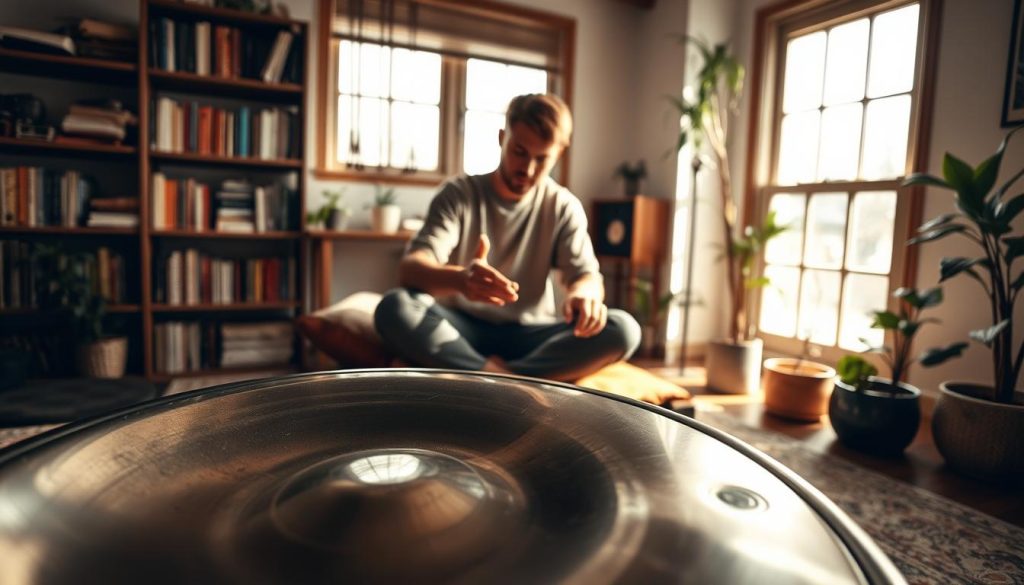
Although this instrument is often seen as accessible, mastering it takes time and patience. Learning to play means understanding the finer points of striking technique, which calls for a gentle, precise movement.
Each instrument has its own scale, such as D Kurd or Celtic Minor. You therefore need to learn to play notes that naturally sound good together. On average, about 20 hours of practice may be enough to reach a reasonable playing level.
Reaching true mastery, however, will probably take several months or even years. Learning time varies with previous experience and natural aptitude.
- Understand that although this instrument is known for being accessible, mastering it takes time and persistence.
- Know that, on average, about 20 hours of practice are needed to reach a reasonable playing level.
- Discover that striking with your fingertips requires a gentle, precise movement that may be difficult at first.
- Learn that each instrument has its own scale, which shapes how you learn.
- Understand that experience with other instruments can shorten the time it takes to learn.
- Know that becoming a true master takes several months or even years of dedicated practice.
- Discover that most beginners can play their first melodies after just a few weeks of regular practice.
- Learn that natural aptitude plays a part, but persistence and practice are decisive.
- Understand that learning resources can greatly speed up your progress.
- Know that even the most talented artists have spent countless hours refining their technique.
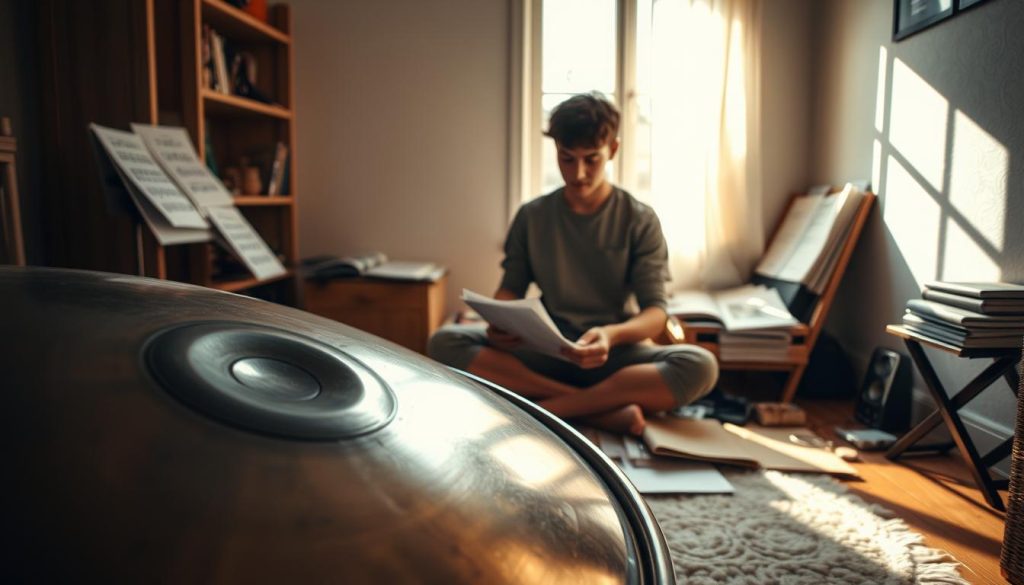
| Aspect | Details |
|---|---|
| Average learning time | 20 hours to reach a reasonable level |
| Time to achieve mastery | Several months to several years |
| Effect of previous experience | Shortens learning time |
| Importance of practice | Regular practice is essential |
Learn the handpan on your own or with a teacher: which should you choose?
There are several ways to learn to play this fascinating instrument. You can teach yourself or work with a teacher. The choice depends on your preferences and musical goals.
Teaching yourself is entirely possible thanks to the instrument’s intuitive nature. Many renowned artists began learning on their own around 2010, when online resources were still limited. However, this approach can sometimes mean spending time trying combinations that do not work.
Working with a teacher can speed up your progress considerably. A teacher can offer personalized advice and help you develop suitable techniques. Platforms such as David Charrier’s MasterTheHandpan offer online courses with immersive videos and an innovative notation system, without requiring knowledge of music theory.
Here are some points to consider when making your choice:
- Self-study: you can learn at your own pace and on your own schedule.
- Online resources: available books and tutorials, such as those from the Instruments du Monde store, offer practical advice and 25 pieces of sheet music.
- Cost: a budget of about 30 euros can give you access to quality learning resources.
- Guidance: a teacher can correct your movements immediately and adapt lessons to your level.
- Interaction: in-person lessons allow direct interaction, which can benefit your learning.
- Flexibility: online courses let you learn anywhere, at any time.
In short, whether you learn alone or with guidance depends on your budget, available time and musical goals. Both approaches have advantages and disadvantages. If you want to progress quickly, online or in-person lessons may be a good choice.
| Aspect | Self-study | Guided learning |
|---|---|---|
| Cost | About 30 euros for resources | About 40 euros per hour for a teacher |
| Flexibility | Learn at your own pace | Set times determined by the teacher |
| Interaction | Limited | Direct and immediate |
| Progress | Can be slow without feedback | Faster with advice |
Whatever you choose, the main thing is to stay motivated and enjoy learning this unique instrument. Whether you take online courses or work with a teacher, every step brings you closer to your musical goal.
Conclusion: begin your musical journey with the handpan
Beginning a musical journey with this unique instrument is a rewarding experience. Although it is intuitive, developing a striking technique and a sense of rhythm is essential to getting the most from it. Whether you learn alone or with guidance, your choice will affect the pace of your learning.
Teaching yourself can be free, but it often takes more time, especially for a beginner. To help you progress, the book from Instruments du Monde offers practical advice and 25 pieces of sheet music.
The key to success is regular practice. Even a few minutes a day can make a big difference. Joining the handpan community can also bring support and motivation. Once you have learned the basics, you can explore recording and share your music with the world.
So begin today: this musical journey can transform your relationship with sound and rhythm for years to come.